


We used to believe the future was battery-powered. The vision was clean. No tailpipes. Just silent fleets of Teslas and Nissans gliding past glass skyscrapers, a sci-fi dream realized by early tech prophets like Bradbury and Dick. The hype was real. In 2008, Barack Obama pledged to put one million EVs on American roads by 2015. It felt inevitable. We had the hardware, too. The Nissan Leaf. The Tesla Model S. The BMW ActiveE. They were here. They were shiny.
Then reality hit.
Range anxiety isn’t a marketing term anymore. It’s a physical barrier. Most early EVs offered 100 to 200 miles before the battery died. That’s it. And charging infrastructure? Sparse. You couldn’t just “fill up.” You had to hunt for plugs. The fear of being stranded became a market-killer. Sales stalled. In 2012, only 52,835 plug-ins moved off lots. From December 2010 through that period, total sales hovered around 70,000 units. Against 15 million traditional vehicles sold annually? That’s less than 1 percent. A rounding error.
So the industry pivoted. Not backward, but sideways. Companies realized they couldn’t just wait for batteries to get better. They saw the fossil-fuel economy not as a failure, but as a platform. Audi is leading this charge. Specifically, they are betting on e-gas.
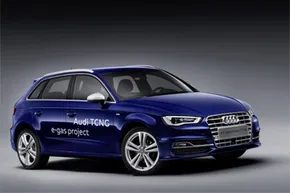
In 2013, Audi opened the world’s first industrial plant to produce synthetic, carbon-neutral fuel. This isn’t just regular gasoline. It’s e-gas designed for compressed natural gas (CNG) vehicles. Their test bed? The A3 Sportback TCNG. But the bigger play is infrastructure. This plant creates a blueprint. It builds the network needed to supply electricity for EVs and hydrogen for fuel-cell cars when those technologies actually mature. It’s a bridge.
Skeptics aren’t impressed. Christopher DeMorro, writing for Gas 2, called it out. His argument was blunt. The problem isn’t just sustaining emissions. It’s reducing them. Focusing on e-gas keeps us on the carbon standard. We should prioritize vehicles that use less energy period. Efficiency over synthesis.
But before you dismiss the project as corporate greenwashing, you need to understand the mechanics. You need to look at how Audi defines “carbon neutrality.” It’s not magic. It’s chemistry. And it might be the only reason the internal combustion engine survives the next decade.
Audi isn’t just talking about reducing its carbon footprint. The company is actively engineering a way to make internal combustion engines carbon neutral. If the terms “carbon footprint” or “carbon offsets” are foreign to you, think of it this way: a carbon footprint calculates all the carbon dioxide (CO2) emissions from a person or business. CO2 is the main bad actor here, but accurate measurements also count methane and chlorofluorocarbons. These figures are usually expressed in tons of CO2 equivalents per year.
When you lower CO2 emissions for a specific activity, the footprint shrinks. If you cut emissions until they equal the footprint, you hit carbon neutrality. Companies get there in messy, varied ways. Some build wind farms to replace coal. Others plant trees for carbon sequestration. Audi funds projects that reduce greenhouse gases. All of these count as carbon offsetting.
Transportation is the hard part. Moving people and goods usually means burning fossil fuels. Building a car takes electricity, often from dirty power plants. Extracting, refining, and delivering the fuel takes even more. Then the car drives. The internal combustion engine pumps out greenhouse gases. They collect in the atmosphere. They form a planet-warming blanket. Electric and hydrogen vehicles could solve this. But they aren’t viable for everyone, everywhere, for years.
The Werlte Plant and Synthetic Methane
Audi calls its approach “balanced mobility.” It’s defined as holistic, CO2-neutral mobility across short, intermediate, and long distances. E-gas is the key to keeping the combustion engine alive in this green scenario. How do you get carbon neutrality from an old-school tech? By using carbon dioxide as a raw ingredient.
A refuse biogas plant supplies the CO2. A purpose-built factory in Werlte, Germany, handles the chemistry. Starting in 2013, that plant consumes 2,800 metric tons of CO2 annually. It generates 1,000 metric tons of e-gas per year. Combine that with other green practices, and Audi achieves carbon neutrality across its entire value chain.
Chemists know e-gas as methane. Consumers know it as natural gas. It heats homes. It powers natural gas vehicles. It’s synthetic. It’s clean-ish.
E-fuel Fundamentals
The chemistry behind e-gas isn’t magic. It’s a series of reactions. Hydrogen from water electrolysis meets carbon dioxide. They bond. They form methane. The result is a fuel that burns in existing engines. It behaves like natural gas. It’s clean at the tailpipe because the CO2 came from the air to begin with.
If you’re looking to switch from regular gasoline, the infrastructure is tricky. In the U.S., the Department of Energy offers an Alternative Fuels Station Locator. Enter your zip code. Select the fuel type. See what’s available. It’s sparse. It’s growing. But it’s there.
Why stick with combustion when batteries exist? Range anxiety. Cold weather performance. The existing grid. The sheer volume of internal combustion engines still on the road. Audi isn’t abandoning the engine. It’s trying to make the engine irrelevant to the carbon tally. It’s a bridge. A long, chemical bridge.
The math is tight. 1,000 metric tons of fuel. 2,800 metric tons of CO2 in. The rest is water. Hydrogen and oxygen. Released as a byproduct. Clean. Simple. Or at least, as simple as industrial-scale chemistry gets.
Does it scale? That’s the question. One plant in Werlte is a proof of concept. A blueprint. Not a global solution. Not yet. But it proves the concept works. Methane from air. Carbon neutral. Engine ready.
The rest is just volume. And cost. And politics. And infrastructure. And time.


The Chemistry Behind the Pump
Let’s cut through the marketing gloss. E-gas is simply synthetic methane. It’s the lab-grown twin of the real thing. You know the real stuff. It’s that colorless, odorless gas pulled from ancient plant matter and aquatic sludge buried deep in the crust. Fossil methane takes millions of years to cook up. Synthetic methane? You can make it in a hurry.
It starts with electrolysis.
Pass an electric current through water. Break the bonds. You get hydrogen and oxygen. The equation is straightforward:
2 H2O → 2 H2 + O2
Hydrogen alone looks promising as a future fuel. Compress it, store it in a big tank, run it through a fuel cell with oxygen, and you get electricity and water as byproducts. But here’s the rub. Building a hydrogen infrastructure from scratch is expensive. We aren’t there yet.
So Audi takes a different route. They take that hydrogen and mix it with carbon dioxide. This is methanation.
CO2 + 4 H2 → CH4 + 2 H2O
The result is CH4. Methane. It behaves exactly like the swamp gas floating above a bog or the natural gas tapped at a wellhead. Same flammability. Same lack of smell. Same colorless profile.
Why does this matter for the car enthusiast? Because it doesn’t need new pipes. It doesn’t need a new grid. This synthetic fuel can slot directly into the existing natural gas network. It flows to homes and businesses. It fills tanks at compressed natural gas (CNG ) stations.
The auto industry is focused on that last point. CNG stations power a growing fleet of natural gas vehicles, or NGVs. These aren’t magic bullets for global warming. They won’t erase our fossil dependency overnight. But they bridge the gap. They keep engines running while the infrastructure catches up.
We’ll look at how Audi actually puts this fuel into a car next.
The Low-Carbon Reality of Natural Gas Vehicles
The idea of running an Audi A3 on synthetic methane feels like a futuristic leap, but it’s actually rooted in early 20th-century engineering. As soon as reliable natural gas transmission lines appeared in the early 1930s, drivers wanted to burn the stuff. The mechanics are straightforward. Four-stroke engines mix fuel with air, ignite it with a spark plug, and drive pistons up and down. The same physics apply to gasoline and natural gas. If the U.S. and Middle East hadn’t struck such massive, cheap oil reserves, natural gas vehicles (NGVs) might have dominated the road.
They didn’t. Today, NGVs are a niche. At the end of 2011, only about 120,000 were on American roads. Globally, the number was higher—over 15 million—but the distribution was uneven. Five nations: Iran, Pakistan, Argentina, Brazil, and India, held nearly 70 percent of the market share. Why there? Those countries lack the refining capacity for crude oil. They use what they have. In the next decade, more countries will likely follow suit, especially if gasoline prices keep climbing. Natural gas is cheaper. Estimates suggest fuel savings of around 30 percent compared to gasoline.
Cleaner Combustion
Cost isn’t the only draw. Emissions are lower. The U.S. Environmental Protection Agency (EPA) rates NGVs as the cleanest internal-combustion vehicles available. The Honda Civic’s natural-gas version earned that title. The stats are stark. Carbon monoxide drops by 70 to 90 percent. Nitrogen oxides fall by 75 to 95 percent. Even carbon dioxide, the primary greenhouse gas, reduces by 20 to 30 percent. The result is better air quality and a slower march toward global warming.
It’s not a perfect solution. Buying an NGV costs more upfront. Refueling is a headache, rivaling the charging infrastructure problems of electric vehicles. As of December 2011, the U.S. had only about 1,000 NGV stations. Half were private. Public access was limited. You can install a home refueling system, but that adds to the sticker shock. And while they cut CO2, they don’t eliminate the warming effect entirely.
Audi’s Synthetic Loop
Think of NGVs as a bridge. A transitional technology. That changes if you can run them on synthetic methane derived from carbon dioxide. Audi plans to do exactly this at its Werlte plant. The process splits water into hydrogen and oxygen via electrolysis. Then, it combines the hydrogen with carbon dioxide captured from a biogas plant. But electrolysis needs power. Doesn’t that just shift the pollution elsewhere? Yes. That’s the final piece of the Audi e-gas project. Where does the electricity come from? Renewable sources.
Dual-Flexibility
Carmakers pushing synthetic methane need a vehicle to take it. For Audi, that’s the A3 Sportback TCNG. They didn’t build a “pure” NGV. The A3 TCNG carries both natural gas and gasoline tanks. The engine switches between them seamlessly. Run low on CNG? No station in sight? Use gasoline. It’s a compromise, but the goal is to run on natural gas as much as possible. Audi projects 1,500 modified A3 TCNG models can drive 9,320 miles (15,000 kilometers) per year on renewable e-gas. Sales were planned to begin in 2013.
Powering the Grid with Wind and Waste
The Werlte facility is a hybrid beast. It’s the first plant on Earth to marry hydrogen electrolysis with methanation. You take hydrogen from water and mix it with carbon dioxide. The result is synthetic methane. But the real story isn’t the chemistry. It’s the source.
The energy starts as wind. Strong, consistent breezes off the North Sea. Audi installed three large-scale offshore wind farms there. Four turbines. Each pumping out 3.6 megawatts. Annual output? Fifty-three gigawatt-hours. That is a lot of electrons. And Audi has three distinct plans for them.
First, direct injection. The company claims it can use the wind power to manufacture 1,000 Audi A1 e-tron models. These cars would then run for 6,210 miles (10,000 kilometers) annually. Pure electric. Zero tailpipe.
Second, the Werlte plant itself. About 20 gigawatt-hours of that wind power will flow into the facility. Here, electricity splits water into oxygen and hydrogen. In the short term, this hydrogen won’t go into fuel cells. It’s the primary ingredient for e-gas. Synthetic methane. It enters the natural gas grid. It ends up in Natural Gas Vehicles (NGVs).
Third, storage. Wind farms are volatile. Sometimes they generate more power than the grid can handle. That excess usually vanishes. E-gas changes that. You can pump it into Germany’s natural gas infrastructure. Store it. Pull it out later when you need to generate power. The German network is massive. It could hold the equivalent of 200 terawatt-hours of electricity. Enough to keep the lights on for months.
Collaboration and Efficiency
Audi didn’t invent this loop from scratch. The process came from the Center for Solar Energy and Hydrogen Research Baden-Württemberg. They worked with the Fraunhofer Institute for Wind Energy and Energy System Technology. Solar Fuel Technology is also in the mix. Their facility sits right next to Werlte.
Here is where the efficiency kicks in. Electrolysis and methanation generate waste heat. Audi’s plant captures that heat. Solar Fuel Technology uses it. This cross-plant synergy drastically boosts overall efficiency. It turns a liability into an asset.
Timeline and the Road Ahead
The Werlte facility hit its topping-out milestone in December 2012. Production was slated to begin in 2013. The timing lined up with Audi’s new A3 Sportback TCNG. These vehicles hit dealerships in late 2013.
The roadmap didn’t stop there. A second TCNG model, based on the A4 chassis, was planned for 2015. The goal was simple: more natural gas vehicles on the road.
Audi wasn’t the only player. Chrysler and General Motors had already launched natural gas versions of their heavy-duty trucks. Honda was pushing its natural gas Civic. The message was consistent. Save money. Reduce emissions. Maybe save the planet, too.
The infrastructure is shifting. The fuel is changing. But the engines? They still need to burn something. Whether it’s electrons, hydrogen, or synthetic methane, the wheel keeps turning.


