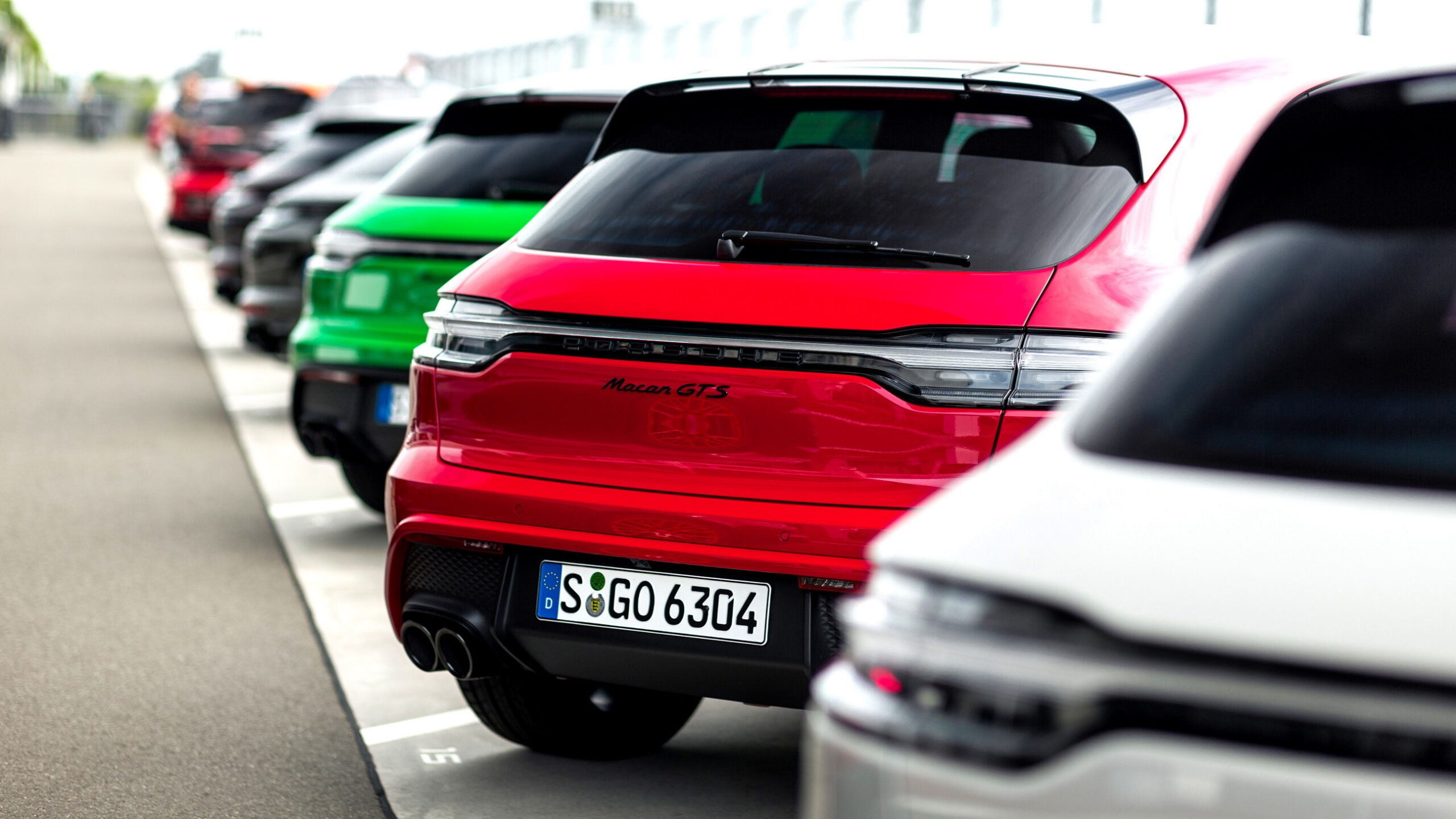
Despite the launch of its fully electric successor, Porsche is facing a stubborn reality in the American market: buyers still prefer the gasoline-powered Macan over the EV. In response, the automaker has quietly shifted production strategies, moving away from its traditional built-to-order model to build up a significant inventory of internal combustion engine (ICE) vehicles. This buffer aims to satisfy lingering demand until a new gas-burning SUV arrives later in the decade.
The Sales Discrepancy
The data highlights a clear preference for the legacy model. In the first quarter of 2026, the original Macan recorded 10,130 U.S. sales, outpacing the all-electric Macan, which sold 8,079 units.
This trend is notable because the electric version, launched in 2024 on the advanced PPE platform shared with the Audi Q6 e-tron, represents Porsche’s cutting-edge technology. Meanwhile, the gasoline model relies on an architecture dating back to 2013, kept relevant only through facelifts in 2019 and 2021. Yet, despite its age, the ICE model remains the stronger seller.
Why Production Must End
Porsche cannot sustain the gasoline Macan indefinitely. The decision to end production in the summer of 2026 is driven largely by regulatory pressures rather than lack of interest.
- Cybersecurity Regulations: The aging platform failed to meet new EU cybersecurity standards, effectively forcing the model out of the European market in spring 2024.
- Engineering Limits: Re-engineering a decade-old chassis to meet modern safety and connectivity benchmarks was deemed financially unviable.
Building a Buffer
To bridge the gap between the end of production and the arrival of a successor, Porsche is ramping up manufacturing at its Leipzig factory in Germany. According to reports from German magazine AMS, the plant is operating at full capacity rather than waiting for individual customer orders.
This strategic stockpile serves two purposes:
1. It ensures dealerships remain stocked with new gasoline Macans for regions like North America, potentially extending availability well into 2027.
2. It provides a smooth transition period while Porsche develops its next-generation internal combustion SUV.
A Shift in Strategy
Initially, Porsche planned for the Macan EV to serve as a direct, immediate replacement for the gasoline model. However, market feedback forced a rethink. The company now recognizes that electrification is not a simple switch but a gradual transition.
The warehouse of leftover inventory should be deep enough to keep showrooms stocked while Porsche works on what comes next.
Once the final unit rolls off the line this summer, the online configurator for the gas Macan will close. New buyers will no longer be able to customize a unit from scratch, but the existing stockpile ensures that demand will not go unmet in the interim.
Conclusion
Porsche’s decision to stockpile gasoline Macans underscores the complexity of the automotive transition to electric vehicles. While the industry moves forward, consumer preference for familiar, high-performance internal combustion engines remains strong, forcing manufacturers to adapt their rollout strategies to match real-world demand.