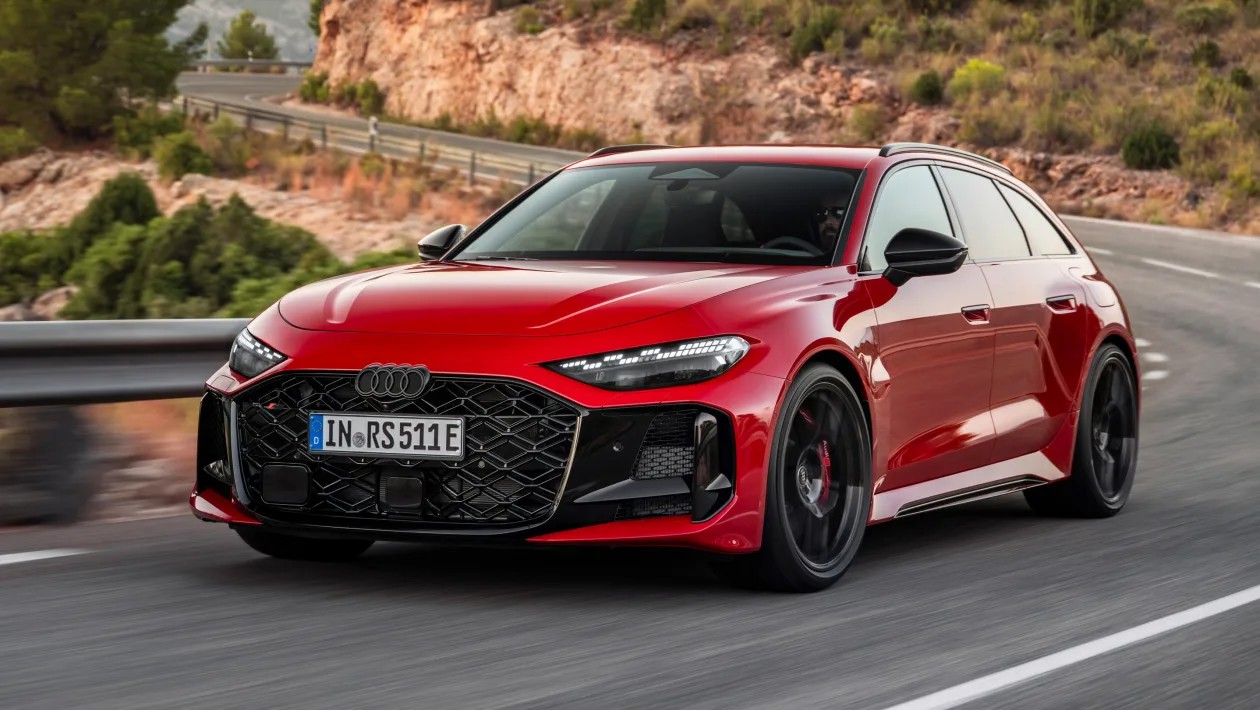
Audi has unveiled the next-generation RS 5, a high-performance car designed to compete with rivals from BMW and Mercedes-AMG. This model marks a significant shift for the RS line, introducing a plug-in hybrid powertrain to boost both efficiency and power. The RS 5 will launch in both saloon and Avant (estate) body styles, with UK deliveries starting in the coming months, priced from £90,220 and £92,120 respectively.
The Hybrid Powerhouse
At the heart of the new RS 5 is a heavily upgraded 2.9-litre twin-turbo V6 engine paired with a plug-in hybrid system. This setup includes an electric motor and a 25.9kWh battery pack, delivering a combined output of 630bhp and 825Nm of torque. The V6 itself produces 503bhp, with the electric motor adding an additional 174bhp and 460Nm.
This powertrain has been refined to meet strict Euro 7 emissions standards while exceeding the power output of its predecessor. Key improvements include twin-scroll turbochargers, a new fuel injection system, and water-to-air intercoolers. Power is delivered through an eight-speed automatic transmission to a new torque-splitting centre differential, capable of distributing power between 70:30 front-to-rear up to 15:85. An electric motor on the rear axle enables torque-vectoring and full rear differential lock.
Performance Figures and Chassis Upgrades
The RS 5 accelerates from 0-62mph in 3.6 seconds, a 0.5-second improvement over the previous RS 4 Avant, reaching a top speed of 176mph with the optional Audi Sport Package. The plug-in hybrid system also provides a 52-mile all-electric range and fuel efficiency between 62-74mpg, with CO2 emissions between 102-86g/km.
Audi has significantly reinforced the chassis, increasing overall width by 90mm and redesigning most exterior panels. The suspension features dual-valve dampers for enhanced control over ride and handling. While some high-end technologies like rear-axle steering or air springs were omitted, the RS 5 still boasts a kerb weight of 2,355kg for the saloon and 2,370kg for the estate.
Standard brakes include 420mm front and 400mm rear steel discs, with optional ceramic brakes measuring 440mm front and 420mm rear – matching the largest available in production cars like the Lamborghini Urus.
Styling and Interior Features
The RS 5’s aggressive styling includes a three-dimensional grille, flared wheel arches (standard with 20-inch wheels, optional 21-inch), and oversized rear diffusers with dual exhaust outlets. Forged carbon-fibre trim elements are available with the Audi Sport Package, along with unique front bumper inserts and wheels.
Inside, the RS 5 features Audi’s latest screen-focused design, sports seats, carbon-fibre trim, and new Audi Sport graphics. A “Boost” button on the steering wheel unlocks maximum power for 10 seconds, regardless of drive mode.
Competition and Market Position
The Audi RS 5 competes with models like the Mercedes-AMG C 63, BMW M3, and Alfa Romeo Giulia Quadrifoglio. However, the automotive landscape is shifting. BMW’s next M3 is expected to incorporate mild-hybrid technology, and Alfa Romeo may discontinue its Quadrifoglio variants due to emissions regulations.
Mercedes-AMG recently cancelled production of its four-cylinder C 63, replacing it with a less powerful six-cylinder model. Audi’s decision to retain the V6 engine with a plug-in hybrid system has proven more successful, echoing BMW’s approach with the M5. The RS 5 offers superior electric range and overall performance compared to competitors, positioning it as a strong contender in the high-performance segment.
The Audi RS 5’s combination of hybrid efficiency, potent V6 power, and aggressive styling sets it apart in a competitive market, offering a compelling alternative to rivals who have strayed from traditional high-performance formulas.