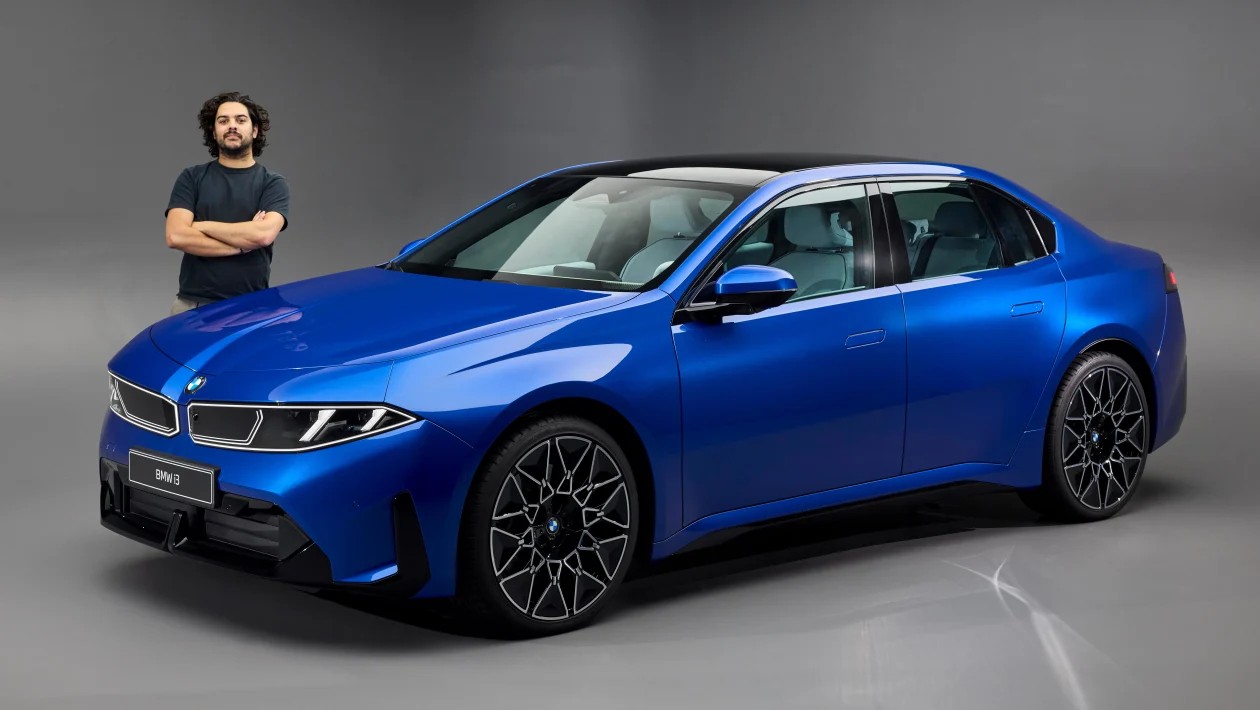
BMW has unveiled the all-new i3, its first fully electric 3 Series, marking a pivotal moment for the brand as it transitions toward a future dominated by electric vehicles. This model isn’t merely an update; it represents a fundamental shift in BMW’s approach to electric engineering, and will set the standard for the entire lineup moving forward.
The Next Generation: Neue Klasse and Beyond
The i3 is the second vehicle built on BMW’s groundbreaking “Neue Klasse” platform, following the iX3 SUV. While the original i3, with its carbon chassis, won’t be directly replaced, its spirit of innovation lives on. Electrifying the 3 Series – BMW’s core model – is a bold move, mirroring the challenge Porsche faces with electrifying the 911.
BMW’s confidence stems from the success of the iX3, which has already demonstrated the brand’s ability to deliver compelling electric performance. A conventional gasoline-powered 3 Series will also be released soon, sharing design cues with the i3 but built on a modified version of the current platform. However, the i3 is a fully independent BMW project – no joint ventures or reliance on external partnerships.
Unrivaled Range and Charging Capability
The i3 boasts a projected WLTP range of 559 miles, a figure that significantly surpasses competitors like the Tesla Model 3 (410 miles) and Polestar 2 (369 miles). It can also charge at up to 400kW, adding 248 miles of range in just 10 minutes – a game-changing capability that puts it leagues ahead of the competition. This is achieved through a 112kWh (gross) lithium-ion battery pack, employing BMW’s cylindrical cell design and cell-to-case mounting for maximum efficiency.
Performance and Power
The high-spec i3 50 xDrive M Sport model delivers 462bhp and 645Nm of torque from its dual electric motors. The architecture is designed from the ground up, unlike some adaptations of existing platforms. BMW calls this system the ‘Heart of Joy’, streamlining all the i3’s electronics into one tech-stack. This means the car’s powertrain, brakes, infotainment system, and autonomous driving features all work in harmony.
Design and Interior
The i3’s design is a departure from previous models, taking inspiration from the BMW i Vision Dee concept. The exterior is more streamlined and modern, with illuminated black grilles and flush door handles. Inside, the cabin features BMW’s Panoramic iDrive system, replacing the traditional dial pack with a full-width head-up display projected onto the base of the windscreen. A 17.9-inch angled touchscreen handles most functions, but key controls like climate and volume remain physical for ease of use.
Future Powertrain Options
BMW plans to expand the i3 lineup with additional powertrain configurations, including single-motor variants and smaller battery packs. A high-performance iM3 model is also in development, potentially boasting 1,000bhp with four electric motors, a unique battery pack, and features like drift mode.
Competitive Landscape
BMW has decisively outperformed competitors in key metrics. The Tesla Model 3, Polestar 2, and Mercedes-Benz C-Class all lag behind in range and charging speed. Chinese brands like BYD and Zeekr are also trailing, with Zeekr emerging as the only potential rival capable of challenging BMW’s dominance.
The i3 is expected to arrive in the UK in late 2026, with pricing estimated between £52,000 and £58,000 for the launch model. The i3 represents a significant leap forward in electric vehicle technology, setting a new benchmark for performance, range, and charging capability.