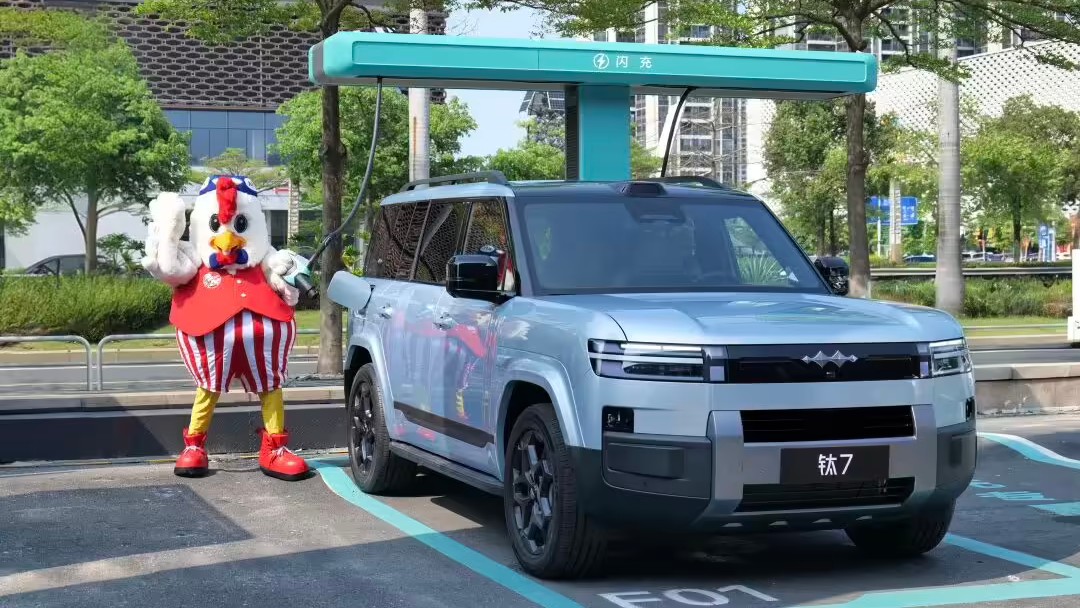
BYD and KFC China have entered into a strategic partnership aimed at merging electric vehicle (EV) infrastructure with the convenience of fast-food dining. The collaboration focuses on a “9-minute one-stop” experience, where drivers can recharge their batteries and order meals simultaneously, minimizing downtime during travel.
The “9-Minute” Synergy
The core of this partnership lies in the synchronization of two different types of “refueling.” BYD is leveraging its high-speed charging technology alongside KFC’s massive drive-thru network to create a seamless transition for drivers.
- Rapid Charging: Using BYD’s second-generation Blade Battery and flash-charging technology, vehicles can charge from 10% to 97% in approximately nine minutes.
- Dining Integration: This timeframe aligns almost perfectly with the time required to pick up a quick meal, allowing drivers to address both energy needs—for the car and the driver—in a single stop.
Smart In-Car Integration
The partnership is not just about physical infrastructure; it is about digital integration within the vehicle’s software. The rollout will begin with the Fang Cheng Bao Ti7 model, with plans to expand to other mainstream BYD models.
Key features of the smart driving experience include:
– Voice-Command Ordering: Drivers can select meals, process payments, and set pickup reservations using only voice commands, ensuring safety while driving.
– Route Synchronization: The vehicle’s system will communicate with the restaurant. As the car approaches the KFC location, the system triggers a pickup reminder, aiming for a “zero-wait” arrival and departure.
Scaling the Infrastructure
To support this vision, BYD is aggressively expanding its charging footprint. Li Yunfei, General Manager of BYD’s Brand and Public Relations Department, noted that the company has already deployed over 5,000 flash-charging stations across China.
The company has set an ambitious target to reach 20,000 stations by the end of 2026, aiming to make rapid charging a standard component of daily life for Chinese EV owners.
Why This Matters: The Context of the Chinese Market
This move is a calculated play to solve one of the most significant hurdles for EV adoption: range and charging anxiety. By attaching charging to a routine activity like eating, BYD is attempting to normalize the time spent at a charging station.
Furthermore, the choice of partner is strategic. While McDonald’s holds a larger global footprint, KFC is the dominant foreign fast-food player in China, boasting roughly twice as many locations as its competitor. This massive physical presence provides BYD with an ideal, ready-made network to deploy its charging technology and reach a vast number of consumers.
This partnership represents a shift from seeing charging as a chore to viewing it as a seamless part of a lifestyle ecosystem, blending mobility with daily consumer habits.
Conclusion
By integrating rapid-charging technology with KFC’s extensive drive-thru network, BYD is transforming the EV charging experience into a convenient, multi-tasking service. This move strengthens BYD’s infrastructure while addressing the practical time constraints of modern electric vehicle users.