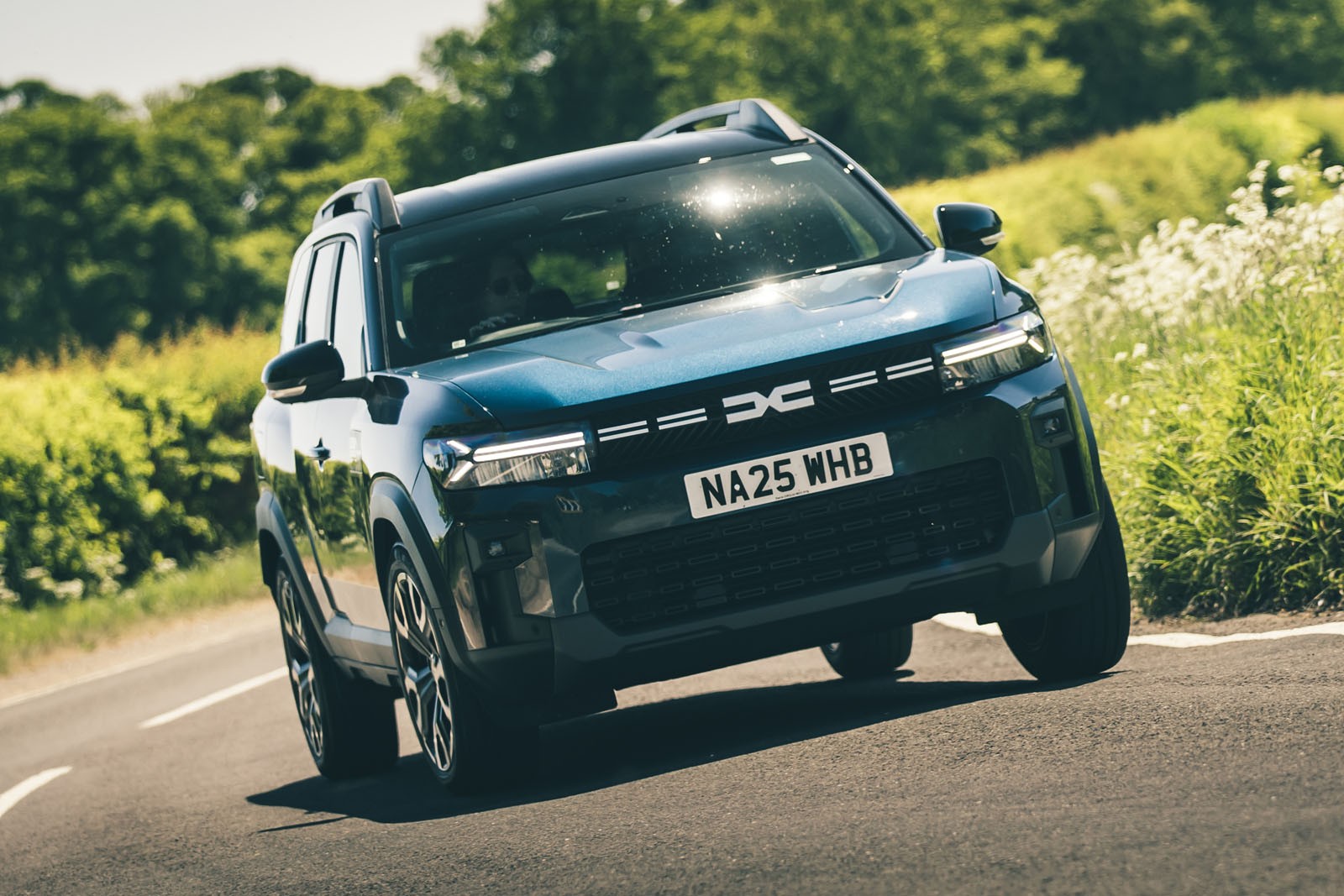
Dacia will not artificially restrict sales of petrol and hybrid vehicles to comply with the UK’s new zero-emission vehicle (ZEV) mandate, according to the brand’s vice-president for sales and marketing, Frank Marotte. The decision comes as automakers face significant financial penalties – up to £12,000 per internal combustion engine (ICE) car sold above a manufacturer’s EV quota.
The ZEV Mandate and Dacia’s Position
The UK’s ZEV mandate requires 33% of each major carmaker’s sales to be all-electric this year. For Dacia, which relies heavily on ICE models within the broader Renault Group, meeting this target presents a clear challenge. Marotte acknowledges a “trade-off” will exist between continuing high ICE sales and rapidly increasing EV volume.
While upcoming electric models – including a new city car based on the Renault Twingo alongside the existing Dacia Spring – will help, pressure remains to shift the brand’s sales mix toward EVs. Dacia has stated it will not reduce the availability of petrol cars, instead focusing on increasing EV sales to avoid penalties.
“We need to be compliant with the ZEV mandate, because the penalties are too high and we have no intention at Renault Group to pay penalties.” – Frank Marotte
Broader Market Pressures
The ZEV mandate isn’t the only factor influencing Dacia’s strategy. The rise of competitive Chinese brands and consolidation among established European automakers is putting “constraints” on the brand’s performance in the UK. Despite overall growth across Europe, Dacia’s UK market share fell from 1.61% in 2023 to 1.49% last year. This contrasts with the brand’s 0.1% gain in its overall European market share, totaling 697,408 sales.
The Sandero supermini remains Dacia’s top seller, and Europe’s most popular car, with 289,295 units sold in 2024. However, sales declined by 6.5%, attributed to contractions in key markets like France and Italy.
Implications for the Future
The UK’s ZEV mandate is seen as a precursor to similar regulations spreading across Europe. Dacia is prepared to accelerate EV development to meet these upcoming requirements, particularly in the short term. The brand is prioritizing compliance not just to avoid financial penalties, but because similar schemes are expected to be implemented elsewhere on the continent.
Dacia’s approach highlights the challenges automakers face as they transition to electrification under tightening regulatory pressure. The brand is betting on increased EV offerings, rather than artificial limitations on existing ICE models, to navigate the changing automotive landscape.