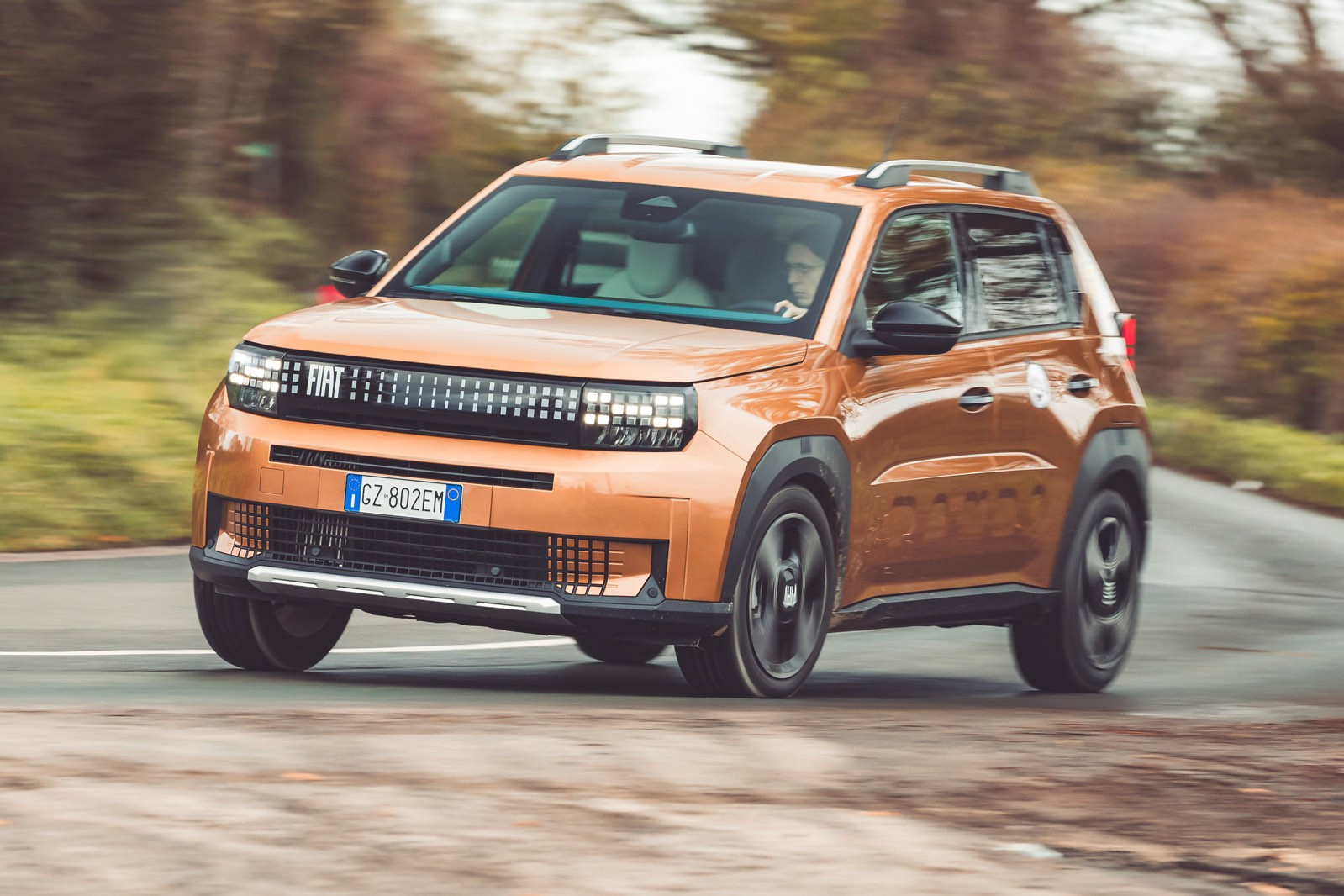
The Fiat Grande Panda has evolved. No longer a micro-car, it now occupies supermini territory in size – a shift that some enthusiasts may lament, as the original’s nimble compactness has been replaced by a more conventional footprint. However, this new iteration retains a playful spirit and introduces clever design details that set it apart.
Design & Details
The Grande Panda doesn’t take itself too seriously. Its interior is peppered with delightful touches: a bamboo glovebox (“bambox”), unique C-pillar trim displaying both the classic Fiat logo and modern branding, and the “PANDA” embossing on the tailgate. These elements reflect Fiat’s commitment to adding character to everyday driving.
The interior design also prioritizes sustainability, with recycled materials used extensively. For example, each model incorporates the equivalent of 140 recycled drink cartons in its Lapolen Ecotek plastic components.
Powertrain & Performance
The Grande Panda offers two powertrain options: a hybrid automatic and a pure petrol version with a manual gearbox. The tested hybrid combines a 1.2-litre engine with a 48V battery and a dual-clutch transmission, delivering 99bhp. While not as electrically potent as some rivals (like the Toyota Yaris), the hybrid provides a useful boost in urban traffic.
The petrol manual, expected to be cheaper, should offer a smooth experience based on its performance in other Stellantis vehicles. However, the hybrid’s powertrain quirks – including a lack of regenerative braking control and a limited drive mode selection (D and L only) – may frustrate drivers seeking more involvement.
Practicality & Space
Despite its relatively small exterior dimensions (under four meters), the Grande Panda offers a surprisingly spacious interior. The hybrid version boasts slightly more rear legroom than the EV model, while the boot capacity of 412 litres is 51 litres larger than its electric counterpart. Front seats provide reasonable thigh support, though some drivers may find the accelerator pedal placement awkward.
Value Proposition
The Grande Panda Hybrid starts at £18,995, making it competitively priced against rivals like the Skoda Fabia (which is £2,000 more expensive) and the Dacia Sandero (at £14,765). Fiat offers three trim levels – Pop, Icon, and La Prima – in seven vibrant exterior colors.
Fuel Economy
The tested Grande Panda Hybrid achieved an official fuel economy of 55.4mpg, though real-world testing yielded around 50mpg. This is average for a hybrid supermini, but the vehicle’s compact size and efficient powertrain contribute to reasonable running costs.
The Grande Panda represents a modern take on an iconic nameplate. Its playful design, practical interior, and competitive pricing make it a compelling option in the supermini segment.