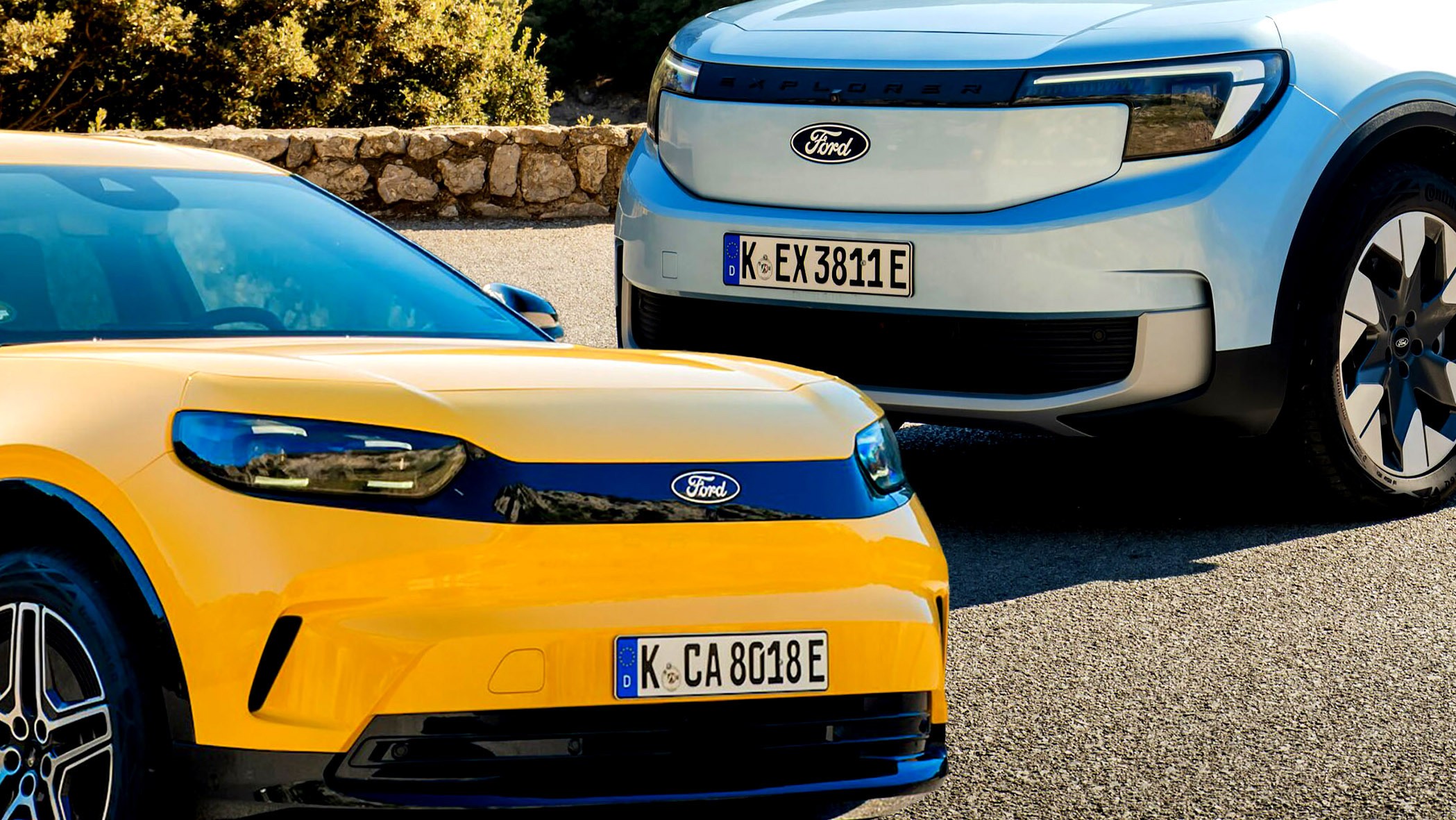
Ford has upgraded its European electric vehicles, the Explorer and Capri, with improved battery technology and increased power, yet demand continues to lag. The enhancements aim to address a critical issue: consumer reluctance to adopt these VW-based models despite significant investment in their production.
Performance Upgrades: A Step in the Right Direction
The 2026 Explorer and Capri Standard Range models now feature lithium iron phosphate (LFP) batteries, boosting range by up to 70 kilometers (52 miles) under WLTP testing. The Explorer now achieves 444 km (276 miles) on a single charge, while the Capri reaches 464 km (288 miles).
Additionally, the rear electric motor delivers 187 hp (140 kW / 190 PS) and 350 Nm (258 lb-ft) of torque—a noticeable increase from previous versions. This translates to a slightly faster 0-100 km/h (0-62 mph) time of 8 seconds, shaving 0.7 seconds off the older models.
These improvements come as Ford scales back shifts and lays off workers at its Cologne, Germany, EV factory due to sluggish sales. The upgrades are a direct response to market pressure, indicating the company’s willingness to adapt, but not necessarily guarantee success.
The Broader EV Landscape in Europe
Ford’s situation highlights a wider trend in the European EV market. Volkswagen is preparing to replace its ID.4 with the ID. Tiguan while phasing out the ID.5. Competition is fierce, with numerous rivals already established:
- Skoda Enyaq
- Renault Scenic E-Tech
- Nissan Ariya
- Kia EV6
- Hyundai Ioniq 5
- Peugeot E-3008
- Opel Grandland Electric
- Citroen e-C5 Aircross
- Jeep Compass Electric
- Tesla Model Y
This crowded market makes it difficult for any single EV to stand out, and Ford’s models are entering a battle for share against well-established players.
Pricing and Future Outlook
Pricing for the updated Explorer and Capri has not yet been announced, but the current models start at €39,900 ($47,600) and €42,400 ($50,700) in Germany, respectively. The question remains whether these incremental improvements will be enough to sway buyers in a competitive EV market.
While Ford’s upgrades demonstrate a commitment to improving its EV offerings, the core issue of low demand persists. The company must address fundamental market barriers—such as price sensitivity, charging infrastructure concerns, and consumer preferences—to achieve sustainable success in the European EV sector.