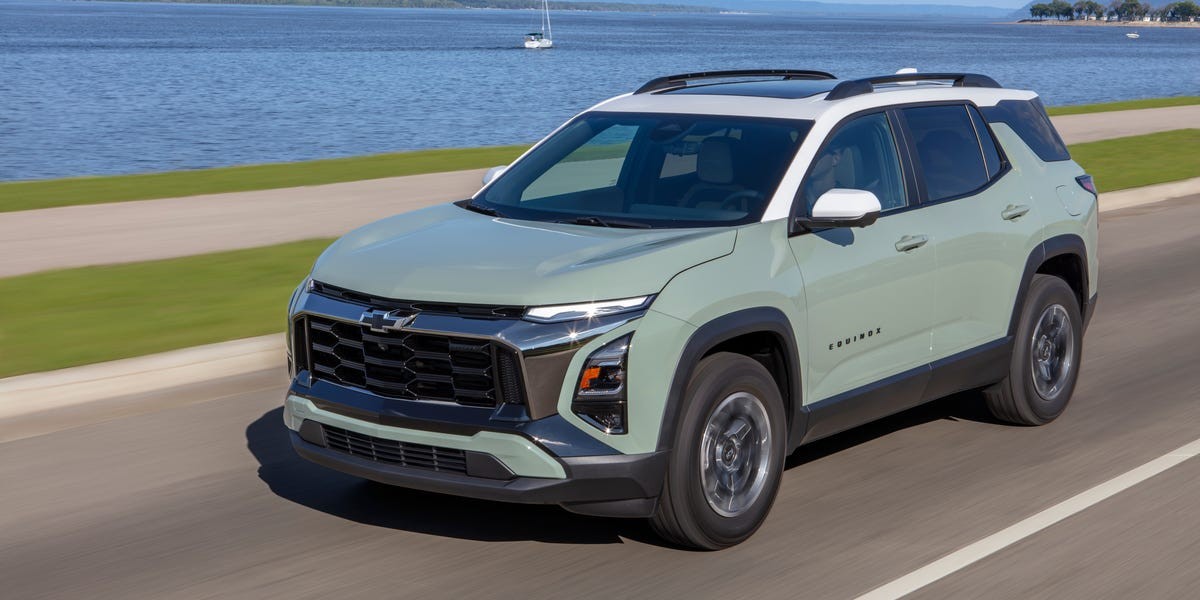
General Motors (GM) will discontinue the continuously variable transmission (CVT) in the 2027 Chevrolet Equinox, replacing it with a conventional eight-speed automatic. This change, confirmed in GM’s vehicle order guide, extends beyond the Equinox and will also affect the GMC Terrain.
The Transition Explained
Previously, front-wheel-drive Equinox models exclusively used a CVT, while all-wheel-drive versions came standard with the eight-speed automatic. Now, all 2027 Equinox trims will feature the eight-speed. The shift aligns with a $39 million investment in GM’s Toledo Propulsion Systems facility, as highlighted by Ohio Representative Elgin Rogers – an upgrade specifically designed to support increased production of this new transmission variant.
The change means buyers can expect a more familiar driving experience. CVTs, though efficient, often deliver a rubber-band-like feel that many drivers dislike. The eight-speed automatic provides distinct shift points, a sensation preferred by many.
Why Now? Industry Trends
GM isn’t alone in reassessing the CVT. Nissan recently swapped the CVT in its 2025 Murano for a nine-speed automatic, despite being one of the earliest champions of the technology. The Murano debuted in 2003 with a CVT, but even Nissan appears to be moving away from the gearless design.
The core issue? CVTs promised fuel efficiency and smooth acceleration with fewer moving parts. In practice, many models suffered from a distinctive, often unpleasant droning sound under hard acceleration, and the disconnected feeling of the engine staying at a constant RPM was jarring for drivers accustomed to traditional gearboxes.
Minor Updates to the 2027 Model
Beyond the transmission change, the 2027 Equinox will see a few cosmetic updates. The Cacti Green exterior color will be discontinued, replaced by Autumn Harvest Metallic. The RS trim will also swap Santorini Blue stitching for Torch Red. Otherwise, the vehicle is expected to remain largely unchanged from the current model.
The move away from CVTs is a clear response to consumer feedback and a broader industry reassessment of the technology’s drawbacks. The return to traditional automatics suggests that driver feel and perceived responsiveness are now prioritized alongside fuel efficiency.