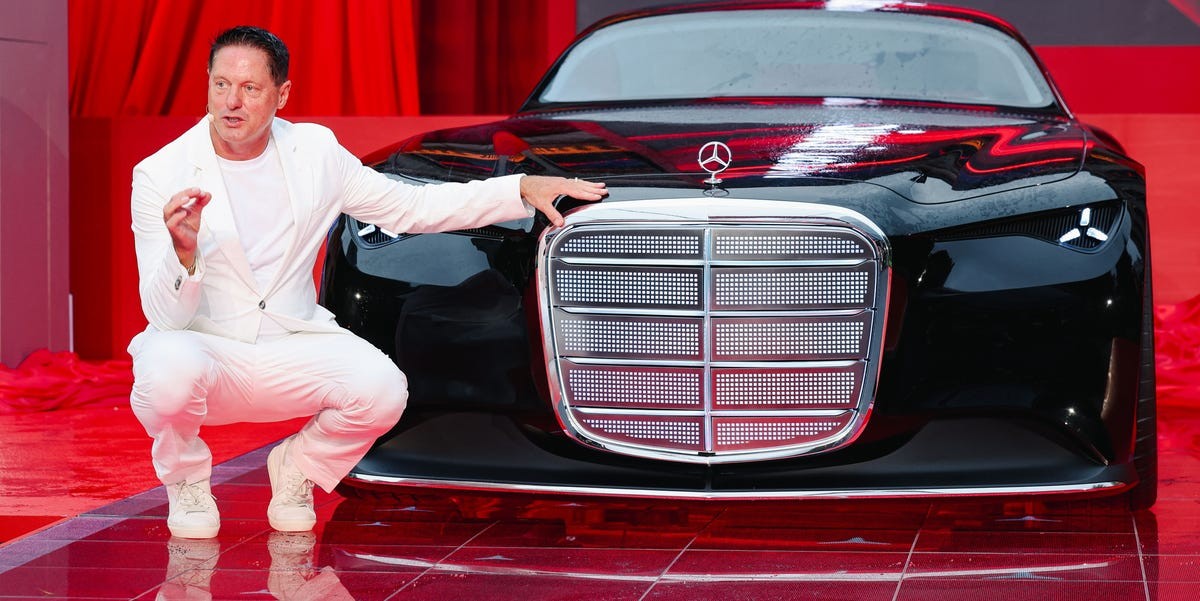
Mercedes-Benz design chief Gorden Wagener reflects on his career’s defining projects, from groundbreaking concept cars to the evolution of iconic models like the S-Class and G-Wagen. His comments reveal the internal battles, creative risks, and strategic shifts that shaped modern Mercedes design. Wagener also admits one project that didn’t quite hit the mark: the initial EQ electric vehicle line.
The McLaren Collaboration: A Rookie’s Breakthrough
Wagener recalls a pivotal early project: a concept car collaboration with McLaren for the 1999 Detroit auto show. Assigned as a junior designer, he won the internal competition, a testament to Mercedes’ willingness to empower young talent. The resulting car, inspired by Formula 1 and the Silver Arrow racers, remains striking today, defying expectations with its exaggerated yet timeless form. This early success underscored a key lesson: Mercedes valued bold experimentation even from newcomers.
Redefining the S-Class: Design Over Engineering
The S-Class, Mercedes’ flagship, holds immense significance for Wagener. He oversaw four generations, prioritizing design-led innovation over purely engineering-driven parameters. The redesigned coupe exemplifies this approach. Wagener pushed for a lower roofline, wider track, and more aggressive proportions, challenging convention to deliver a truly emotional and distinctive model. This decision cemented the S-Class coupe as a modern classic, spawning further variations like the Cabriolet and Maybach editions. The key takeaway: sometimes, breaking the rules yields the most iconic results.
The SLS AMG: Embracing Excess
The SLS AMG, with its signature gullwing doors, embodies Mercedes’ heritage of extreme proportions and fearless design. Initially, the design team pushed even further, exaggerating dimensions before refining them for production. The gullwing mechanism, a defining feature, represents a legacy only Mercedes could credibly execute. Wagener notes the importance of drawing inspiration from the past while avoiding mere imitation, extracting the essence of iconic designs instead.
The G-Wagen: A Delicate Evolution
The redesign of the G-Wagen presented a unique challenge: modernizing a 40-year-old icon without losing its brutalist charm. Wagener describes a lengthy process where internal debates raged over preserving the original’s stark aesthetic versus introducing contemporary refinements. CEO Dieter Zetsche famously questioned the direction, calling it “like a school bus.” Ultimately, the team found a balance: updating technology while retaining the G-Wagen’s unmistakable silhouette. The lesson: even subtle design changes can dramatically impact a legacy vehicle.
The EQ: A Purpose-Built Misstep
Wagener concedes that the initial EQ electric vehicle line stands out as a missed opportunity. Launched with the intention of creating a distinctly futuristic aesthetic, the EQ’s radical departure from traditional Mercedes proportions proved divisive. The design was driven by aerodynamics and a desire to signal a new era of electric mobility. However, Wagener now believes that prioritizing powertrain differentiation was a mistake. The future of Mercedes design, he argues, lies in unifying combustion and electric models under a single brand identity. The shift acknowledges that in luxury, brand recognition trumps technological distinction.
The Future: A Unified Vision
Wagener concludes that the industry is moving towards a more cohesive design language where powertrain no longer dictates aesthetics. Mercedes will embrace a unified brand identity, delivering the status and proportion customers expect, regardless of whether the car runs on gasoline or electricity. The EQ’s early radicalism now seems like an unnecessary detour. Ultimately, the brand—not the technology—is what sells a luxury vehicle.