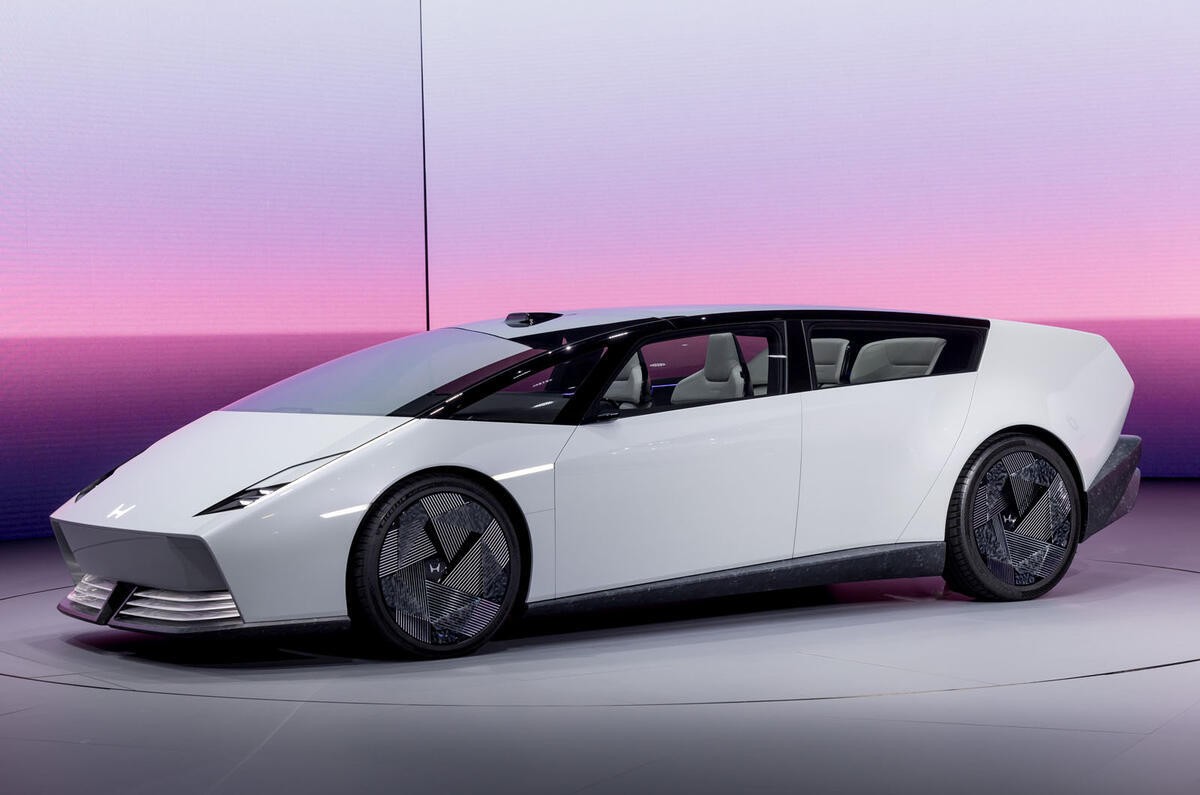
Honda has abruptly canceled its highly anticipated 0 Series electric vehicle program – including both a saloon and SUV model – just months before production was set to begin. The decision reflects a significant strategic U-turn, driven by deteriorating market conditions, financial pressures, and a rapidly evolving competitive landscape.
EV Demand Weakens, Policy Changes Impact Strategy
The Japanese automaker cited an “extremely challenging earnings situation” as the primary reason for scrapping the project, which included the US-market Acura RSX. This reversal comes as global demand for EVs slows, coupled with policy shifts in key markets like the United States.
Notably, the recent rollback of EV incentives by the Trump administration has created an “unfavorable impact” on Honda’s business plans. Prior to these changes, the company had aggressively pursued EV adoption in the US, but now anticipates further losses as a result of the policy reversal.
Competitive Pressure from China Intensifies
Beyond US policy, Honda also faces intense competition from Chinese EV manufacturers, who are proving more agile in responding to changing consumer preferences. The company acknowledges that consumer priorities are shifting from traditional hardware features (fuel efficiency, space) towards software-driven functionalities.
Chinese firms can “leverage their short product development cycles” to adapt quickly, a capability Honda currently lacks. This speed allows them to adjust to demand more efficiently, exacerbating the competition.
Financial Implications and Write-Downs
The cancellation will result in substantial financial write-downs. Honda projects losses of ¥340–570 billion (approximately £1.6–2.7 billion) in the current fiscal year, with further losses expected in 2026–27.
“Honda determined that starting production and sales of these three models in the current business environment where the demand for EVs is declining significantly would likely result in further losses over the long term.”
Broader Context: The Changing EV Landscape
This move highlights the growing volatility of the EV market. Several automakers are reassessing their electrification strategies as demand plateaus and production costs remain high.
Honda’s decision underscores the risks of committing to long-term EV projects without considering dynamic policy changes and cutthroat competition. The company initially planned seven 0 Series models, but now appears to be scaling back its ambitions in light of these challenges.
Ultimately, Honda’s decision is a stark reminder that the transition to electric vehicles is not guaranteed, and requires adaptability in the face of unpredictable economic and political realities.