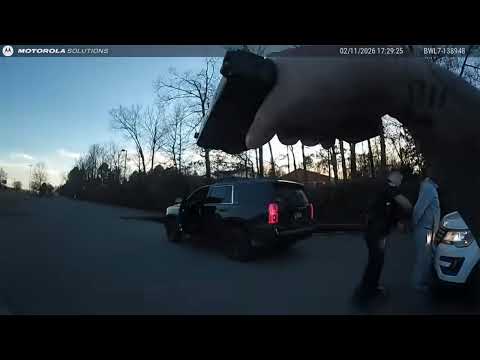
An Arkansas family was held at gunpoint by police last week after an automatic license plate reader (ALPR) misidentified their vehicle as stolen. The incident, documented in an official police report obtained by Carscoops, underscores the potential for error in automated law enforcement technology and raises questions about accountability when those errors occur.
The Stop and the Misread Plate
Sherwood Police Department Officer Kinkade initiated the stop after receiving an alert from a Flock Safety ALPR system indicating a stolen vehicle. The system flagged the vehicle as having the license plate Arkansas APX55Y, but the actual plate number was APX55X – a single-character difference. According to Officer Kinkade’s report, he initially confirmed the plate through the ALPR before pulling the family over.
Blaming the Equipment and the Vehicle Owner
The incident report reveals that Officer Kinkade not only acknowledged the ALPR system’s potential role in the error but also attributed the issue to a broken license plate frame on the vehicle. He stated that the frame likely obstructed the camera’s view, leading to the misread. This suggests a shifting of responsibility from the technology itself to external factors and the vehicle owner.
Escalation and Aftermath
The situation escalated with officers drawing their firearms on the family, including children present in the vehicle. While the stop did not result in physical violence, the incident highlights the dangers of relying on flawed technology in high-stakes law enforcement scenarios. To make matters worse, officers inadvertently drove off with the family’s keys before realizing their mistake and returning to retrieve them.
Implications and Concerns
This case demonstrates that ALPR systems, despite their growing prevalence, are not foolproof. Misreads can and do occur, and even well-intentioned officers can compound those errors by misinterpreting data or shifting blame. The incident raises broader questions about the accuracy of ALPR technology, the training of officers who rely on it, and the potential for wrongful stops and escalations based on automated errors.
As automated policing expands, incidents like this serve as a stark reminder of the human cost when technology fails. The focus must shift toward improving accuracy, accountability, and minimizing reliance on potentially flawed systems.