Despite a significant downturn in local sales and a shrinking dealership network, Jeep has officially moved to dispel rumors regarding its future in Australia. During the 60th Easter Jeep Safari in Moab, Utah, Matt Nyquist, Jeep’s Vice President of Global Product Planning, emphasized that right-hand drive (RHD) markets remain a strategic priority for the brand.
A Troubled Sales Trajectory
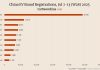
The reassurance from Jeep leadership comes at a critical time for the brand’s Australian operations. Once a dominant force in the local automotive landscape, Jeep has experienced a precipitous decline in volume:
- 2014 Peak: 30,408 deliveries
- 2024 Performance: 2,456 sales
- 2025 Projection: 1,682 sales (to date)
This contraction has also impacted the brand’s physical footprint, with the local dealership network having dwindled to approximately 44 retailers.
The decline is most visible in the disappearance of flagship models. The Jeep Grand Cherokee, which was once a market leader with over 16,000 annual sales in 2014, saw its numbers plummet to just 645 in 2024. In March 2025, Stellantis (Jeep’s parent company) made the “difficult decision” to pause sales of the Grand Cherokee in Australia, leaving the local lineup consisting only of the Avenger, Compass, Wrangler, and Gladiator.
Why the RHD Commitment Matters
In the automotive industry, manufacturing vehicles for right-hand drive markets is a massive undertaking. Mr. Nyquist noted that RHD production is “the hardest and most expensive part to put into play.”
Because of these high engineering and production costs, a brand’s decision to continue RHD development is a strong signal of its long-term intent. If a manufacturer stops investing in RHD versions of its models, it is often a precursor to exiting those markets entirely. By stating that Jeep intends to “protect” its key products for RHD, Nyquist is signaling that the brand is not planning an exit from Australia.
Finding Synergy in the Landscape
Despite the numbers, Jeep maintains that Australia remains a logical fit for its brand identity. Mr. Nyquist highlighted the “synergy” between Jeep’s capabilities and the Australian environment:
“You get a lot of environment, a lot of landscape that requires the 4×4… requires the capability.”
Beyond just selling vehicles, Jeep is also doubling down on its Mopar accessory strategy. The brand aims to encourage owners to customize their vehicles through “upfits,” a move designed to strengthen the lifestyle connection between the driver and the brand.
Looking Ahead: Future Products
To stem the sales slide, Jeep is pointing toward a refreshed product pipeline and strategic adjustments:
– Pricing: The brand has “repositioned” its pricing structures locally.
– New Models: The new Jeep Compass is expected to arrive in 2026.
– Electrification: The all-electric Jeep Recon is listed as being “on the horizon.”
Conclusion
While Jeep’s recent sales data paints a picture of a brand in retreat, the company’s decision to maintain expensive right-hand drive production suggests a long-term commitment to the Australian market. The brand’s survival will likely depend on whether its upcoming product launches can successfully reconnect with an audience that has moved away from its traditional heavyweights.