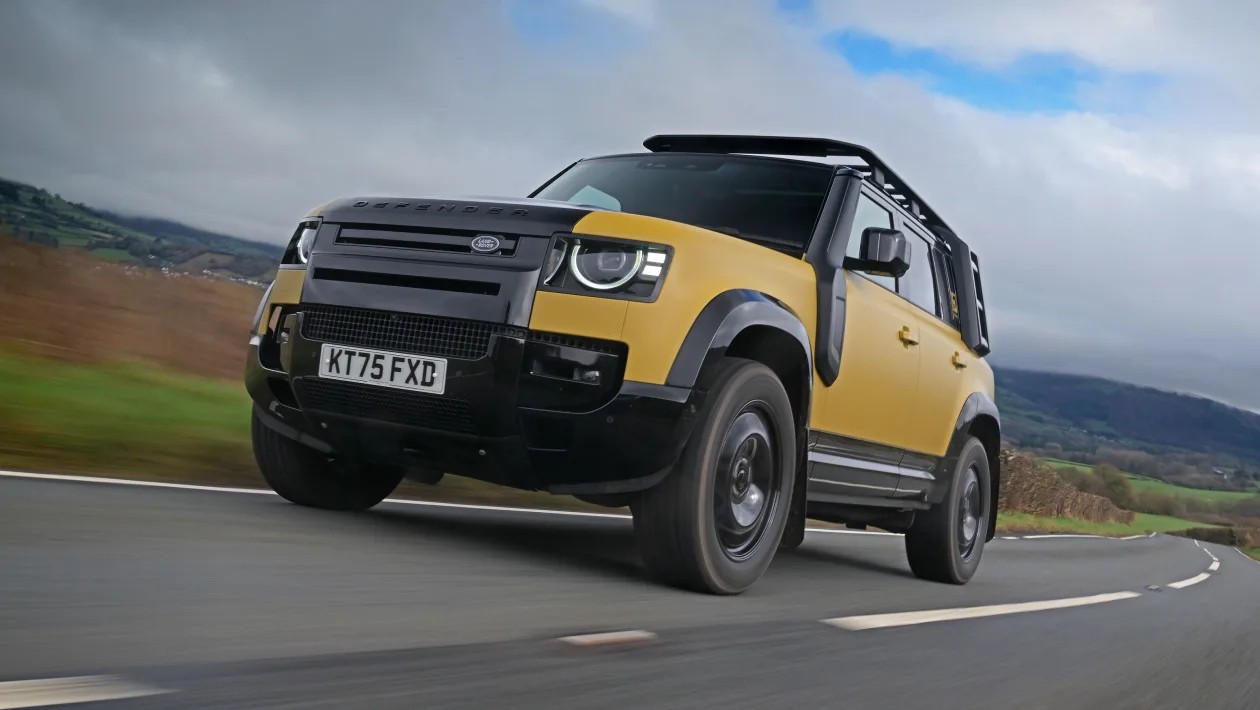
The Land Rover Defender remains a standout SUV, blending iconic design with contemporary capability. Recent updates have reinforced its desirability, offering a versatile range of models from practical family transport to high-performance off-roaders. Despite high prices and a complex configuration system, the Defender’s blend of rugged appeal and upscale comfort ensures it remains a sought-after 4×4.
Evolution of a Classic
The redesigned Defender, launched in 2020, marked a departure from its minimalist predecessor. While polarizing at first, sales figures confirm Land Rover’s strategic direction was correct; demand has remained strong, prompting further refinement over the years. The latest model year (2026) introduces subtle aesthetic and usability improvements, demonstrating the brand’s commitment to continuous evolution.
The exterior receives understated enhancements: a redesigned headlight signature, flush-fitting taillights, and expanded paint/wheel options. Inside, the updated 13.1-inch touchscreen and adaptive off-road cruise control elevate both comfort and functionality. New driver-attention sensors and accessory packs further personalize the Defender experience.
Versatility in Body Styles
The Defender is available in three configurations: the compact three-door 90, the versatile five-door 110, and the extended-length 130. The 110 and 130 variants come standard with air suspension, enhancing ride quality and off-road capability. Pricing begins at around £57,000, with the 110 starting at £63,000 and the 130 at £84,000. Commercial versions (90 Hard Top and 110 Hard Top) start just under £59,000, while the performance-focused Octa model boasts a staggering £150,000 price tag.
Performance and Driving Experience
The Defender’s refinement is a significant upgrade from its rustic origins. Engine options range from diesel mild-hybrids to a high-performance V8. Acceleration figures vary from 7.6 seconds (P300e) to 4.0 seconds (Octa), ensuring a responsive driving experience across all trims.
Urban driving is manageable with light steering, though its width can be challenging in tight city spaces. The diesel engines deliver strong performance, while the Octa model’s advanced air-suspension system rivals sports cars in cornering ability. Highway comfort is excellent, though off-road tires and roof racks can introduce noise at higher speeds.
Off-Road Prowess
Despite its on-road refinement, the Defender remains a formidable off-roader. Air suspension provides ample ground clearance, while locking differentials and low-range gears tackle challenging terrain with ease. Land Rover’s Terrain Response software adapts to various surfaces, and the new off-road adaptive cruise control and ClearSight visibility system enhance capability further.
Running Costs and Depreciation
The Defender’s ownership costs are high. Initial prices are premium, and fuel efficiency isn’t exceptional, with diesel models averaging around 33.8 mpg. The plug-in hybrid (P300e) offers improved economy but isn’t tax-efficient. Insurance groups are high, and the V8 Octa falls into the highest band.
However, the Defender retains strong residual values, with models holding between 53% and 68% of their original value after three years, outperforming many competitors.
Interior and Technology
The Defender’s cabin blends durability with modern technology. The large touchscreen, sturdy build quality, and user-friendly layout enhance comfort and usability. While not as overtly luxurious as Range Rover models, the Defender’s rugged aesthetic and exposed design elements (like visible screw heads) create a unique character. Materials are high-quality, ensuring long-term durability.
Conclusion: The Land Rover Defender successfully marries heritage with innovation. Despite its price and complexity, it remains a compelling choice for buyers seeking a versatile, capable, and stylish SUV that excels both on and off the road.