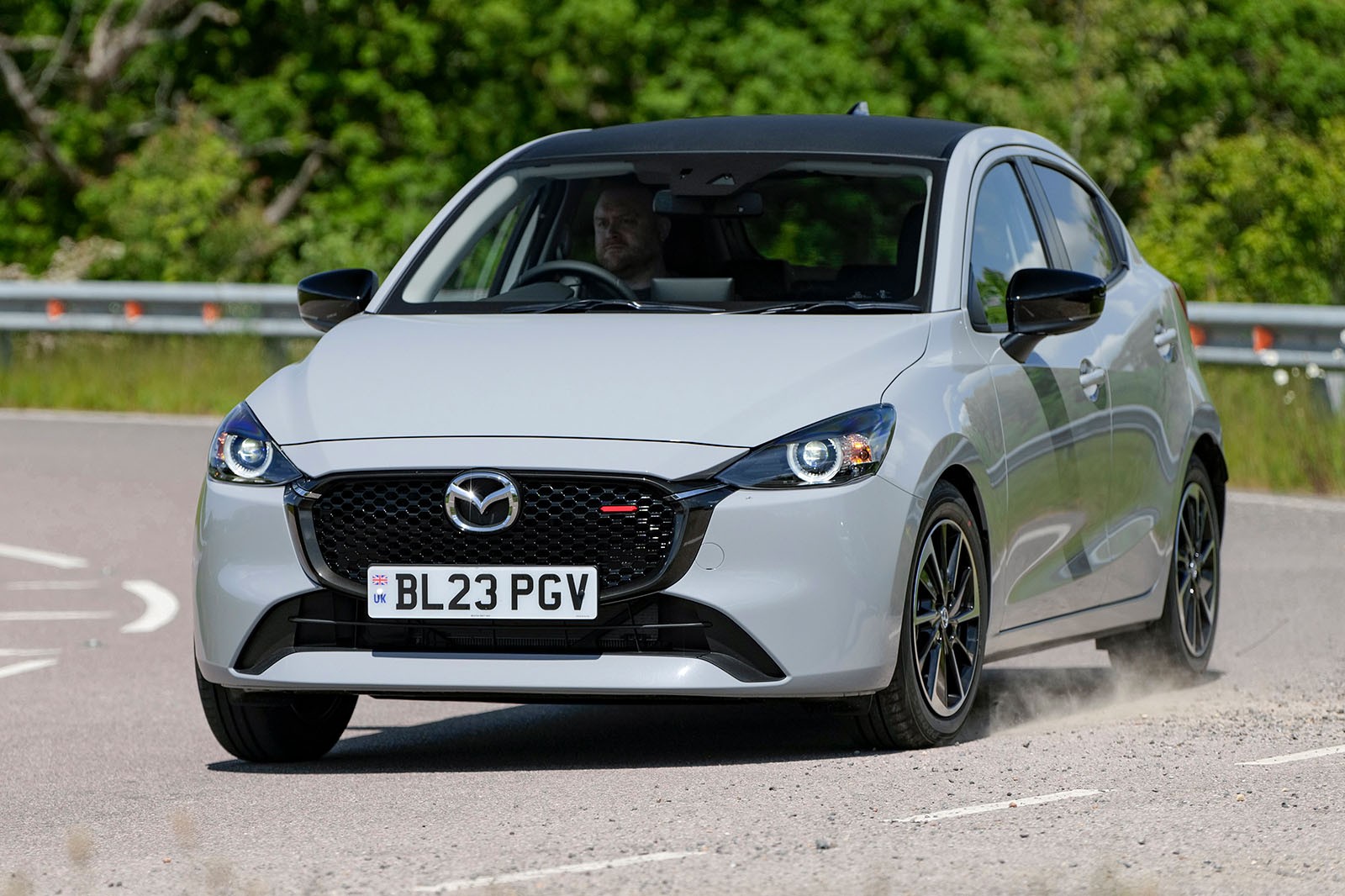
In an era where small cars are increasingly designed for maximum utility and digital distraction, the Mazda 2 (2023-2024) stands as a deliberate exception. While many of its competitors are moving toward larger, more practical footprints, Mazda has doubled down on a philosophy of driver engagement, structural rigidity, and sophisticated design.
Engineering and Dynamics: Substance Over Size
The Mazda 2 may not compete with rivals on sheer volume, but it excels in structural integrity. Built on the Skyactiv platform, the car features a significant increase in high-strength steel, making the chassis 22% stiffer and 7% lighter than its predecessor.
This structural foundation translates directly into how the car feels on the road. Mazda has moved away from the “monocab” look of previous generations, shifting the front axle forward and the A-pillars back to create a more balanced, athletic stance.
A Coherent Driving Experience
While many superminis suffer from “incongruent” handling—where the steering feels disconnected from the suspension—the Mazda 2 is remarkably consistent. Key technical adjustments include:
– Enhanced Steering: An increased castor angle at the front and a quicker steering ratio improve responsiveness.
– Refined Suspension: Despite using a standard torsion beam at the rear, Mazda has raised the mounting points to better manage impacts.
– Mechanical Precision: The manual gearbox is noted for its solid, slick, and well-defined shifts, paired with a progressive clutch and well-tuned brake pedal.
The Mazda 2 offers a level of dynamic consistency rarely seen in the supermini segment, behaving predictably and precisely in almost any corner.
The Interior: Design-Led Minimalism
The cabin is where Mazda’s background in premium design becomes most apparent. Eschewing the “tacky” or cluttered interiors common in this segment, the Mazda 2 opts for a space-conscious, horizontal architecture.
The dashboard is clean and uncluttered, featuring a periscoped instrument cluster and high-quality switchgear. While the rear seating and boot (280 liters) are modest compared to rivals like the Seat Ibiza or Volkswagen Polo, the interior quality feels a step above.
Technology and Ergonomics
The infotainment system follows Mazda’s “driver-first” philosophy:
– Tactile Control: A rotary dial and physical shortcut buttons allow for operation without looking away from the road.
– Safety-Centric Design: The touchscreen deactivates while the vehicle is in motion to prevent driver distraction.
– Connectivity: The system supports wireless Apple CarPlay and wired Android Auto, though the interface itself may feel slightly dated compared to modern smartphone-centric layouts.
Powertrain: The Charm of the Naturally Aspirated Engine
In a market dominated by small turbocharged engines, Mazda’s 1.5-litre Skyactiv-G feels almost exotic. Available in three outputs (74bhp, 89bhp, and 113bhp), the engine requires a different driving style than its turbocharged competitors.
To get the most out of the 113bhp variant, drivers must be willing to rev the engine. The power is most effective between 4,000 and 6,500 rpm, where the engine becomes “vociferous and sweet,” providing a zesty performance that feels much more spirited than the raw numbers suggest. The 89bhp and 113bhp models are also supported by 24V mild-hybrid systems to aid efficiency.
The Trade-Off: Character vs. Utility
Choosing a Mazda 2 involves making specific compromises. It is not the most practical choice for families or those needing massive cargo space, and its ride can feel “ragged” on broken urban asphalt. However, these are the costs of its primary strength: engagement.
| Feature | Mazda 2 Advantage | Rival Advantage |
|---|---|---|
| Driving Feel | High engagement & precision | Ease of use & isolation |
| Interior | Premium, minimalist design | Maximum space & utility |
| Engine | Linear, rev-happy character | Low-end torque from turbos |
Conclusion
The Mazda 2 is a “hidden gem” for drivers who prioritize the joy of the journey over the sheer volume of the cargo. While it lacks the massive dimensions of its European rivals, it compensates with a level of chassis coherence and interior sophistication that makes it a unique, high-quality outlier in the supermini market.