Finding an affordable car isn’t just about the sticker price. True cost-effectiveness means considering long-term expenses like fuel, insurance, maintenance, depreciation, and road tax. This article breaks down the top 10 cheapest cars to run in 2025, based on a Total Cost of Ownership (TCO) analysis.
Why Total Cost of Ownership Matters
TCO is a crucial metric often overlooked by buyers focused solely on upfront costs. Ignoring it can lead to unexpected financial burdens down the road. Predicting TCO accurately requires expert data and algorithms, which is why we partnered with CAP HPI, a leading automotive data firm, to compile this ranking. Their depreciation predictions are widely used by manufacturers for financing costs.
The Top 10 Cheapest Cars to Run
The following table ranks cars based on their TCO, showing per-mile, monthly, and total costs over 36 months/30,000 miles:
| Rank | Make/Model | Pence per Mile | Monthly | Total Cost (36 Months/30k Miles) |
|---|---|---|---|---|
| 1 | Citroen Ami | 22.17p | £184.72 | £6,649.88 |
| 2 | Dacia Spring | 37.56p | £313.00 | £11,267.88 |
| 3 | Leapmotor T03 | 40.16p | £334.66 | £12,047.75 |
| 4 | Renault 5 | 41.70p | £347.51 | £12,510.24 |
| 5 | Dacia Sandero | 41.74p | £347.87 | £12,523.42 |
| 6 | Kia Picanto | 42.92p | £357.63 | £12,874.59 |
| 7 | Dacia Jogger | 43.69p | £364.97 | £13,107.97 |
| 8 | Citroen e-C3 | 43.80p | £364.97 | £13,139.09 |
| 9 | Hyundai i10 | 43.86p | £365.48 | £13,157.45 |
| 10 | Fiat Grande Panda | 44.19p | £368.28 | £13,257.93 |
Electric Cars Dominate the Rankings
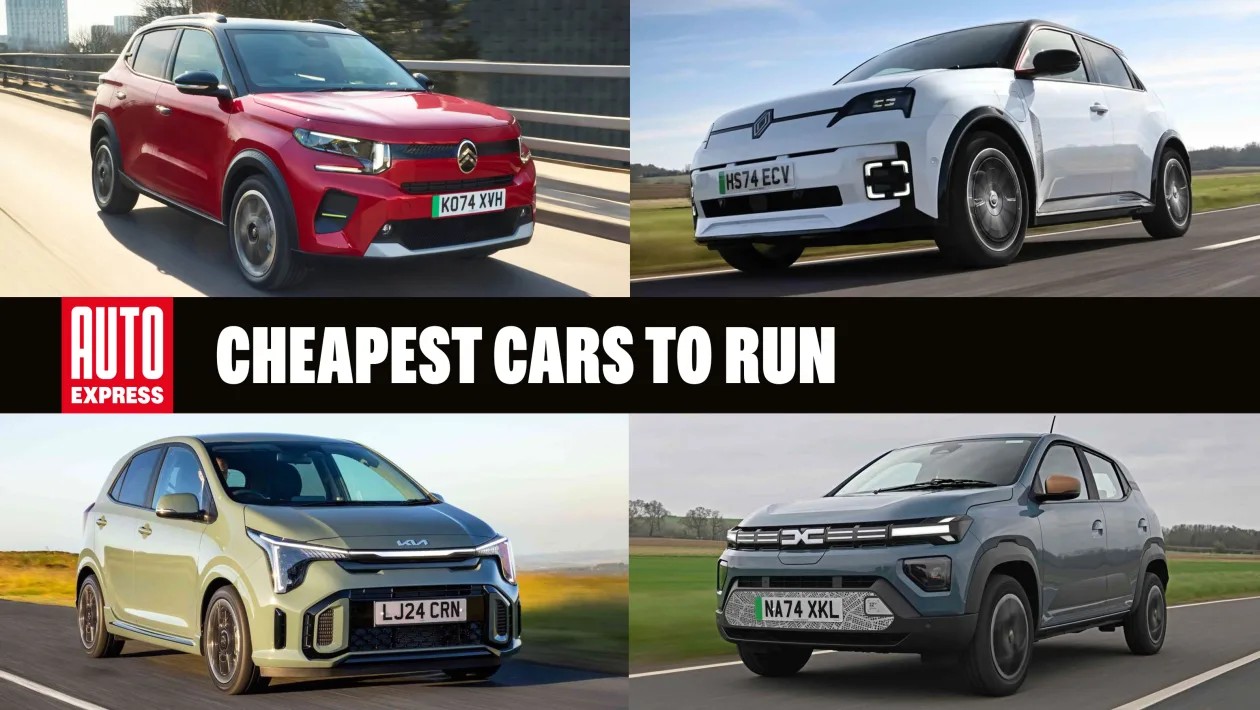
Electric vehicles (EVs) are increasingly the most cost-effective option, occupying the top four spots. The Citroen Ami leads the list, but its limited speed (28 mph) and range make it unsuitable for many drivers. The rankings show a 50/50 split between EVs and petrol cars in the top ten.
1. Citroen Ami: The Ultra-Budget Choice
The Ami is technically a quadricycle, not a car, and can run for as little as 22.17p per mile. However, its compromises – limited speed, comfort, and range (just over 46 miles) – make it ideal only for short urban trips.
2. Dacia Spring: The Affordable EV Alternative
The Dacia Spring is a more practical EV option, starting at £15,995. Its TCO is the second-lowest, making it an appealing choice for daily commuting. The 70bhp model offers improved performance over the base 45bhp version.
3. Leapmotor T03: The Rising Chinese Contender
Backed by Stellantis, Leapmotor’s T03 is a surprisingly affordable EV. It offers a decent 165-mile range, sprightly performance, and a four-year warranty, making it a strong contender in the budget EV segment.
4. Renault 5: Retro Charm with Modern Efficiency
The Renault 5 combines retro styling with modern EV technology. The Urban Range model offers a TCO under £4,200 over 10,000 miles, making it a compelling choice for city drivers.
5. Dacia Sandero: The Cheapest Non-Electric Option
The Dacia Sandero remains the most affordable non-electric car. Its improved refinement and generous standard equipment make it an excellent value proposition, especially considering its low running costs.
The Unexpected Challenger: Dacia Jogger
The Dacia Jogger stands out as the only MPV in the top ten. Despite being a family-sized vehicle, it achieves a competitive TCO of 43.69p per mile, proving that affordability doesn’t necessarily mean sacrificing space.
Conclusion
The cheapest cars to run in 2025 are largely EVs, though budget petrol options like the Dacia Sandero and Jogger remain competitive. Choosing the right vehicle requires considering individual needs and driving habits. By focusing on TCO rather than just initial costs, buyers can ensure long-term financial savings and maximize value.