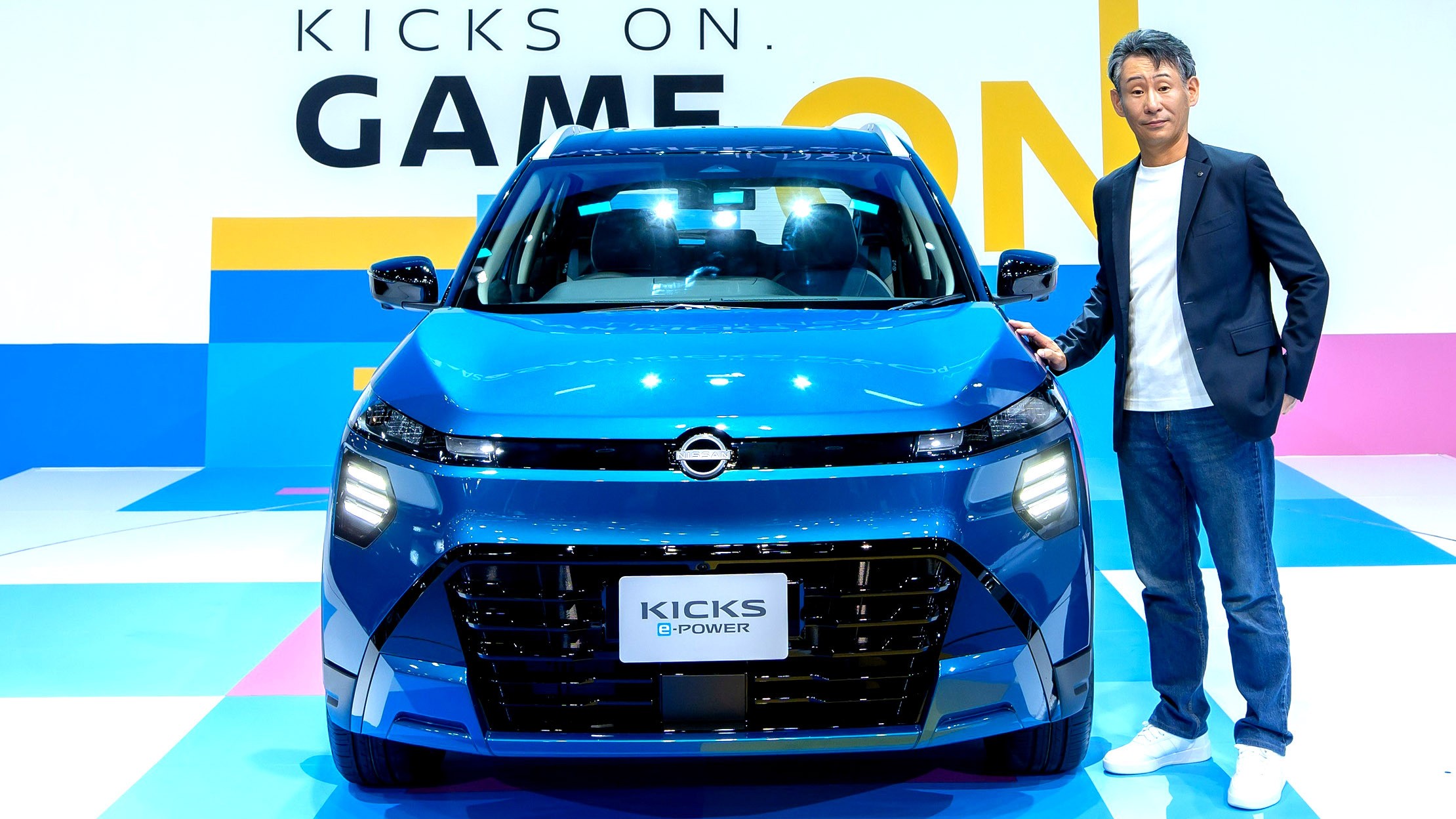
Nissan has reintroduced an updated version of its original Kicks subcompact SUV in Thailand, blending a familiar chassis with modern technology. The new model, closely related to the South American “Kait” variant, features refreshed styling and a unique hybrid powertrain designed to mimic the driving experience of an electric vehicle without requiring external charging.
Updated Design on a Familiar Platform
The revamped Kicks retains the original 2016 platform but boasts a significantly altered front fascia. The traditional V-motion grille has been replaced with a more contemporary lower bumper intake and split LED headlights, giving the vehicle a bolder appearance. The side profile remains largely unchanged, although new wheel designs and redesigned skid plates have been incorporated. At the rear, slimmer taillights and a cleaner tailgate complete the visual overhaul.
Interior Upgrades
Inside, the most prominent upgrade is a larger 12.3-inch infotainment touchscreen paired with a 7-inch digital instrument cluster. The dashboard materials have been updated, and the air vents redesigned for a more modern look. Available upholstery options include Moonstone and Black/Dark Gray. Additional features include a six-way power-adjustable driver’s seat, wireless charging, an intelligent rearview mirror, and Nissan’s ProPILOT suite of advanced driver-assistance systems (ADAS).
Hybrid-Only Powertrain
The Thai-spec Kicks exclusively offers Nissan’s e-Power hybrid system. This setup utilizes a 1.2-liter three-cylinder engine to generate electricity for a 2.06 kWh lithium-ion battery, which then powers an electric motor driving the front wheels. The total output remains at 134 hp (100 kW / 136 PS) and 280 Nm (207 lb-ft) of torque, providing an EV-like driving experience without the need for plug-in charging.
This approach allows Nissan to offer a compelling hybrid option in markets where full EV infrastructure is still developing. The strategy sidesteps range anxiety while still delivering fuel efficiency and a responsive driving feel.
The decision to build on an older platform rather than adopting the latest generation highlights Nissan’s pragmatic approach to market-specific vehicle development. The Kicks e-Power offers a balanced combination of affordability, updated features, and a unique powertrain solution tailored for regions where EV adoption is slower.