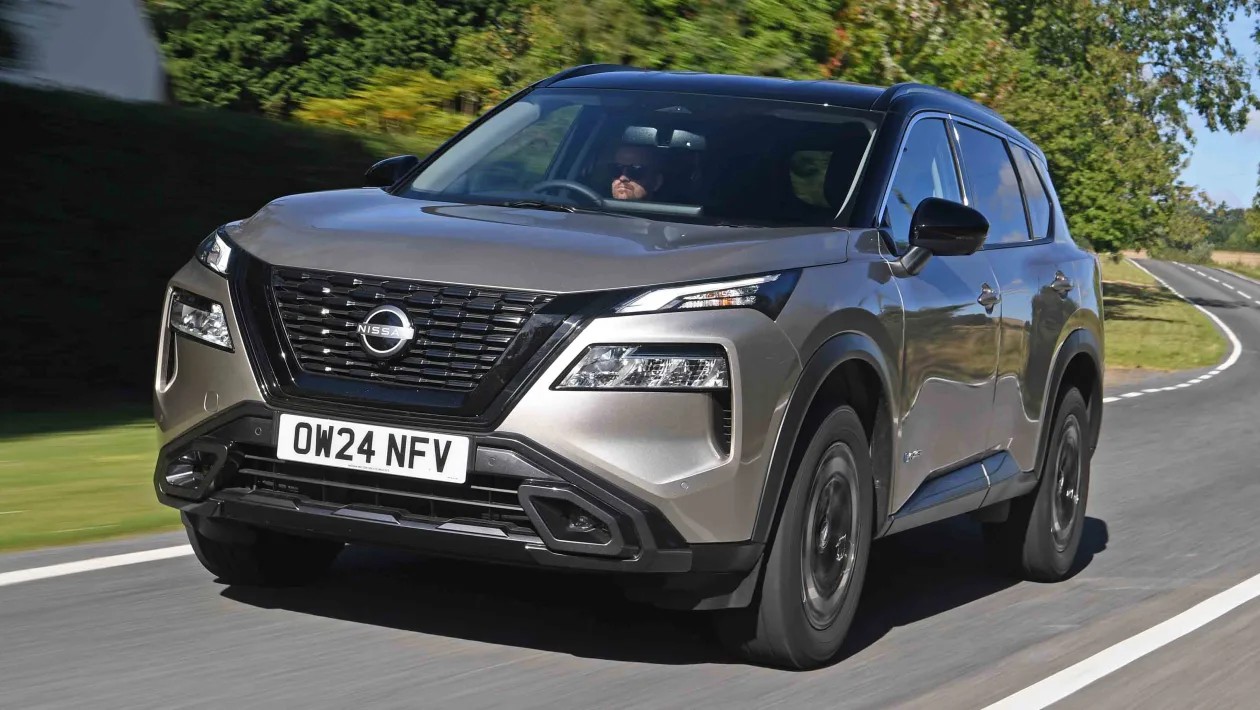
The Nissan X-Trail has undergone significant improvements, now offering more space, higher cabin quality, and expanded safety features, making it a strong contender for family car buyers. However, the real-world efficiency of Nissan’s e-Power hybrid system lags behind traditional alternatives, raising questions about its cost-effectiveness despite smooth operation.
Evolution of a Family SUV
Over two decades, the X-Trail has matured from a utilitarian vehicle into a more refined competitor in the crowded large SUV market. Nissan’s decision to avoid conventional hybrid or plug-in setups in favor of its e-Power range extender is unusual. This system uses the engine as a generator for an electric motor, aiming for smoother transitions between power sources. However, this approach results in compromised fuel economy compared to rivals.
Performance and Driving Experience
The X-Trail isn’t designed for spirited driving but performs adequately. The e-Power variants are particularly easy to drive, with brisk acceleration and seamless power transitions. However, the electric motors can be noisy, especially at low speeds, and steering feedback is minimal. The all-wheel-drive e-4ORCE system responds quickly for added traction in adverse conditions.
Key Performance Specs:
- 0-62 mph: 7.0-8.0 seconds (depending on model)
- Top Speed: 105-111 mph (depending on model)
Running Costs and Efficiency
The e-Power model achieves up to 49.6 mpg, but real-world tests show lower figures. Compared to the Kia Sorento Hybrid, the X-Trail offers marginally better efficiency in urban environments, yet it falls short in longer journeys. Diesel alternatives (like the Skoda Kodiaq) remain more economical for high-mileage drivers. Insurance costs are moderate, but higher trim levels incur luxury car tax. Depreciation is average, with the X-Trail retaining 43-47% of its value after three years, trailing competitors like the Kia Sorento.
Interior and Technology
The X-Trail’s interior prioritizes usability over extravagance. Physical controls are abundant, offering straightforward operation. Higher trims feature a power tailgate, quilted leather, and a Bose audio system. The infotainment system includes touchscreen options up to 12.3 inches, though responsiveness can be sluggish. Nissan plans a Google-based system update in 2026, which could address current shortcomings.
Pricing and Availability
The Nissan X-Trail starts around £36,500, with prices increasing to £44,500 for top-end models. Seven-seat configurations add an extra £1,000. Used models are available, with prices ranging from £12,994 for older diesel versions to £23,670 for newer petrol models.
The Nissan X-Trail is a solid family SUV with practical improvements but falls short in fuel efficiency compared to competitors. Its unique e-Power system offers smooth operation but at the cost of real-world economy.