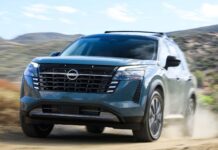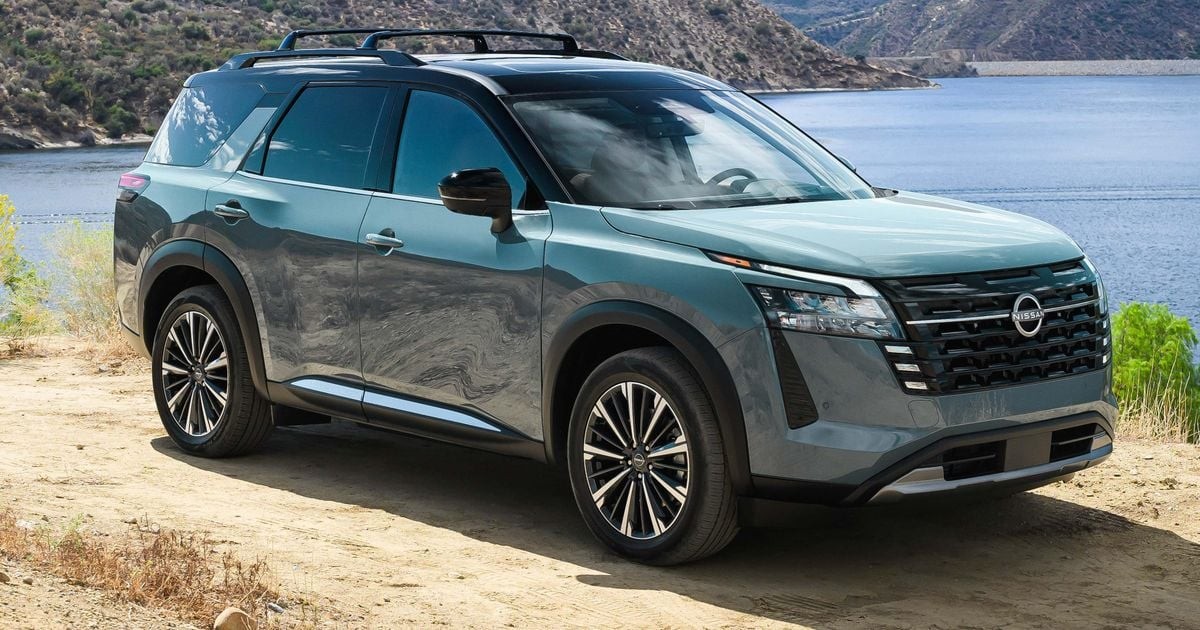
Nissan is preparing to split its Pathfinder lineup, offering a traditional, car-based model alongside a new, more robust body-on-frame SUV. This move is driven by market demand and the need to compete effectively in both on-road comfort and off-road capability.
Dual Approach: Existing vs. New Pathfinder
The current fifth-generation Pathfinder, introduced in 2021, will continue with updates expected around 2028 or 2029 focused on refining ride quality and handling. This version will remain exclusively combustion-powered, a shift away from hybrid options previously available.
However, Nissan is also developing a separate, body-on-frame Pathfinder – potentially marketed as the “Pathfinder Pro-4X” – slated for release as early as mid-2029. This rugged iteration will share a new ladder-frame platform with other Nissan and Infiniti models, including a resurrected Xterra and a new Frontier pickup truck.
Strategic Platform Sharing
Nissan aims for 70% parts commonality across the five vehicles built on this new platform, maximizing efficiency and reducing development costs. The Pro-4X will initially launch with a gasoline engine, with a hybrid powertrain planned for later in its lifecycle. Expect a boxier design and increased towing capacity to differentiate it from the existing Pathfinder.
Market Context and Competition
Nissan isn’t alone in offering both unibody and body-on-frame SUVs. Toyota, for example, sells the Kluger (unibody) and Prado (body-on-frame) in Australia, and the Highlander/Grand Highlander alongside the 4Runner/LandCruiser in the US.
Internal data suggests that over half of potential buyers may cross-shop between the two Pathfinder models. The existing Pathfinder saw a sales peak in 2025, surpassing 100,000 units in the US and outselling the Toyota Highlander. However, sales in Australia remain significantly lower, with just 732 units sold in 2023 compared to over 8,000 Toyota Klugers.
Aging Platforms and Future Outlook
The current Pathfinder uses a platform dating back to 2000, though it has received updates over the years. Nissan also employs similarly aged platforms for other models, such as the Z sports car.
Nissan’s decision reflects a broader trend in the industry: automakers are increasingly recognizing the need to cater to diverse consumer preferences, offering both comfortable, road-focused SUVs and more capable, off-road-oriented alternatives. The split Pathfinder lineup is a direct response to these demands.
The company remains flexible on how long it will keep the unibody Pathfinder in production, indicating a willingness to adapt to market changes.