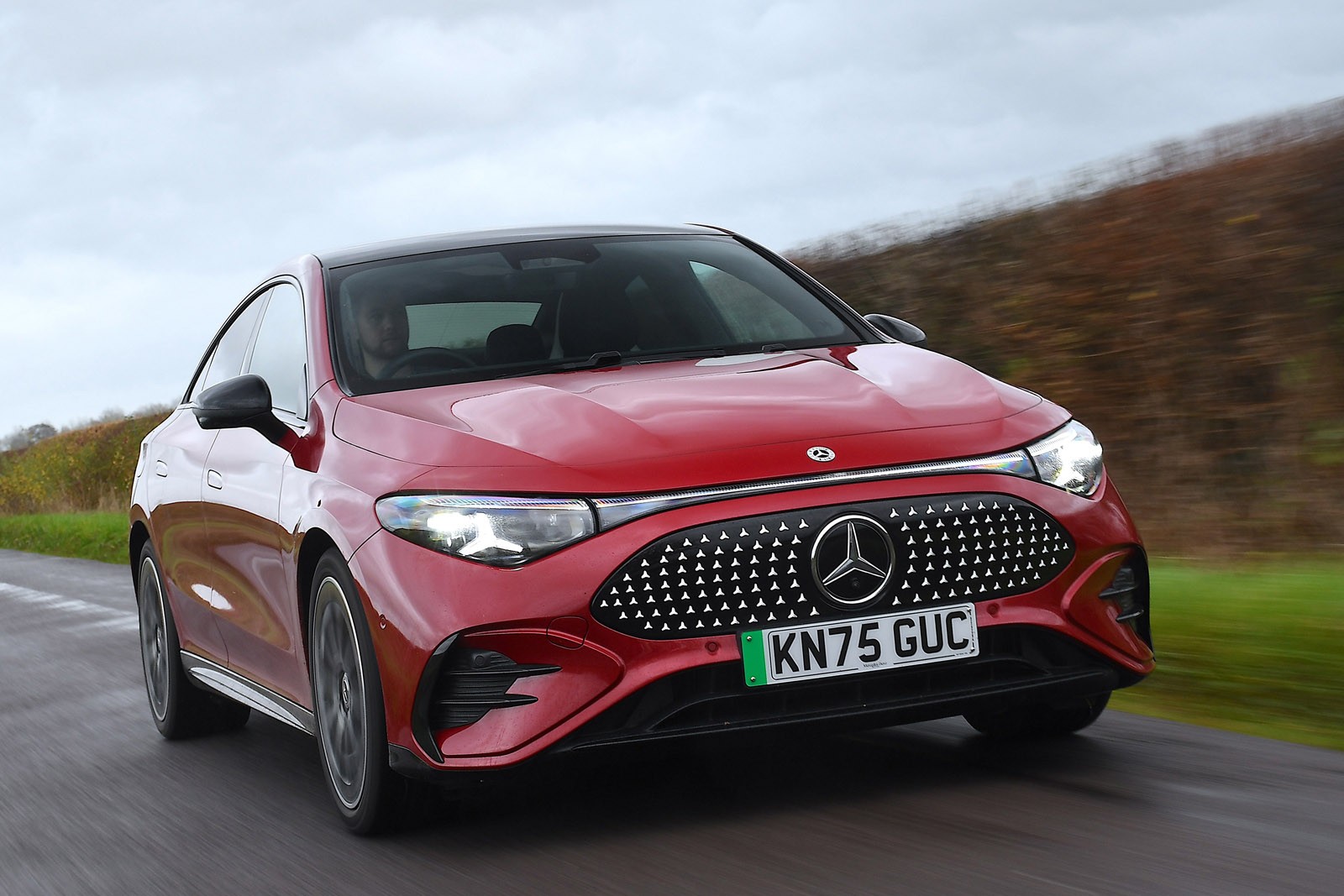
Mercedes-Benz is shifting its electric strategy. Unlike the dedicated “EQ” models—which often felt like entirely separate, isolated electric entities—the new CLA is built on the Mercedes Modular Architecture (MMA). This platform is designed for versatility, supporting both pure electric powertrains and 48V hybrids. By moving away from the polarizing, ultra-aerodynamic shapes of the EQS and EQE, Mercedes has opted for a more conventional, premium look that balances efficiency with traditional aesthetics.
Design and Aerodynamics: Efficiency Through Form
While the CLA looks more “normal” than its siblings, it is a masterclass in aerodynamic engineering. To maximize electric range, Mercedes has focused heavily on reducing drag:
– Aerodynamic Optimization: The most efficient version achieves a remarkably low drag coefficient (Cd ) of 0.21, thanks to 17-inch wheels and flush door handles.
– Streamlined Details: The front “grille” is sealed on EV models, and even the suspension components are covered to prevent airflow disruption.
– The Trade-off: To achieve this sleekness, some practical elements suffer. The Shooting Brake version has a smaller boot (455 liters) than its predecessor, and the interior packaging remains tight.
Interior and Technology: High-Tech but Tactilely Questionable
The cabin is where the CLA’s “techno-premium” identity is most evident. It is a space defined by screens and software, though it struggles to maintain the “old-world” luxury Mercedes is known for.
The Digital Experience
The MBUX Superscreen is the centerpiece, featuring a massive array of displays, including a 14-inch screen dedicated to the passenger. While the tech is impressive—boasting Google-powered navigation that even warns of potholes—it raises concerns regarding driver distraction, as the passenger can play games or stream media in full view of the driver.
The Luxury Gap
Despite the high-tech feel, the material quality feels inconsistent. The heavy use of glossy plastics and “shiny” moldings can feel somewhat “chintzy” compared to competitors who favor more tactile, expensive-feeling surfaces. Furthermore, Mercedes has continued its aggressive move toward screen-only controls, removing physical buttons for essential functions like heated seats and lumbar support. While the AI-assisted voice control is industry-leading, the lack of physical switches remains a point of friction.
Driving Dynamics: Refinement Over Raw Power
The CLA is not trying to be a supercar, but it excels at being a sophisticated cruiser.
- The 250+ Model: With 268bhp, it offers respectable performance. Interestingly, the car maintains its acceleration even when the battery is low (below 10%), which is a significant win for real-world usability.
- The 350 4Matic: This twin-motor variant offers a more “premium” driving feel. While adding a second motor usually kills electric range, Mercedes has managed to limit the impact to just 15–20 miles, making it a highly practical performance upgrade.
- Drivability: The car is exceptionally easy to drive. The absence of paddle shifters is compensated for by a highly intuitive drive selector that allows for everything from “one-pedal” driving to a relaxed “freewheeling” mode.
Critical Note on Safety: While the driving experience is smooth, testing revealed a concerning flaw: wet braking performance. The CLA required significantly longer distances to stop in the wet compared to rivals like the Kia EV3. This suggests that the high-efficiency tires chosen by Mercedes may compromise safety in adverse conditions.
Value and Competition
At a starting price of £45,615, the CLA sits in a competitive bracket.
| Feature | Mercedes CLA | Tesla Model 3 |
|---|---|---|
| Primary Strength | Refined driving & tech integration | Efficiency & Value |
| Interior Feel | High-tech, “Techno-Premium” | Minimalist, functional |
| Standard Gear | Premium features, but less “bang for buck” | Highly competitive pricing/specs |
While the CLA is a more “mature” and comfortable vehicle, the Tesla Model 3 remains a formidable opponent, matching the Mercedes in efficiency and offering more features for a lower price point.
Conclusion
The new Mercedes-Benz CLA is a sophisticated, well-balanced evolution of the electric sedan. While it struggles with some ergonomic choices and disappointing wet-weather braking, its clever use of the MMA platform makes it a highly efficient and enjoyable long-distance cruiser. It represents a meaningful step forward, even if it hasn’t quite leapfrogged the efficiency benchmarks set by Tesla.