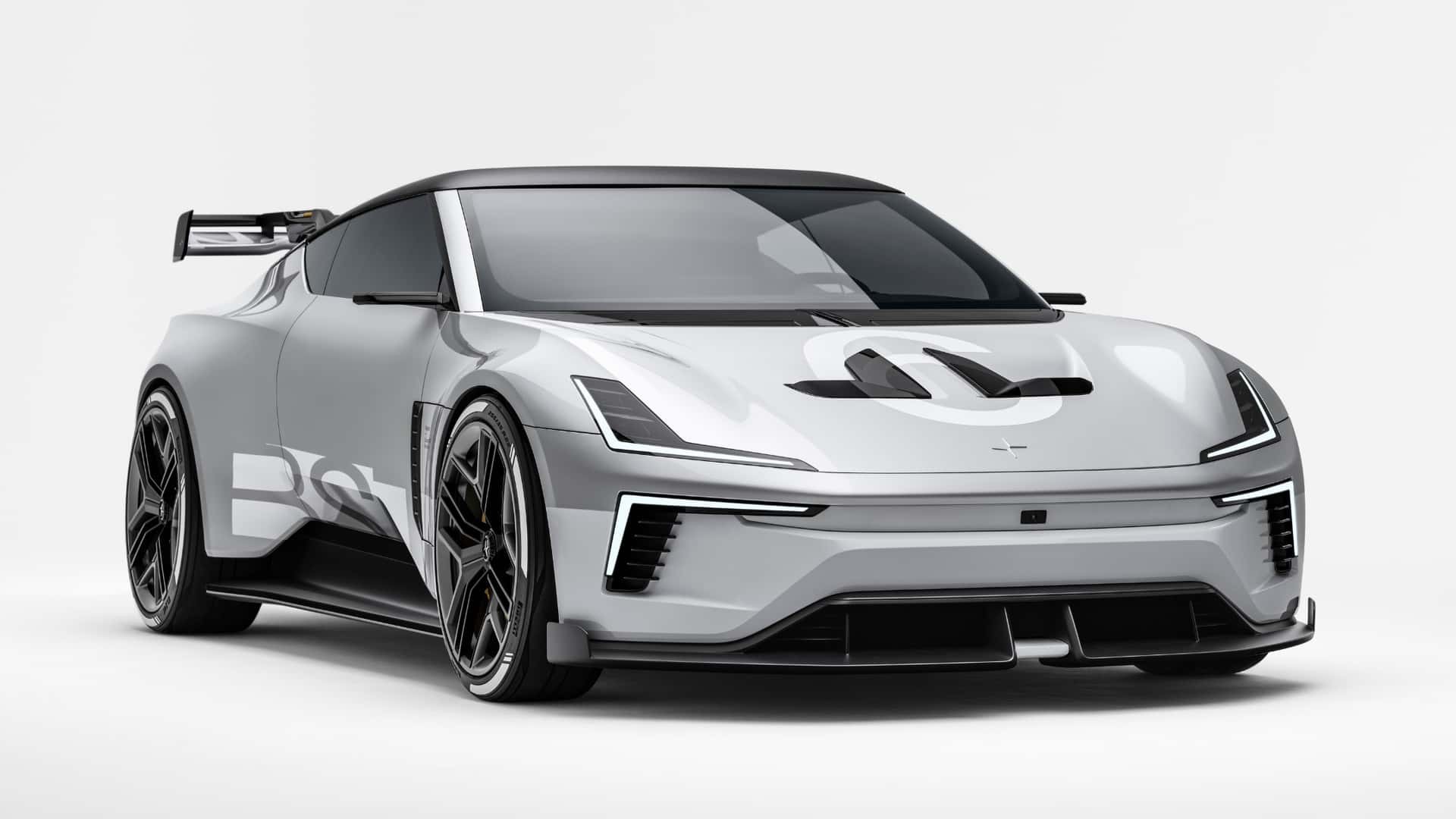
Polestar is embarking on an ambitious expansion, planning four new models by 2028 to directly challenge the high-performance divisions of BMW and Mercedes-Benz. This move signals a major shift for the Geely-owned brand, which aims to establish itself as a serious competitor in the elite EV performance market.
Polestar’s Four-Model Offensive
Over the next three years, Polestar will roll out a lineup designed to shake up the luxury EV segment:
- 2026: The Polestar 5, a four-door flagship, will lead the charge. A performance variant of the Polestar 4, likely a wagon, will also debut.
- 2027: The second-generation Polestar 2 will arrive, evolving into a more traditional sedan.
- 2028: The Polestar 7, a compact SUV, will expand the brand’s commercial reach.
This rapid product cycle comes after a period of financial difficulty, including a $900 million loan from its parent company. However, Polestar views this not as a recovery strategy, but as a full-scale assault on established performance leaders.
The Rise of the BST Sub-Brand
Central to Polestar’s plan is the expansion of its “BST” (Beast) badge. Initially reserved for limited-run versions of the Polestar 2, BST will become a dedicated high-performance sub-brand.
Expect aggressive tuning: sharper suspension, track-focused dynamics, and blistering acceleration. High-performance variants are planned for the Polestar 2, 3, and 4, with even the Polestar 5 potentially receiving an extreme derivative capable of challenging Audi RS models. This move is a return to Polestar’s roots, as the brand originally served as Volvo’s in-house performance division.
Polestar 5: The Spearhead of the Charge
The Polestar 5 will spearhead this push, boasting up to 884 horsepower and 748 lb-ft of torque. The car will feature a 112.0-kilowatt-hour battery and an 800-volt architecture, positioning it firmly in electric grand tourer territory.
The next-generation Polestar 2 is expected to grow in size, potentially rivaling the Tesla Model 3 Performance. The Polestar 7 will focus on strengthening the brand’s presence in the competitive compact C-SUV segment.
Polestar has the styling and numbers to compete, but the real test will be whether it can match the driving dynamics of BMW M and Mercedes-AMG.
Polestar’s success hinges on delivering not just power, but also the precision and engagement expected from established performance brands. The next few years will determine if the Swedish EV maker can truly take on the German elite.