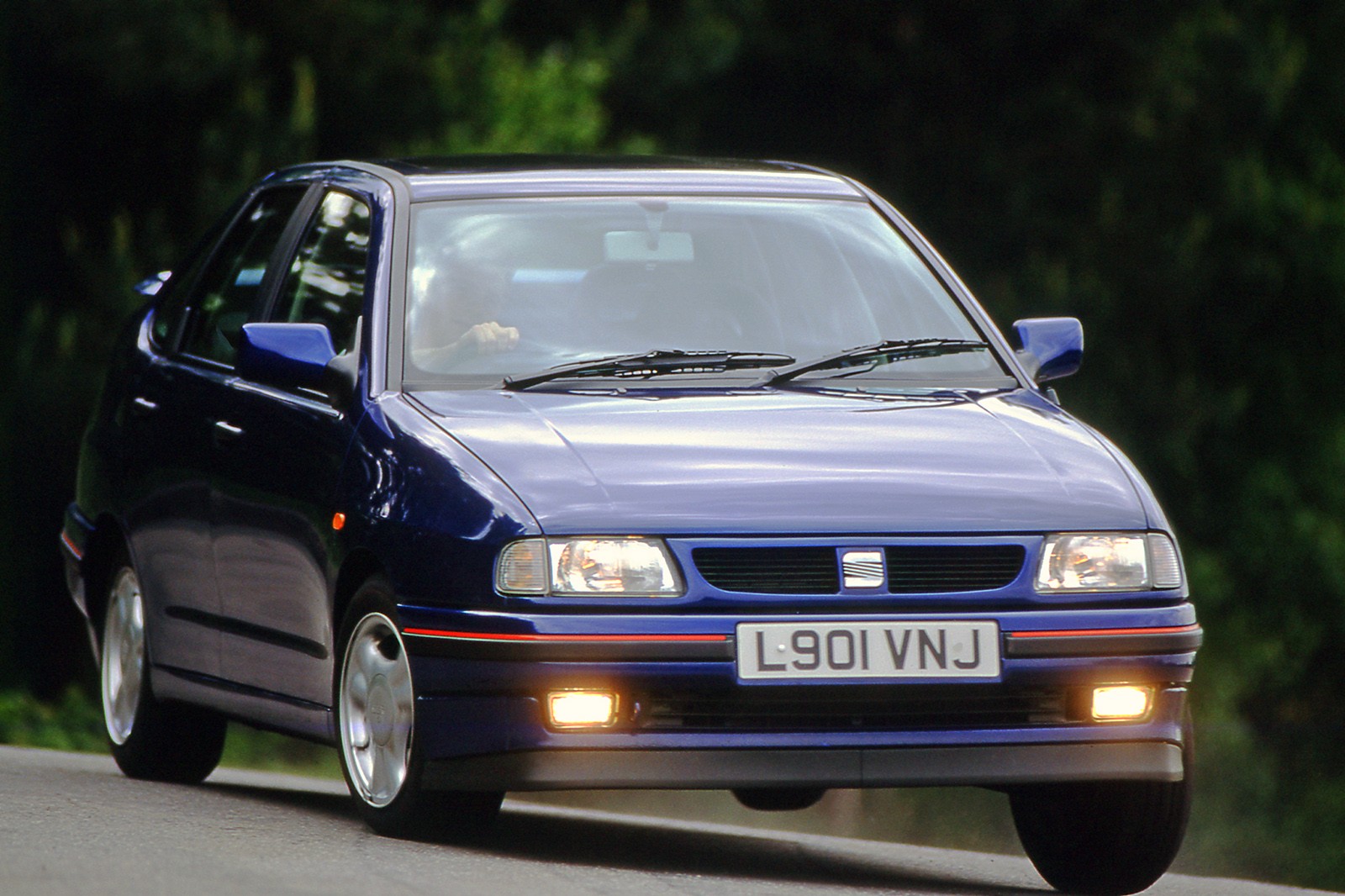
For many driving enthusiasts of the 1990s, the Seat Toledo was often viewed as a practical, if somewhat uninspired, family hatchback. However, beneath its unassuming exterior lay a mechanical secret: it was essentially a Volkswagen Golf Mk2 in a different suit.
While it may have lacked the cult status of its German cousin, the Toledo offered a unique combination of German engineering and Spanish pragmatism that made it a sleeper hit for those in the know.
A Turning Point for Seat
To understand the significance of the Toledo, one must look at the history of Seat itself. Since its inception in 1950, the Spanish manufacturer had largely functioned as a state-owned entity that built licensed versions of Fiat vehicles.
The Toledo represented a major shift in identity. It was only the third Seat model to feature an entirely unique design, following the 1200 Sport and the iconic first-generation Ibiza. Designed by the legendary Giorgetto Giugiaro, the Toledo signaled Seat’s transition from a licensed manufacturer to a brand with its own design language.
The Mechanical Connection: Golf DNA
While the styling was distinct, the “bones” of the Toledo were pure Volkswagen. The car utilized the chassis, suspension, floor pan, and engine architecture of the highly successful VW Golf Mk2.
This connection provided the Toledo with access to some of the most reliable and spirited powertrains of the era, including:
– The 1.8L GTI engine producing 115bhp.
– The highly sought-after 16-valve version delivering 126bhp.
Performance and Handling: The Unexpected “Bend-Basher”
On paper, the Toledo was heavier than the Golf, which might suggest a more sluggish driving experience. However, the reality on the road was quite different.
The extra weight from the car’s extended bodywork and its large boot—capable of swallowing an entire student’s worth of belongings—actually worked in its favor during spirited driving. This added mass helped the Toledo behave as a “friskier bend-basher” than the lighter Golf, offering a level of engagement that few other hatchbacks in its class could match.
The Trade-off: Build Quality vs. Performance
The marriage of Spanish design and German engineering was not without its flaws. While the mechanical components were robust and reliable, the interior craftsmanship often fell short of Volkswagen’s standards.
“The pure VW bits were okay, but interior trim used to untether itself… loose pieces squeaking at the prospect of a trip to the footwells.”
It was common for owners to find loose trim pieces or rattling components within the cabin. While the car was mechanically sound and rarely suffered breakdowns, the perceived “cheapness” of the interior materials often distracted from the premium driving experience provided by the engine and chassis.
Conclusion
The Seat Toledo was a paradoxical vehicle: a car with a budget-friendly interior but a high-performance heart. For those seeking a practical family car that could still deliver genuine driving thrills, it remains a highly underrated chapter in 1990s automotive history.