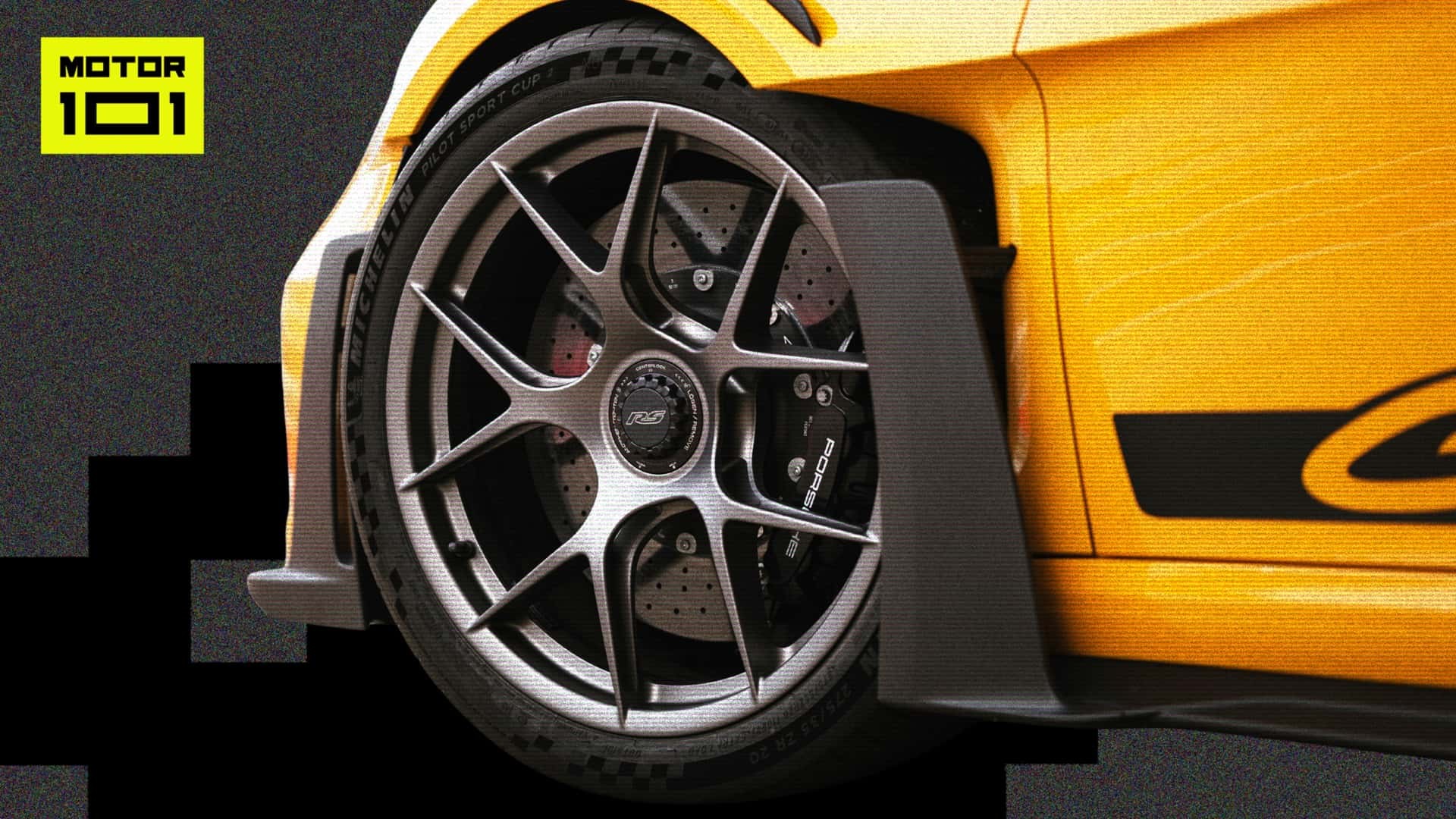
If you follow high-performance automotive news, you have likely encountered the term “forged wheels.” While it is often used as a buzzword to justify premium price tags on luxury cars, forging is a specific, highly technical manufacturing process that offers tangible mechanical advantages.
But what exactly separates a forged wheel from a standard one, and is the massive price jump actually justified for the average driver?
The Manufacturing Breakdown: Forged vs. Cast vs. Flow-Formed
To understand why forged wheels are superior, one must look at how they are built. The difference lies in how the metal is shaped, which fundamentally changes the material’s internal integrity.
1. Forged Wheels (The Gold Standard)
Much like a blacksmith shaping iron, forging involves taking a solid piece of high-quality alloy—usually 6061-T6 billet aluminum or occasionally magnesium—and compressing it into shape.
Rather than melting the metal, it is heated until pliable and then subjected to immense pressure (sometimes up to 10,000 tons) in a forging press. This process does more than just shape the wheel; it aligns the metal’s grain structure, making the material much denser and more consistent. After forging, the wheels undergo precision CNC machining to carve out intricate designs and bolt holes.
2. Cast Wheels (The Industry Standard)
Most standard alloy wheels are “cast.” In this process, molten metal is poured into a mold and allowed to cool. While efficient and cost-effective, casting has inherent weaknesses:
* Random Grain Structure: Because the metal cools from a liquid state, the internal structure is disorganized.
* Potential Imperfections: Casting is prone to porosity (tiny air bubbles), gas pockets, and shrinkage, which can create structural weak points.
3. Flow-Formed Wheels (The Middle Ground)
Flow-forming is a hybrid approach. A wheel is first cast, but then it is spun rapidly while being subjected to heat and pressure. This “rolls” the metal, stretching it to create a stronger, thinner rim. It offers a compromise: better performance than a basic cast wheel, but without the elite strength of a fully forged one.
Why It Matters: The Performance Advantage
The primary reason enthusiasts and engineers obsess over forging is the strength-to-weight ratio.
In automotive physics, weight reduction is most effective when it is unsprung mass —the weight not supported by the car’s suspension (such as wheels, tires, and brakes). Reducing unsprung mass allows the suspension to react faster to bumps and changes in the road.
The benefits of forged wheels include:
* Sharper Handling: Lighter wheels reduce rotational inertia, making the car more responsive during turns and acceleration.
* Increased Durability: Because the metal is denser, forged wheels can withstand much higher stresses. This is critical for track drivers hitting curbs or navigating uneven surfaces at high speeds.
* Intricate Design: Because the material is so strong, engineers can design wheels with much thinner, more elegant spokes (like the BBS FI-R) without risking structural failure.
The Performance Delta: While specific numbers vary, industry estimates suggest forged wheels can be up to three times stronger while weighing as much as 25% less than a comparable cast wheel.
The Catch: Cost and Practicality
If forged wheels are so much better, why doesn’t everyone use them? The answer is simple: Cost.
The manufacturing process is incredibly labor-intensive and requires massive, expensive machinery. Furthermore, because they are produced in smaller batches for niche markets, they lack the “economies of scale” that make cast wheels affordable.
- Price Gap: While a set of decent cast wheels might be relatively inexpensive, even “budget” forged sets cost several thousand dollars. High-end aftermarket brands like HRE or BBS can easily reach prices of $8,000 to $10,000 per wheel.
- Availability: You won’t find these in a typical tire shop; they are usually reserved for exotic marques like Porsche, Ferrari, or high-end tuning models like the Nissan Nismo Z.
Conclusion: Is the Investment Worth It?
Whether forged wheels are “worth it” depends entirely on your objective. If you are looking for a status symbol or a “car show flex,” they are the undisputed king of the hierarchy. If you are a track enthusiast seeking every millisecond of lap time, the reduction in unsprung weight provides a genuine, measurable advantage.
However, for the daily commuter, the extreme cost and the risk of damaging a multi-thousand-dollar set of wheels on a common pothole make cast or flow-formed wheels a much more practical choice.