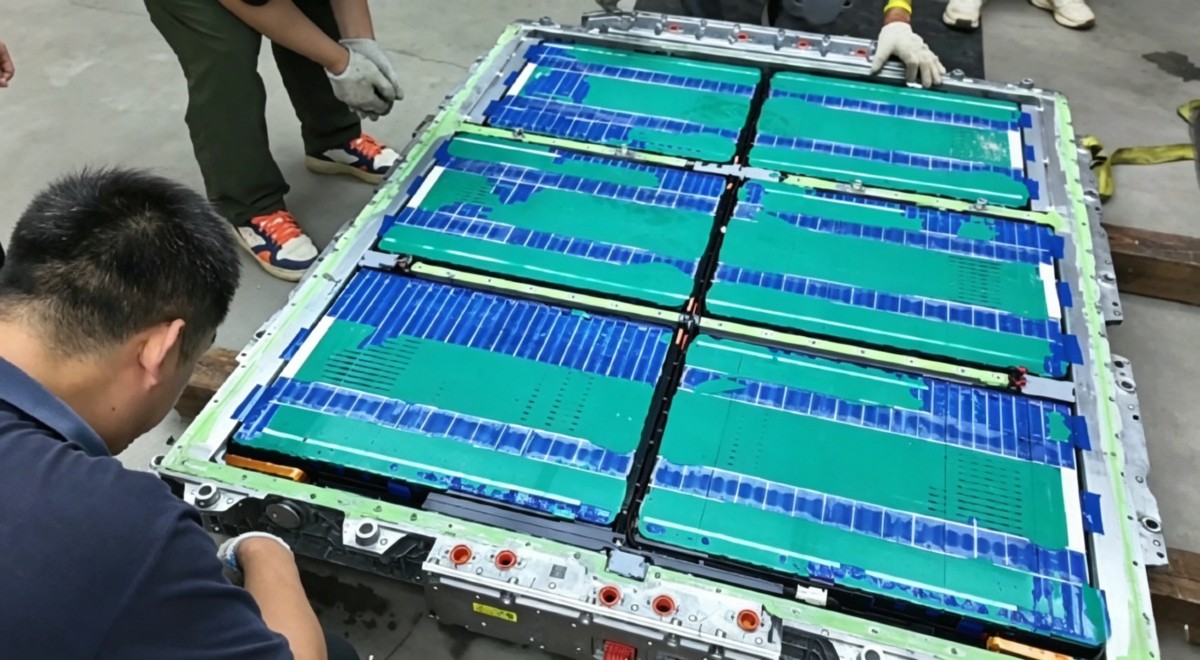
The video went viral for one simple reason. It didn’t explode.
BYD’s second-generation Blade pack endured the gauntlet—grinding, cutting, hammering. No fire. No boom.
That durability sparked a firestorm online. Critics screamed. Some accused the teardown crew of sabotage, of rigging the conditions to make the battery look fragile when it’s actually robust. The creators felt the heat, too. They dropped a lengthy technical follow-up.
We dismantled over twenty packs. This one? The hardest we’ve faced.
They didn’t apologize for the violence of the process. They explained it.
The Ice Bath
The battery sat in a cold storage unit. For forty hours.
The goal was brittle. They wanted the structural adhesive to crack under stress, becoming less gooey and more manageable. Heating wouldn’t work near live cells. Chemical solvents were risky, too, threatening to corrode or contaminate components meant for close inspection.
So they froze it. Then they broke it open.
Detractors claimed the team used air conditioning during fast-charge temp tests to cheat the results. Nonsense. Cabin heating was used earlier, only to discharge the battery quickly before testing commenced. The cooling plate? It stayed intact throughout. Sensors ended up lower on the cells because the upper areas were physically unreachable during the demo.
Anatomy of a Pack
Inside the beast lies a “mu” (目) shaped internal reinforcement.
This structure carves the pack into distinct zones. 170 cells sit inside, connected in series. High-voltage compartments flank the front and rear.
The integration is tight.
A unified DBO and BMS architecture cuts down on clutter. AC charging doesn’t hit the battery directly; it routes through the onboard charger within the vehicle’s electronic control system first. It’s complex, sure. But it keeps the battery bay cleaner.
Cold Blood Cooling
BYD isn’t using water anymore. They’re pushing refrigerant.
Direct-cooling via phase changes transfers heat efficiently. It kills the need for bulky circulation pumps.
Efficiency goes up. Costs might go down. But here is the snag: refrigerants have lower heat capacity compared to traditional liquid systems.
Does heat distribute evenly during rapid, repeated flash-charging? That remains a question. The flow channels look designed to mitigate unevenness, but physics is stubborn.
The Glue Trap
Look closer at the assembly. It is stuck together.
Structural adhesive covers the modules. The busbars. The tabs. The signal wiring.
The amount used is staggering.
It makes dismantling a nightmare. The teardown crew had to destroy outer structures to get inside. This raises a loud, uncomfortable question about the future. Repairability is hard. Recycling is harder. If you can’t take it apart, can you fix it? Can you recycle it?
Beneath the cells sits a fiberboard protective layer. It’s structural armor, not part of the thermal game plan. And the top cover? There isn’t a traditional one. The battery relies on the vehicle’s floor and seat mounts for support. It’s an engineering decision. Some see it as genius integration. Others see it as a repairman’s headache.
Even the choice of aluminium conductors for high-current sections drew raised eyebrows, though the long-term implications remain unvalidated by this single demo.
Numbers Don’t Lie (Usually)
The scale is massive.
Weight: Approx. 572 kg
Pack Energy Density: ~132 Wh/kg
Cell Energy Density: ~179.6 Wh/kg
Pack Integration Efficiency: ~73.6%
These aren’t guesswork estimates. They are measurements.
The Legal Freeze
This isn’t just a technical debate anymore.
Legal battles in China between automakers and content creators are heating up. A recent court ruling ordered the blogger “Long Ge Talks EVs” to pay 2 million yuan (approx. 293,000 CAD / USD range) and issue a public apology.
Why? Unverified claims about BYD vehicles.
The message is clear. The lines between review and libel are thinning. The teardown team notes the difficulty parallels overseas efforts to dissect Tesla’s 4680 packs, such as Munro Live’s work.
As batteries become more integrated, sealed tighter with adhesive, the industry faces a growing friction. We build better cars, perhaps. But we might also be building ones that refuse to come apart.