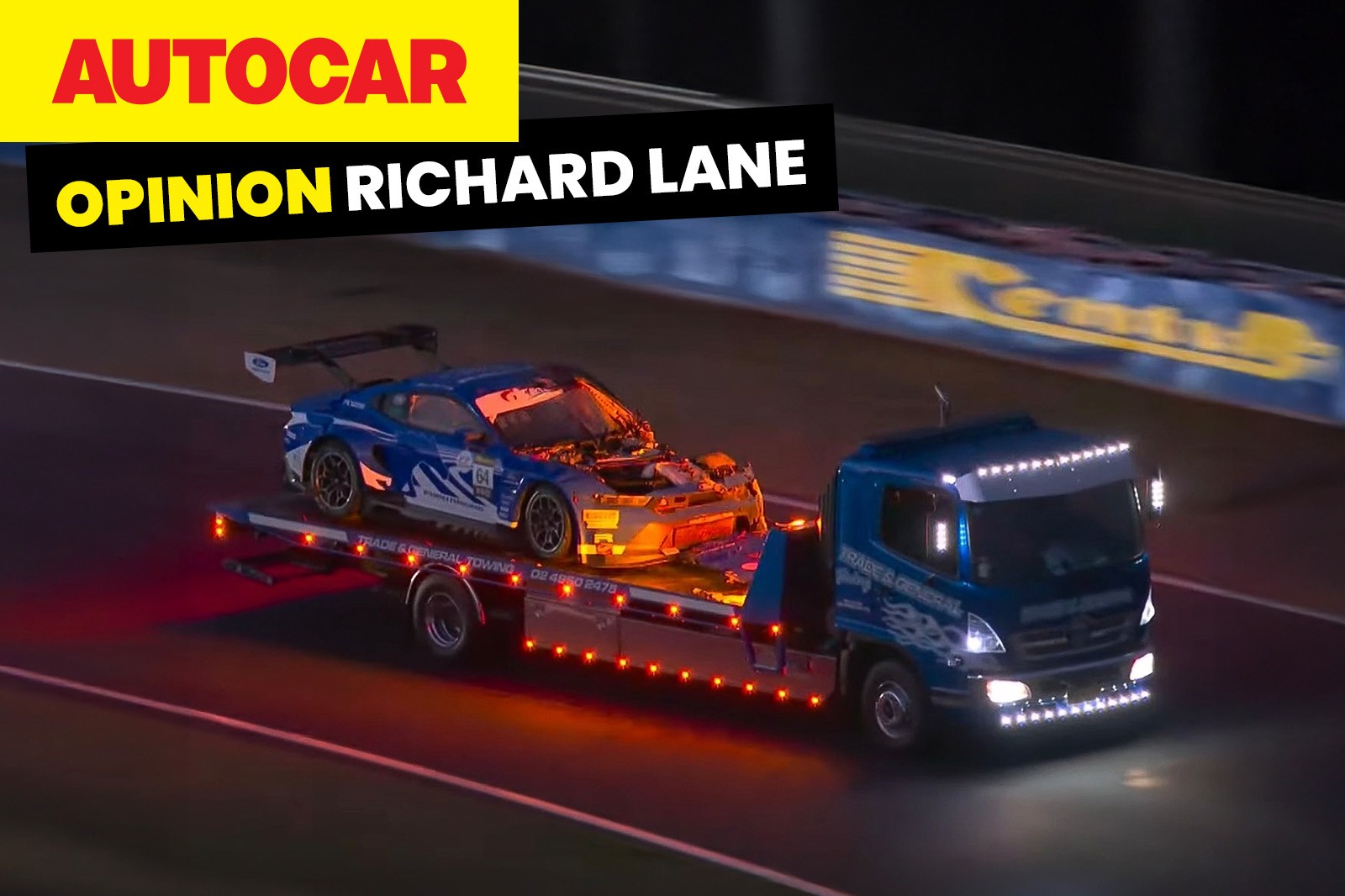
The recent Bathurst 12 Hours race served as a brutal reminder of the dangers lurking beyond the track: wildlife. Driver Chris Mies experienced firsthand just how violently a 152mph impact with a kangaroo can unfold, leaving his Mustang GT3 wrecked and himself shaken. The incident, described in visceral detail, highlights the severe risks that extend even to professional racing environments.
The Anatomy of a Collision
Mies’ encounter wasn’t just about mechanical damage. The aftermath was described as horrific, with the driver covered in animal remains after the impact. The sheer force of a 152mph collision with an 85kg kangaroo is enough to shatter a windscreen and leave lasting psychological trauma, as Mies reported difficulty removing the stench of the animal even after multiple showers.
The situation could have been significantly worse. Had Mies been driving a vehicle with less front-end protection – like a mid-engine sports car – the outcome would likely have been far more catastrophic. This underscores a grim reality: certain car designs offer minimal protection against large animal strikes.
A Global Problem, Not Just Australia
This incident isn’t isolated to Australia’s unique wildlife. Motorsports history is littered with similar accidents, from a dog running onto the Bahrain F1 track in 2020 to the month-long coma suffered by Cristiano da Matta after hitting a deer during a test session in 2002.
Even further back, Stefan Johansson experienced a near-miss at the 1987 Austrian Grand Prix, and tragically, Alan Stacey was killed in 1960 when a bird struck his open-faced helmet at Spa. While smaller animals might seem less dangerous, they can still be fatal, as demonstrated by Andrea Iannone’s instinctive (and brutal) reaction to a seagull at Phillip Island.
Rising Risks on Public Roads
The problem extends beyond the racetrack. In the UK alone, roughly 70,000 collisions with deer occur annually, a number that’s been steadily climbing due to milder winters and expanding deer populations encroaching on urban areas. While these animals are smaller (around 25kg), hitting one at high speed can still cause significant damage and injury.
The Bathurst incident serves as a stark reminder that even in controlled motorsport environments, the unpredictable nature of wildlife poses a serious threat. This isn’t just a matter of bad luck; it’s a consequence of powerful animals moving freely in areas where high-speed vehicles operate.
High-speed animal strikes remain a significant hazard, not just in racing but also on public roads, and the increasing frequency of these incidents demands increased awareness and potentially preventative measures.