You know the drill with car stats. Fuel economy? Check. Horsepower and torque? You’ve got those memorized. Zero to sixty times? Essential for sports cars. Even interior cubic footage matters when you’re shopping for a family sedan. These numbers tell you what you’re getting for your money. They are straightforward. They are published. They are easy to find.
But some figures trip up buyers. New drivers especially. They look at a spec sheet and nod along, missing the ones that actually matter for safety. Take the gross combination weight rating. Most people don’t know what it means. Or worse, they ignore it. And that is a mistake that can cost you your vehicle—or your life.
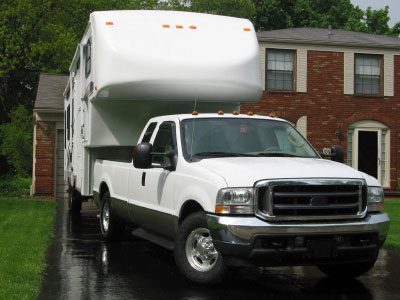
If you plan to tow anything behind your car, truck, or SUV, you need to know this number. It is the hard limit set by the manufacturer. It defines the maximum weight your tow vehicle and your attached trailer can carry together. Never exceed it.
What Exactly Is GCWR?
Gross combination weight rating, or GCWR, is not just a suggestion. It is a calculated maximum. Think of it as the ceiling for your entire towing setup. This includes the tow vehicle itself. It includes the trailer. It includes everything loaded inside both.
It is similar to the gross vehicle weight rating (GVWR). GVWR covers one vehicle—the car you are driving. GCWR covers two. The vehicle. The trailer. Combined. They are attached. They move as one unit. The weight does not double. It adds up.
How is this number derived? Ford explains it clearly. You start with the vehicle’s curb weight. Then you add allowable payload. That means passengers, cargo, and fluids. Finally, you add the weight of the trailer and its load. The sum is your GCWR.
The GCWR is not a measurement of what you currently weigh. It is the maximum limit the manufacturer set for safety.
Do not confuse the two. One is static data. The other is a dynamic limit. Exceeding it puts every component of your rig at risk.
Why Overloading Is Dangerous
You might think, “My truck looks fine. It’s not sagging.” That is where you go wrong. The danger is invisible until it is too late.
Overloading is dangerous on its own. Overloading both the tow vehicle and the trailer is catastrophic. A heavy load is hard to control. It drifts. It sways. It fights you on the steering wheel.
The brakes are the first to fail. They overheat under strain. Once they fade, you have no way to slow down. The tires suffer next. They were not rated for that much mass. A blowout at highway speeds is a death sentence.
The engine and transmission take a beating too. They overheat. They wear out faster. Mechanical failure often follows. The suspension components—springs, shocks, axles—can bend or snap. If a component breaks while you are moving, you lose control instantly.
The list of failures is long. The result is always the same. You crash. You hurt someone. You destroy expensive machinery. Do not test the limit. Stay below it.
Where to Find Your GCWR
You need to know your vehicle’s gross combination weight rating before you hit the road. Where do you look?
Check the label inside the driver’s door frame. It is usually near the latch mechanism. This sticker contains all the weight limits for your specific VIN. It is the most accurate source.
If you cannot find the sticker, look online. Most manufacturers publish these specs on their support sites. Search for your model year and trim.
The charts below provide a snapshot for popular makes. Note that many luxury and performance vehicles list dashes. This often means they are not designed for heavy towing, or the rating is significantly lower than standard trucks.
GCWR Data by Make
Depending on your make and model year, you can find your gross combination weight rating in the following breakdowns.
Acura GCWR
Acura models vary wildly in their towing capacity. The MDX jumps significantly in 2007. The RSX, once a staple, shows no towing rating in later years.
| Year | Model | GCWR (lbs) |
|---|---|---|
| 2006 | MDX | 8121 |
| 2006 | RL | 5162 |
| 2006 | RSX | 4384 |
| 2006 | TL | 4730 |
| 2006 | TSX | – |
| 2007 | MDX | 10053 |
| 2007 | RL | 5164 |
| 2007 | RDX | 6394 |
| 2007 | TL | 4773 |
| 2007 | TSX | 4407 |
| 2008 | MDX | 10053 |
| 2008 | RL | 5164 |
| 2008 | RSX | 6394 |
| 2008 | TL | 4773 |
| 2008 | TSX | 4407 |
| 2009 | MDX | 10053 |
| 2009 | RL | 5233 |
| 2009 | RSX | 5574 |
| 2009 | TSX | 4550 |
Related Acura Specs: GVWR, GAWR, Cargo Carrying Capacity, Curb Weight, Payload, Towing Capacity.
Audi GCWR
Audi’s lineup is selective. The Q7 appears as a capable tow vehicle in the late 2000s. Many of their sedans and coupes show no rating, indicating they are not intended for trailer use.
| Year | Model | GCWR (lbs) |
|---|---|---|
| 2006 | A3 | – |
| 2006 | A4 | – |
| 2006 | A6 | – |
| 2006 | A8 | – |
| 2006 | S4 | – |
| 2006 | TT | – |
| 2007 | A3 | – |
| 2007 | A4 | – |
| 2007 | A6 | – |
| 2007 | A8 | – |
| 2007 | Q7 | 10665 |
| 2007 | RS4 | – |
| 2007 | S4 | – |
| 2007 | S6 | – |
| 2007 | S8 | – |
| 2008 | A3 | – |
| 2008 | A4 | – |
| 2008 | A5 | – |
| 2008 | A6 | – |
| 2008 | A8 | – |
| 2008 | Q7 | 10665 |
| 2008 | R8 | – |
| 2008 | RS4 | – |
| 2008 | S4 | – |
| 2008 | S5 | – |
| 2008 | S6 | – |
| 2008 | S8 | – |
| 2008 | TT | – |
| 2009 | A3 | – |
| 2009 | A4 | – |
| 2009 | A5 | – |
| 2009 | A8 | – |
| 2009 | Q7 | 10665 |
| 2009 | R8 | – |
| 2009 | S4 | – |
| 2009 | S5 | – |
| 2009 | S8 | – |
| 2009 | TT | – |
*Related Audi Specs: GVWR, GAWR, Cargo Carrying Capacity, Curb Weight, Payload, T
BMW gross weight rating
If you’re hauling heavy loads in your German sedan, you’ll want to check these numbers. Most BMWs in the mid-2000s were purely passenger cars. GCWR (Gross Combined Weight Rating) indicates the maximum weight of the car and trailer. Anything but playing with fire.
The SUV is the highlight of the 2006 collection. The BMW X3 has a GCWR of 7,673 lbs. The BMW X5 is the real workhorse here, weighing in at 10,802 pounds. sedans? Not so much. The 3 Series (325, 330, 335), 5 Series (525, 530, 550, 650, 750) and even the high performance M3 and M5 models do not have GCWR listed. This is BMW’s polite way of saying they don’t rate them for towing. The Z4 and Z4M also were also off the charts, effectively zero towing capacity.
Several minor changes were made to the 2007 model. The X3 dropped slightly to 7,662 lbs. The X5 advanced to 11,132 lbs. There are no changes in the sedan or coupe lineup. There is no towing rating for models 328, 335, M5, M6 or Alpina B7.
1 series released in 2008. 128 and 135 do not include GCWR. The X5 was settled at 11,132 lbs and the X3 at 7,662 lbs. The new X6 joins the fray with a GCWR of 11,044 pounds. The 5 Series is available in 528 and 535 versions, but again, no towing data. The same thing happened in 2009. The X5 dropped slightly to 11,066 lbs. The X6 still weighs 11,044 lbs. The M3, M5 and M6 models do not yet have towing ratings. If you want to tow a car in a BMW of this era, go for an SUV.
Buick Gross Combined Weight Rating
Buick keeps things a little simple with this window. LaCrosse and Lucerne are light vehicles. From 2006 to 2009, the Lacrosse GCWR remained at 4,645 pounds. The Lucerne weighs 4,914 pounds. These are sedan numbers. Unless your cargo is very special, you probably won’t be towing your boat in Lucerne.
SUVs tell a different story. Rainier and Rendezvous are rated for heavier loads. In 2006 and 2007, the Rendezvous weighed 7,746 pounds, while the Rainier weighed 10,500 pounds. Terraza 2006 weighs 8500 lbs.
In 2008 the Enclave was introduced with a GCWR of 9,500 lbs. This held true throughout 2009, with the LaCrosse and Lucerne ratings remaining unchanged. If you needed a Buick to tow a midsize trailer, the Enclave or Rainier were the only options these days.
Cadillac Gross Combined Weight Rating
Cadillac offers more variations, especially in the Escalade. CTS started at 4,659 lbs in 2006 and 2007. By 2008 and 2009 the rating had risen to 5,011 lbs. The CTS-V was 5,000 lbs in 2006 and 2007.
From 2006 to 2009, the DTS weight remained at 5,159 lbs. Changes to STS and STS-V have been made. The STS rose from 5,079 lbs in 2007 to 5,123 lbs in 2008 and 2009. The STS-V rose from 5,544 lbs in 2007 to 5,383 lbs in 2006, but remained unchanged at 5,544 lbs in 2008.
Large trucks are the top of the market. The Escalade and Escalade ESV rated at 12,902 lbs in 2006 and jumping to 14,000 lbs between 2007 and 2009. Escalade EXT started at 13,464 lbs in 2006 and reached 14,000 lbs in 2007, 2008, and 2009. The Escalade Hybrid was introduced in 2009 and weighs 6,314 lbs.
SRX has increased significantly. It was 5,314 lbs in 2006, jumped to 6,314 lbs in 2007 and 2008, and finally leveled off at 5,123 lbs in 2009. XLR and XLR-V are had no towing ratings.
Chevrolet Gross Combined Weight Rating
Chevrolet’s product range is diverse, and GCWR products vary from small passenger cars to large trucks.
Light and compact cars:
Aveo and Corvette do not have GCWR. Between 2006 and 2009 cobalt was valued at 4,141 lbs. Over four years HHR is worth 4,305 lbs. The Impala weighs approximately 4,703 to 4,705 lbs. Malibu needs attention. It was unrated in 2006 and 2007, revived in 2008 at 4,447 lbs (Malibu Classic) and unrated in 2009.
Light trucks and SUVs:
Colorado has gotten better over time. In 2006, it weighed 5,218 pounds, increased to 5,772 pounds in 2007, and reached 7,000 pounds in 2008 and 2009. The Equinox has held steady at 7,252 pounds for four years. TrailBlazer dropped from 11,000 lbs in 2006 to 10,000 lbs from 2007 to 2009. TrailBlazer EXT 2006 weighs 9,921 lbs.
Express vans are versatile. As of 2006, the Express weighed 9,500 pounds. By 2009, prices will be broken down according to equipment. The Express 1500 costs 12,000 lbs, the 2500 drops slightly to 11,788 lbs and the 3500 will set you back 12,000 lbs. Uplander Minivan weight went from 7,734 lbs in 2006 to 7,754 lbs in 2007, 8,500 lbs in 2008 and finally 10,000 lbs in 2009 (shared with the TrailBlazer/Tahoe). The Traverse was introduced in 2009 and weighs 9,500 lbs.
Full-size SUVs and trucks:
Silverado 1500 A lot has changed. In 2006 it was 10,839 lbs, dropped to 10,000 lbs in 2007 and 2008 and remained at £10,000 in 2009. Silverado 1500 Hybrid was 12,000 lbs in 2006 and **1007 ss. 12,597 2006 £13,000 2007 £13,000.
The durable Silverado 2500 HD and 3500 HD are beasts. In 2006, 2007, 2008 and 2009, the 2500 HD weighs 16,000 lbs. 3500 HD is 16.0
Ford GCWR figure
Looking at Ford’s figures from 2006-2009, the hierarchy is clear. The big hit is the Super Duty trucks. In 2006, the Ford F-250 and F-350 both weighed 15,000 lbs. By 2007 this figure had increased significantly to 17,000 lbs for both models. The F-450 was launched in 2008 with an impressive GCWR of 27,000 lbs, dropping to 16,983 lbs in 2009.
For the average car buyer, information is scarce. Ford Fusion, GT, Mustang, Taurus all show a dash for this period. If you’re looking for a towable setup for this era’s midsize sedan, information suggests that Ford doesn’t publish or support these limits. Five Hundred and Escape float around 4,800 lbs. E-Series trucks are the mainstay here, with the E-350 Super Duty holding steady at 13,000 lbs from 2006 to 2009. The F-150 has experienced significant growth, jumping from 11,665 lbs in 2006 to 14,950 lbs in 2009.
GMC GCWR Figures
GMC’s lineup speaks of similar heavy-duty performance. Sierra 2500 and Sierra 3500 are the main products here. As of 2006, both weighed around 15,800 lbs. The Sierra 3500 rose to 16,000 lbs by 2008 and stayed there until 2009. The Sierra 1500 is more modest, hovering around 9,500 lbs since 2008 after dropping in 2006 and 2007.
The Yukon family is consistent. From 2007 to 2009 in the Yukon the limit itself was 10,000 lbs. The Yukon XL was slightly more expensive at 13,000 lbs in 2007 and 2008, but dropped to 11,000 lbs in 2009. The Envoy and Envoy XL are pegged at £10,000. Most years listed are in lbs. The Savana wagon mirrors Ford’s E-Class split model: 2500 and 3500 models weigh 12,000 lbs, while 1500 models weigh 9,500 lbs. The Canyon pickups are lightweight, ranging from 5,179 lbs in 2006 to 5,887 lbs in 2009.
Honda GCWR Figures
Honda does things differently. By 2009, information had become very scarce. The GCWR of the Civic has dropped significantly from 6,060 lbs in 2007 and 2008 to 3,738 lbs in 2009. This suggests a significant change in lineup or a conservative estimate for the new model year. The Civic Hybrid is even lower, weighing in at around 3,740 lbs and left the list in 2009.
What is listed under Accord is confusing. The GCWR was 4,206 lbs in 2006 and 4,274 lbs in 2007, while the lines appeared in 2008 and 2009. This could mean that either the data was not available or the model was not rated for towing in the standard of the time. The Odyssey minivan is one of the few vans that offers solid performance from 8,034 lbs to 8,210 lbs. The Pilot started strong at 9,700 lbs in 2007 and 2008, but dropped to 8,466 lbs in 2009. The Ridgeline was reliable at 10,085 lbs in 2007-2008, then disappeared from the list in 2009.
HUMMER GCWR Figures
Hummer H2 is a tank. In 2006, it weighed 13,050 lbs, went up to 13,150 lbs in 2007, and jumped to 14,000 lbs in 2008 and 2009. This weight is not much different from a regular car. From 2006 to 2009, the H3 remained surprisingly stable at 8,000 lbs. The only exception is the 2009 H3T truck model, which comes in at 9,461 lbs. The specs aren’t hugely different, but the H2 proves that size reflects overall weight capacity.
Hyundai GCWR Figures
Hyundai numbers are the most scattered. In 2006, the Azera was valued at 4,779 lbs. The 2008 Accent had the same numbers, but the 2008 Elantra was rated much higher at 5,550 lbs. This difference makes it difficult to compare years. In 2007 and 2008, the Santa Fe remained stable at 5,527 lbs. The temperature in Tucson is around 4,400 lbs most years. By 2009 the list had shrunk dramatically to include the likes of the Azera and Sonata (4,442 lbs ). The Accent was reappears in 2008, but was discontinued in 2009. The Elantra also dropped from the 2009 lineup entirely.
Infiniti GCWR Figures
Infiniti has surprisingly high numbers for a luxury car. The QX56 is a full-size SUV, and the numbers reflect that. In 2006 the weight was 14,510 lbs, in 2007 it jumped to 15,558 lbs and in 2009 it leveled off at 15,100 lbs. The FX45 is also heavy, coming in at 14,520 lbs in 2007 and 2008. The G35 and G37 are even lower, with the G37 reaching 13,266 lbs in 2008. The M35, 9, 2, and G37 are 0.7lbs. lost. The EX35 was introduced in 2008 and weighs 12,902 lbs. The FX35 and M45 lost data within a few years, masking the towing potential of a given model year.
Isuzu GCWR Figures
Isuzu’s data is limited to the SUV and pickup truck segments. The Ascender was a workhorse from 2006 to 2008, with a flat GCWR of 10,000 lbs. i-series pickup trucks have grown over time. The i-350 went into production in 2006 and weighs 9,000 lbs. Replaced in 2007 by i-370. This model started at 9,000 lbs and rose to 9,500 lbs in 2008. The smaller i-280 and i-290 models are 5,500 lbs. He gained weight in 2006 and 2007 and reached 6,000 lbs in 2008.
ジャガー GCWR Character
This is basically a 白紙手机です。 Each model listed by Jaguar (S-Type, X-Type, XJ8, XKR, XK, XF ) has a total weight of 0-2. 2009. This may mean that these vehicles are not suitable for towing, or that the manufacturer has not published a specific GCWR limit for the market in which this data is collected. There is no data available here for draw calculations.
Jeep GCWR figure
Jeep’s range is mainly mid-range. The Grand Cherokee is stable and hovers around 8,000 lbs.
You can’t just look at tow ratings in isolation. If you’re actually planning to pull a heavy load, you need to understand Gross Combination Weight Rating. It’s not the max weight your truck can carry. It’s the max weight of the vehicle plus everything on it plus the trailer and its cargo. Miss this distinction and you’re playing with fire.
The data below covers the 2006 through 2009 model years. Some models have no rating listed because they weren’t intended for heavy towing. Don’t guess. Look at the numbers.
Kia GCWR
Kia didn’t have a massive lineup of heavy haulers back then. Most of their sedans and crossovers were rated for light duty or not rated at all. The Sedona minivan and Sorento SUV carried the most weight.
2006 Kia Specs
* Optima: 5,292 lbs
* Sportage: 4,880 lbs
* Other models (Amanti, Rio, Sedona, Sorento, Spectra) were not rated.
2007 Kia Specs
* Sorento: 9,299 lbs
* Sedona: 8,015 lbs
* Sportage: 4,880 lbs
* The Rondo joined the lineup but had no GCWR listed.
2008 Kia Specs
* Sorento: 9,299 lbs
* Sportage: 4,880 lbs
* The Sedona dropped from the ratings list entirely for this year.
2009 Kia Specs
* Borrego: 9,398 lbs
* This was Kia’s flagship SUV. The Sorento and Sportage faded out of the heavy-duty charts.
“Most Kia sedans from this era had no GCWR. Stick to the Sorento or Borrego if you need serious capacity.”
Land Rover GCWR
Land Rover pushed hard into the luxury off-roading segment. The Range Rover and LR3 were built for work, not just weekends. Their GCWRs are massive compared to most crossovers.
2006 Land Rover Specs
* Range Rover: 13,324 lbs
* Range Rover Sport: 13,318 lbs
* LR3: 13,165 lbs
2007 Land Rover Specs
* Range Rover: 13,324 lbs
* Range Rover Sport: 13,334 lbs
* LR3: 13,276 lbs
* The LR2 wasn’t released yet.
2008 Land Rover Specs
* Range Rover Sport: 13,334 lbs
* The main Range Rover and LR3 dropped off this specific list, likely due to model year updates or powertrain changes.
2009 Land Rover Specs
* LR3: 13,662 lbs
* Range Rover: 13,564 lbs
* Range Rover Sport: 13,334 lbs
* LR2: 7,905 lbs
* The entry-level LR2 was significantly lighter duty than its siblings.
Lexus GCWR
Lexus split its towing capacity between luxury sedans and serious off-roaders. The GX 470 and LX 470/570 were the workhorses. The RX 350 and IS models were lighter, often rated for small trailers or jet skis.
2006 Lexus Specs
* LX 470: 12,240 lbs
* GX 470: 11,521 lbs
* RX 400h: 8,015 lbs
* RX 330: 7,510 lbs
* LS 430: 6,140 lbs
* Most other models (ES, GS, IS, SC) had no rating.
2007 Lexus Specs
* LX 470: 12,240 lbs
* GX 470: 11,521 lbs
* RX 400h: 8,015 lbs
* RX 350: 7,520 lbs
* The new LS 460 and GS 350 had no GCWR listed yet.
2008 Lexus Specs
* LX 570: 14,645 lbs
* The new V8 LX 570 took over the top spot.
* GX 470: 11,521 lbs
* RX 400h: 6,340 lbs
* RX 350: 6,020 lbs
* The IS-F was not rated for towing.
2009 Lexus Specs
* LX 570: 14,645 lbs
* GX 470: 11,521 lbs
* RX 350: 6,020 lbs
* The RX 400h was dropped from the lineup.
Lincoln GCWR
Lincoln kept it simple. The Navigator and Mark LT were the heavy hitters. The Town Car and newer MK models were lighter, suited for small loads.
2006 Lincoln Specs
* Mark LT: 14,500 lbs
* Navigator: 11,900 lbs
* Town Car: 6,460 lbs
2007 Lincoln Specs
* Navigator: 15,000 lbs
* Mark LT: 14,500 lbs
* MKX: 6,370 lbs
* Town Car: 6,460 lbs
* The MKZ had no rating.
2008 Lincoln Specs
* Navigator: 15,000 lbs
* Mark LT: 14,500 lbs
* MKX: 7,350 lbs
* Town Car: 6,502 lbs
* The MKZ was still not rated.
2009 Lincoln Specs
* Navigator: 15,000 lbs
* MKX: 7,350 lbs
* Town Car: 6,502 lbs
* MKS: 5,277 lbs
* The Mark LT was gone. The MKZ remained unrated.
Mazda GCWR
Mazda’s truck lineup (B-Series) was actually built by Ford. The B4000 could tow surprisingly well. The CX-9 was a solid family hauler with decent capacity.
2006 Mazda Specs
* B4000: 6,973 lbs
* B3000: 6,072 lbs
* MPV: 5,904 lbs
* B2300: 4,744 lbs
* Tribute: 4,842 lbs
* Most cars (Mazda3, 6, MX-5, RX-8) were not rated.
2007 Mazda Specs
* B4000: 7,000 lbs
* CX-9: 6,826 lbs
* B3000: 6,000 lbs
* CX-7: 5,860 lbs
* B2300: 4,800 lbs
* The Tribute was dropped.
2008 Mazda Specs
* B4000: 7,000 lbs
* CX-9: 6,826 lbs
* CX-7: 5,860 lbs
* Tribute: 4,893 lbs
* Tribute Hybrid: 4,747 lbs
* B2300: 4,800 lbs
2009 Mazda Specs
* B4000: 6,952 lbs
* CX-7: 5,860 lbs
* **B
Limitations of Nissan GCWR
Nissan doesn’t just make SUVs. They built a transport platform. The 2006 Nissan Armada has a Gross Combined Weight Rating (GCWR) of 11,818 lbs. By 2008, this figure had increased significantly to 15,100 lbs. For the same body type, that means a 3,000-pound increase in capacity. Why? Engine upgrades, transmission cooling and chassis reinforcement. The 2009 Nissan Armada held that 15,100 lb line.
The Nissan Titan has a similar story. In 2006 it was rated for 11,465 lbs. By 2007, moved to 11,600 lbs. The 2009 model held at 11,688 lbs. The gains are small but consistent.
For medium users, the Nissan Frontier is a workhorse. The weight rating for 2006 is 10,676 lbs. In 2007, it increased to 11,133 lbs. Then in 2008 it dropped it back to 10,676 lbs. It’s a strange variation. Have the hitch spec changed? The data says nothing. However, if you’re towing a boat or small camper, a 400-pound swing is important.
The 2006 Nissan Pathfinder sat at 10,523 lbs. In 2008, nudged up to 10,596 lbs. The Xterra started at 9,658 lbs in 2006/07 and dropped to 9,300 lbs in 2008 and 2009. Why did it drop? It may no longer be rating it for heavy trailer brakes in certain trims.
car? Not really towing vehicles. 2009 Nissan Maxima rated for 4,706 lbs. 2009 Nissan Altima was 4,217 lbs. The Altima Hybrid hit 4,620 lbs. The heavier the car, the higher the rating. It makes sense. Sentra is small. 2006 3,663 lbs 2007 £4,003 2008 £4,047 2009 stayed at 4,047 lbs. You can’t tow anything behind the Sentra, unless it’s a Jet Ski on a dolly. Even then, check your tires.
350Z? no rating.
Pontiac GCWR data
Pontiac has been dying for the past few years, but the data is clean. The 2006 Pontiac Montana SV6 was an outlier. 8,500 lbs. That’s a van. The rest are small cars.
G6 remains stable. In 2006 it was 4,530 lbs. In 2007 it was 4,530 lbs. In 2008 it dropped to 4,455 lbs. In 2009 it held at 4,455 lbs. why did it fall Maybe a brake upgrade. Or maybe they just tightened the warranty terms.
G8 is a muscle. The weight rating for 2008 is 6,035 lbs. In 2009 it was stayed at 6,035 lbs. Not bad for a V8 sedan. That’s better than the Grand Prix in 2007, 2008 and 2009 which was around £4,627. The 2006 Grand Prix was slightly higher at 4,634 lbs. The difference was very small.
The Torrent (basically a GMC Terrain badge) started at 7,310 lbs in 2006 and jumped to 7,407 lbs in 2007. The Vibe (Matrix Twin) was around 4,350 lbs. 2006: 4,351 people. 2007: 4,351 people. 2008: 4,350. 2009: 4,506 people. The rise in 2009 was strange. Did they find more steel?
The G5 started in 2006/2007/2008 at £4,141. Then it dropped to 3,902 pounds in 2009. Cut 200 pounds. That’s a lot for a small car.
Winter Solstice and Heaven? No reviews. Roadsters don’t tow.
Porsche GCWR number
Porsche values performance. Cayenne is their truck.
2006 Cayenne : 12,628 lbs.
2008 Cayenne : 12,628 lbs.
2009 Cayenne : 12,650 lbs.
slight rise. Porsche does not exaggerate the technical data. 911, Boxster, cayman? There are no ratings. You can’t tow a trailer behind a 911. If you’re towing it, you’re doing it wrong.
SAAB GCWR specifications
Saab is a niche market. The number is small.
9-3 grew a bit over time.
2006: 5,220 lbs (with 9-2X twin).
2007: £5,380
2008: £5,380
2009: £5,680
The leap forward in 2009 was huge. Did they reinforce the platform at 300 pounds? Or did they stop recommending towing early models?
The 9-5 was a larger sedan. 7,120 pounds. It stayed flat from 2006 to 2009. Consistent. Reliable. Boring but consistent.
The 9-7X (Hummer H3 badge) is the only true tow truck. £10,500 a year. 2006-2009. No changes. It was a dead end anyway.
Saturn GCWR Trend
Saturn is struggling. The specification reflects this confusion.
Relay Minivans start at 8,500 lbs in 2006. In 2007, it dropped to 7,918 lbs. Why? Maybe the towing package was optional or discontinued.
Outlook (Badger Badge) is off to a strong start. In 2007 it was £9,500. In 2008 it fell to £6,872. In 2009 it was £6,852. It’s a big cut. Almost £3,000. What happened? Or did you just stop verifying reloads?
The VUE and VUE Hybrid weigh approximately 4,800-5,400 lbs.
2006: £4,857
2007: £4,857
2008 VUE: £5,475
2009: £5,475
The hybrid version is slightly delayed. 2007: 4,857 people. 2008: 5,439. 2009: 5,439 people. Almost the same as the petrol version.
Aeon, Hi, Sky, Astra? Low rating or no rating. The Plough for 2007, 2008 and 2009 is still £4,678. In 2007, the Ion dropped to 3,902 pounds. Small car, small limitations.
Scion GCWR Reality
Scion focuses on young people. The trailer is not.
2006 tC, xA, xB : Not classified.
2007 tC : Not classified.
2008 tC, xB, xD : Not rated.
Volkswagen GCWR data
At the time, most lineups didn’t publish Gross Combined Weight Rating. However, we know the number of large SUVs and vans.
The 2006 Touareg had a GCWR of 12,952 pounds. This is the only clear figure.
By 2007, the Touareg’s weight had increased slightly to 13,034 lbs. As for the rest of the family, Eos, GTI, Jetta, Beetle, Passat, Rabbit, you guessed it. There are no numbers.
In 2008, the R32, GLI and Touareg 2 were added, but again their GCWRs were not listed.
As of 2009, the Routan minivan weighed 6,771 pounds.
The Tiguan SUV weighs 5,748 lbs. The Touareg 2 weighs 12,952 pounds.
All others are left blank.
For more technical information on these vehicles, check out their GVWR, GAWR, payload capacity, vehicle weight, payload capacity, and towing capacity.
Volvo GCWR data
Volvo is more generous with the numbers. Each model listed here has a rating.
The year 2006 was easy. The XC90 weighs 8,694 pounds. The C70 weighs 7,222 pounds. The S80 weighs 7,184 pounds. The XC70 weighs 7,125 lbs. The S60 weighs 6,843 pounds. The V70 follows at 6,746 lbs. Small cars follow, with the V50 weighing in at 5,476 pounds and the S40 at 5,375 pounds.
In 2007, a change took place. The XC90’s weight drops to 8,570 pounds. The C70 has been took a big hit, dropping to 5,942 lbs. The S80’s weight drops to 6,943 lbs. The S60 climbs slightly to 6,951 lbs. Weight remains steady at 7,125 pounds for the XC70 and 6,746 pounds for the V70. The weight of the V50 increases to 5,494 lbs. S40 settled at 5,384 lbs.
The C30 was launched in 2008. The starting weight is 5,105 lbs. The C70’s weight drops to 5,777 lbs. The S40 is still close to 5,370 pounds. The V50 weighs 5,471 pounds. The S80’s weight jumps to 7,282 lbs. The weight of the XC70 increases to 7,549 lbs. The S60 reached of 6,973 pounds. The V70 weighs 6,977 pounds. The XC90’s weight remains at 8,570 lbs.
This list was updated in 2009. The C30’s curb weight increases to 5,351 lbs. The C70 weighs 5,777 lbs. The weight of the S40 increases to 5,423 lbs. The V50’s weight remains at 5,471 lbs. The weight of the S80 increases to 7,425 lbs. The XC70 still weighs 7,549 pounds. The S60 weighs 6,973 pounds. The V70 weighs ticked up to 6,984 lbs. The XC90’s weight drops to 8,476 lbs.
Do you need more detailed information? See Volvo GVWR, GAWR, cargo capacity, vehicle weight, payload and towing capacity.
Related information
You can find out how the basic vehicle weight is actually calculated. The Truck weigh stations also works based on certain principles. There are guides on how the car engine works, how the automatic transmission shifts gear, and how the suspension system works.