


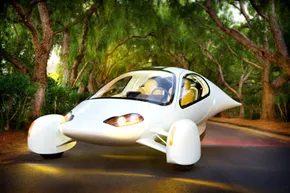
Crossing the United States from coast to coast. Just one tank of gas. It sounds insane. But since Nicholas Otto built the first gasoline engine in the 1870s and Rudolph Diesel followed with his diesel prototype in the 1890s, we have been tweaking efficiency in fits and starts. Now, the clock is ticking on global warming. The European Union is tightening emission standards again. In the US, President Bush signed a bill in December 2007 pushing for an average of 35 miles per gallon by 2020. Small steps.
Then there is Aptera Motors in San Diego.
Founded in 2006 by Steve Fambro and Chris Anthony, this private company is aiming for 300 miles per gallon. They did not just hire engineers. They hired people who know composites, biotechnology, aerodynamics, and finance. The result? A three-wheel, two-passenger prototype that looks like a dolphin mated with a helicopter. It is technically a motorcycle. Initially, only Californians could buy it. If it sells, they plan to go national.
The first prototype hit 230 mpg. That is 195 mpg higher than the federal target. Developers still had work to do. They hoped to be ready for late 2008.
But how fast does it go? What keeps you safe in a vehicle that looks more like a art installation than a car? Let’s look at the specs.
Aptera Specs and Engineering
The Aptera three-wheeler is not just about looks. It is about physics. The design minimizes drag. The shape reduces surface area. Every curve serves a purpose.
Key Performance Metrics
- Target Efficiency: 300 mpg
- Prototype Achievement: 230 mpg
- Seating Capacity: Two passengers
- Wheel Configuration: Three wheels (classified as a motorcycle)
- Initial Market: California residents only
This is not a luxury car. It is a statement. The Aptera challenges the idea that you need four wheels and a wide body to move. It asks if we can do more with less. The gap between 230 and 300 mpg is small on paper but huge in engineering. How did Fambro and Anthony close that gap? What materials make up the shell? And can a motorcycle-style frame provide enough safety for highway speeds?
The answer lies in the details. The composite body is lightweight. The aerodynamics are aggressive. The powertrain is efficient. But the real story is in the numbers. 300 mpg is not a dream. It is a target. And for some, it is already close.
What happens when the prototype becomes production? Does the weight increase? Does the efficiency drop? Or does the law of diminishing returns kick in?
We will find out. The road ahead is long. The tank is small. The numbers are big.
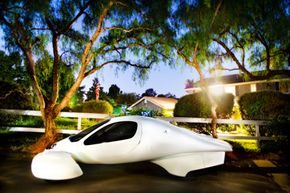

The secret to the Aptera’s staggering fuel economy isn’t just magic. It’s engineering. Aptera Motors leans heavily on composites to keep the weight down and the shape sleek. But what exactly is a composite material, and why does it matter for this three-wheeled EV?
A composite is simply a material made from two or more distinct components. They don’t fuse into a single chemical bond. Instead, they work together to create something stronger, lighter, or more flexible than the individual parts. Think of wood. It’s a natural composite of strong cellulose fibers held together by lignin, a weaker binder. Or concrete. That’s aggregate stone mixed with cement.
In the automotive world, carbon fiber composites are the gold standard for high-performance machines. You see them in the Aston Martin Rapide and the Lamborghini Reventon. These materials allow builders to create structures that are incredibly light yet brutally strong. Fiberglass serves a similar purpose, widely used in airplanes, boats, and even building insulation.
Aptera doesn’t just buy these materials off the shelf. The company uses a patented method called Panelized Automated Composite Construction (PAC2). This process shapes the vehicle’s body into its signature teardrop form. The result is a structure that is both strong and aerodynamic, cutting through the air rather than fighting it.
Why the Aptera Isn’t Diesel (Yet)
The original plan was simpler. Aptera wanted to run on diesel. It made sense. A small, efficient engine could squeeze massive mileage out of every drop of fuel. But California’s emissions standards are ruthless. Building a diesel engine small enough to fit in the Aptera while passing those strict tests proved too difficult.
So the strategy shifted. The Aptera will arrive as a pure electric vehicle (EV) or a plug-in hybrid (PHEV).
The target top speed? Over 85 mph. Likely limited to 95 mph electronically. Why limit a car that’s so efficient? Physics. Light, narrow vehicles with high surface-area-to-volume ratios are unstable at high speeds. Air resistance becomes a major factor.
Imagine throwing a light paper airplane too hard. It wobbles. It veers off course. It crashes. A lightweight car faces the same problem. At highway speeds, the air pushes back hard enough to make a slender vehicle feel tippy. Limiting the speed isn’t just about efficiency. It’s about keeping the car stable and safe.
Aptera Safety
The speed cap isn’t the only safety measure.
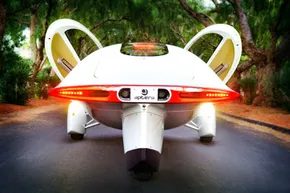
Let’s get one thing straight: Aptera Motors isn’t treating safety like an afterthought. They’re treating it like an engineering mandate. The reason for this paranoia? Legal classification. Under US law, their three-wheeled electric vehicle falls into the motorcycle category. 🏍️
Motorcycles have a reputation. Specifically, a reputation for tipping over. It’s not just bad luck; it’s physics. And Aptera is trying to cheat physics before the regulators even get a say.
The Delta vs. Tadpole Physics Problem
Most three-wheelers in history used a delta formation. That means one wheel in front, two in the back. Sounds stable until you take a corner.
Here’s where it gets messy. Every moving object has a velocity vector. Think of it as an imaginary line pointing straight out from where you’re going. If you drive north, the vector points north. Turn left, and that vector shifts.
In a delta setup, if you shift that vector too far outside your wheelbase during a turn, the laws of leverage take over. The vehicle flips. It’s a rollover waiting to happen, and it’s the primary reason people are skeptical about trikes.
Aptera flipped the script. They went with a tadpole formation. Two wheels in the front, one in the back.
“A tadpole formation keeps the vehicle’s velocity vector between those two front wheels, significantly decreasing chances of rolling over.”
This isn’t just about wheel count. It’s about geometry. By putting the pivot point in the front, the Aptera’s design ensures that even if you’re turning hard, the forces stay contained within the footprint of the front tires. The rear wheel just follows along, dragging its weight behind. It’s stable. It’s planted. It doesn’t want to die.
Center of Gravity: The SUV Sin
Stability isn’t just about wheels. It’s about weight distribution. Race cars have low centers of gravity. Why? Because they need the weight of the chassis to overcome the G-forces generated when hitting corners at 150+ mph. If the center of gravity is too high, the car rolls.
SUVs? They’re tall. Heavy. Prone to rolling over. They put their mass up high, turning every emergency maneuver into a potential catastrophe.
The Aptera sits low. Flat. Close to the pavement.
Couple that low stance with traction control, and you’ve got a vehicle that resists tipping far better than a standard motorcycle. It’s not magic. It’s just basic automotive engineering applied to a weird shape.
Crash Tests and F1 DNA
Theory is nice. Data is better.
Aptera ran the crash tests. The results? The vehicle exceeded strength requirements for both rollover and frontal impact scenarios. The structure held. The cage didn’t buckle.
Where did that strength come from? Formula One race cars.
The safety cage in the front of the Aptera was inspired directly by F1 designs. These are machines built to survive impacts at speeds up to 200 mph. Translating that level of rigidity to a low-volume electric car is overkill, sure. But when your life depends on not flipping at 40 mph, overkill is the only acceptable
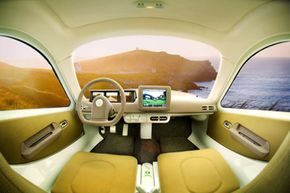
Safety isn’t just about the shell. Aptera Motors built an “Eyes Forward” system to handle the blind spots their narrow body creates. You can’t see behind you with a mirror. The rear view is blocked by the vehicle’s shape. A video display sits right in front of the driver. It shows a 180-degree view of what’s behind. This screen is mandatory for safe driving. You need to see traffic. A GPS unit on the center console adds another layer of security. It keeps you oriented. You know you’re heading the right way.
The “Two Plus One” Reality
The interior layout is strict. It’s a “two plus one” concept. Two adults fit comfortably up front. The back has a removable third seat. It’s only for infants. Remove that seat. You get space for 15 bags of groceries. That’s a lot of room for a vehicle this small.
HOV Lane Access Without the Helmet
Can you drive along the California coast without gear? Yes. The Aptera is classified as a motorcycle. But you don’t need a helmet. You don’t need a motorcycle license either. The vehicle is enclosed. That distinction matters. It makes life easier for California residents. Drivers can use HOV lanes. Even with just one person inside. The classification works in your favor.
For more on the Aptera and other alternative cars, check the links on the next page.


