The luxury SUV market is crowded. It is also expensive. Usually, the gap between mainstream brands and true luxury giants is wide. But lately, that line has blurred significantly. While Porsche, BMW, and Mercedes-Benz dominate the headlines, one unexpected contender is stealing the thunder.
The 2026 Honda CR-Hybrid Sport Touring Trim feels more premium than many cars costing double its price. It encroaches on territory traditionally held by the Mercedes-Benz GLC. And it does so without the premium badge penalty.
Honda isn’t exactly synonymous with opulence. It is known for reliability, not leather stitching. Yet, the top-tier CR-V Hybrid makes a case that might make you rethink your next purchase. If you are looking for a high-end crossover without the German tax, read on.
The Changing Landscape Of Luxury SUVs In America
The American love affair with SUVs shows no sign of slowing down. Every brand wants a piece of the pie. From the off-roading Lexus GX to the tech-laden Aston Martin DBX, the options are endless. Prices have also dropped. Some entry-level luxury SUVs now start below $50,000.
This saturation benefits buyers. It forces brands to innovate. It also creates confusion. Where does a well-equipped Honda end and a true luxury vehicle begin?
Historically, Honda sat firmly in the sensible category. The HR-V is great for the city. The Pilot seats seven and handles dirt roads well. But neither screams “luxury.” They scream “utility.”
Acura, Honda’s luxury division, tries to bridge this gap. Models like the RDX and MDX offer more prestige. But the base Honda brand rarely gets praise for high-end finishes. That is, until now.
Why The Sport Touring Trim Changes The Game
The 2026 CR-V Hybrid Sport Touring Hybrid starts at $30,925. By itself, that isn’t shocking. But look at what you get for that money.
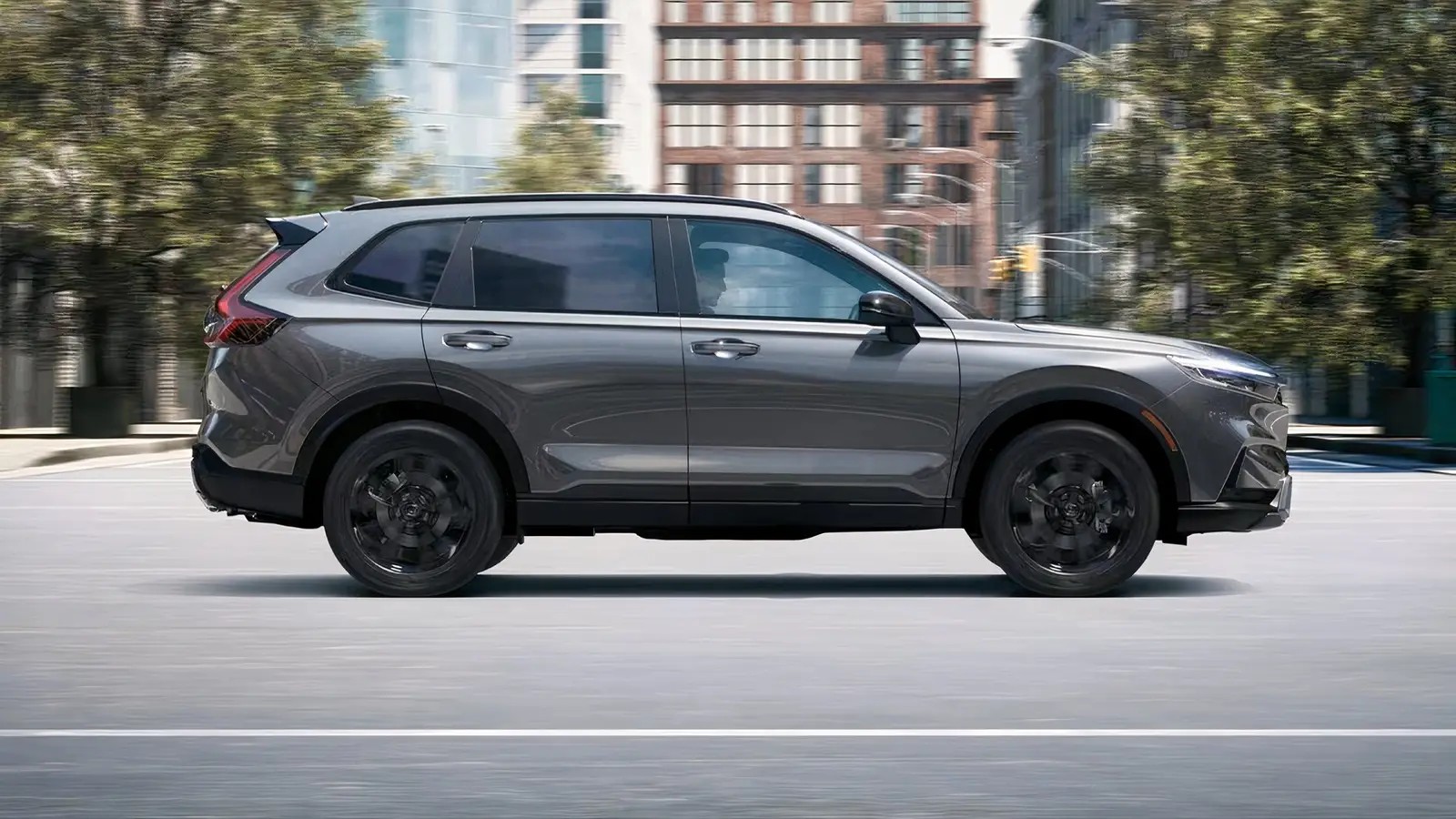
The vehicle pairs a fuel-efficient hybrid powertrain with an 83 out of 100 J.D. Power reliability rating. The exterior design sheds its generic look for something sharper. We are talking a wide stance. A more aggressive front fascia. A sculpted hood that claims space on the road.
Compare this to the entry-level GLC 300. The German SUV comes with heated seats and massive screens (12.3-inch and 11.9-inch). It has 255 horsepower. It is a good car. But it costs significantly more.
The pricing gap between the standard CR-V and the GLC is stark. However, the real comparison lies in the top-spec CR-V. And that is where things get interesting.
Design Language: Minimalism Vs. Brand Heritage
The CR-V Sport Touring leans into a clean aesthetic. Think European minimalism. A gloss-black grille. Slim LED headlights. Body-color accents that look polished but not over-styled.
It rides on 19-inch machine-finish alloys. There is tasteful chrome detailing. The vertical LED taillights and subtle roof spoiler round out the rear. It looks modern. Practical. Sleek.
The Mercedes GLC tells a different story. It leans on brand identity. The prominent star badge. Flowing curves. An “occasion” baked into every surface. It wants to be seen.
The CR-V doesn’t need to shout. Its upright proportions read as functional. The sloping roofline keeps it aerodynamic. It proves luxury doesn’t require heritage badges. It requires good design.
Inside The Cabin: Materials And Comfort
Step inside the Honda, and the surprise sets in. The materials go beyond expectation. Soft-touch surfaces on the doors. Dashboard pads free of cheap plastic. Leather-trimmed seats with contrast stitching.
The color palette is muted. Sophisticated. Metallic accents add depth. Clean lines guide the eye. The armrests are well-padded. The seats support long journeys. Dual-zone climate control is standard. Rear vents keep backseat passengers happy.
German rivals often use harder plastics at this price point. Or they reserve the good stuff for the highest trim. The CR-V includes it as standard.
Owners notice. Kelley Blue Book owners rate the overall experience 3.6 out of 5. But specific feedback highlights the upscale interior. The quiet cabin. The smooth suspension.
One owner put it best:
“The interior is upscale… the cabin is super quiet… it is loaded with technology… even when using nav through Apple wireless it shows the navigation info on the instrument class.”
Mechanical Refinement That Belies Its Origins
How does it ride? Honda used a conventional suspension setup. MacPherson struts up front. Multi-link at the rear.
Most cars in this class stop there. Honda went further. The tuning is the key. The dampers and springs are calibrated to absorb bumps. Body control remains solid. It feels composed.
There are five drive modes: ECON, Normal, Snow, Sport, Individual. No adaptive suspension like the GLC. But the result? A smooth ride that feels far more expensive than it is.
Tech That Feels Class-Agnostic
The technology package punches above its weight. A nine-inch touchscreen pairs with a digital 10.2-inch cluster. Google built-in adds premium usability. Voice control works well. Wireless Apple CarPlay and Android Auto are included.
Add a wireless charging pad. Multiple USB ports. A Bose premium audio system. The cabin feels connected. Modern.
Safety tech seals the deal. Honda Sensing is standard. Adaptive cruise control. Lane-keeping assist. Collision mitigation braking. Traffic sign recognition.
These features create a semi-automated experience you expect from cars costing $60,000 plus. Blind-spot monitoring. Cross-traffic alert. Parking sensors. A driver-attention monitor. The gap between mainstream and entry-level luxury closes rapidly here.
The Cost Reality Check
Here is where the badge matters least. And the wallet benefits most.
The GLC offers more horsepower. A sportier cabin design. A prestige badge that signals success. But maintenance costs tell a different story.
CarEdge data shows a clear divide. Over 10 years, the CR-V Hybrid will cost roughly $7,636 in repairs and maintenance. This is below the industry average. The chance of a major repair sits at 21.74%.
The GLC? It will cost about $15,203 over the same period. That is nearly double. The probability of major repairs jumps to 44.09%. You are paying for the badge, and the badge demands high maintenance.
Efficiency And Practicality Win The Day
The CR-V Sport Touring hybrid uses a 2.0-liter four-cylinder engine paired with a two-motor system. It feeds power through a direct-drive transmission with Real Time AWD.
It does not out-accelerate the GLC 300 on paper. But it saves money every time you fill the tank. FuelEconomy.gov rates it at 37 mpg combined. 40 in the city. 34 on the highway. Annual fuel costs hover around $1,600.
Practicality is also superior. Front legroom is 41.3 inches. Rear legroom is 41 inches. Fold down the 60:40 split seats, and you get 76.5 cubic feet of space. Towing capacity reaches 1,000 pounds for light loads.
It retains city-friendly dimensions while offering SUV volume. It is easy to park. Easy to drive. Easy to own.
Badge Versus Feel
The GLC is a statement. It is engineered to remind you daily that you are driving something expensive. The CR-V is an instrument of livability. It focuses on comfort. Quietness. Usability.
Stripped of the badges, the difference in daily quality narrows considerably. The Honda feels just as refined. Maybe even more so, given its simplicity and lack of friction.
If you value prestige and raw power, the Mercedes is the choice. But if you prioritize long-term value, quiet comfort, and practical luxury, the Honda makes a compelling counter-argument.
The market is shifting. Buyers are becoming savvy. They want premium features without the premium headaches. The 2026 CR-Hybrid Sport Touring Hybrid might just be the car that proves you don’t need a star on the hood to drive like one.
Or maybe you do. That is personal. But for now, the CR-V is making a lot of Germans nervous. And for $31k? It has every right to.