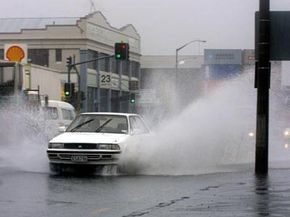
You’re behind the wheel. Rain is hammering the windshield. Your mind is elsewhere, thinking about that deadline that’s due tomorrow and the email chain you’ve been avoiding all morning. Then, you hit a patch of standing water. It’s not even deep, but the sensation is instant. The steering wheel goes light. The car slides. For a few terrifying seconds, you aren’t driving; you’re just hoping the car stays upright. You regain control. You pull over. You promise yourself you’ll be more careful next time.
That scare? That’s hydroplaning.
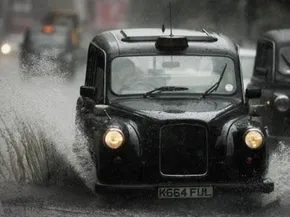
It’s not just a bad day. It’s physics. Hydroplaning happens when a layer of water builds up between your tires and the road surface. Your tires can’t channel that water away fast enough. The rubber stops touching the pavement. Traction vanishes. Steering becomes useless. Braking is useless. You’re sliding on a sheet of water, effectively. It’s like hitting black ice, but with liquid instead of frozen slush.
Any vehicle can do it. SUVs. Sedans. Trucks. But there are hard limits. The water needs to be deeper than a tenth of an inch (0.3 centimeters). And your speed? You need to be going at least 50 miles per hour (22.35 meters per second) to really start losing that grip. If you’re doing 30 in a light drizzle? You’re probably fine. Push past that 50 mark on a soaked highway, and you’re flirting with disaster.
It’s a common cause of accidents. Because of this, tire manufacturers are constantly tweaking tread patterns to push water to the sides. Engineers are also looking at new road surfaces and materials to reduce the risk. But until then, you’re on your own.
How Hydroplaning Occurs
The Physics of Losing Traction on Wet Roads
You can’t fix what you don’t understand. Hydroplaning isn’t magic. It’s physics. Specifically, it’s the loss of traction.
Traction is simple friction. It’s the grip between rubber and asphalt that lets your car move forward. When water coats the pavement, that grip vanishes. The tire hits a layer of liquid so thick and fast-moving that it can’t displace it fast enough. The water lifts the tire off the road. You’re now floating on a cushion of H2O. Zero contact. Zero control.
Most drivers blame speed. They’re right, but incomplete. Speed is a factor. So is road condition. So is tire wear. But the main culprit? Water depth.
The Danger Zone for Hydroplaning
You don’t need a flooded highway to lose control. You only need specific conditions to align.
The threshold is precise. If water accumulates to a depth of one-tenth of an inch (0.3 centimeters) for at least 30 feet (9.14 meters), you’re in the danger zone. Do that while traveling at 50 miles per hour (80 km/h) or more? You’re hydroplaning.
Several variables tilt the odds against you:
- Tire Width: Narrow tires are more susceptible. They have less surface area to cut through the water.
- Tread Condition: Worn tires are dangerous. Tread channels water away. Bald tires push it aside with less efficiency.
- Tread Pattern: Not all patterns are equal. Some channel water better than others.
- Drivetrain: All-wheel drive vehicles are surprisingly prone to hydroplaning compared to two-wheel drive. Why? Their computerized differentials may shift power to the rear tires if the fronts slip, potentially creating a swing or loss of control that doesn’t happen in simpler setups.
- Vehicle Weight: Heavy vehicles are less likely to hydroplane. The extra weight forces the tire down through the water film.
If you’re in a lightweight car with skinny tires and bald tread, you’re playing with fire in the rain.
How to Avoid Hydroplaning Before It Happens
You can’t control the rain. You can control your inputs.
1. Slow Down.
It’s obvious. It’s annoying. It works. Speed is the primary accelerant for hydroplaning. Even if you do slide, lower speed means less kinetic energy. Less energy means a shorter slide. A shorter slide means you retain the ability to recover.
2. Watch the Cars Ahead.
They’re your early warning system.
* Erratic steering? You’re approaching a slick patch.
* Water spraying up? They just hit a puddle. You’re next.
Adjust your speed before you hit the standing water. Don’t wait to feel the loss of traction. By then, you’re reacting, not preventing.
Recovering from a Hydroplane Event
Let’s say you missed the warning. You’re sliding. The car is light. The steering feels like it’s floating in space.
Panic is your enemy. Calm is your tool.
Do NOT slam on the brakes.
Do NOT oversteer.
Here is the protocol:
- Hold the wheel firmly. Keep the nose pointed straight ahead.
- Steer gently. Just enough to keep the vehicle moving in the intended direction. Don’t fight it. Don’t jerk it.
- Lift off the accelerator. Let the engine braking and air resistance slow the car.
Once you’re off the gas, the tires will eventually bite. You’ll feel the road return. That’s when you regain control.
Braking Strategies: ABS vs. Conventional
Before you hit the road, check your owner’s manual. Or ask your mechanic. You need to know if your car has Anti-lock Brakes (ABS).
If you must brake to avoid a collision:
- Conventional Brakes: Pump them rapidly and lightly. Mimic the action of an ABS system manually.
- ABS Brakes: Brake normally. Apply firm, steady pressure. Do not pump them. The computer will pulse the brakes for you, faster and better than your foot ever could.
If any part of your tire touches the pavement again, you’ll start slowing down. Trust the mechanics.
The Cruise Control Myth
The internet is obsessed with the idea that cruise control causes hydroplaning.
The story goes like this: Your car hits water. The wheels spin. The cruise control computer thinks you’re going too slow. It accelerates the car to maintain speed. You lose control completely.
There is zero evidence this happens. Modern cruise control systems detect wheel spin and disengage immediately.
However, experts still advise against using cruise control in heavy rain. Why? Because if you do hydroplane, you’ll instinctively hit the brake to disengage the system. If you’re already sliding, braking is risky. Better to avoid the situation entirely by keeping your foot on the gas and maintaining steady, moderate pressure.
Engineering the Cure: Road Design
Highway engineers have fought this battle since the 1960s. Higher speeds. Wider interstates. More accidents.
The solution isn’t just better tires. It’s better roads.
Cross Slope is the key term. This is the cross-section of the road, perpendicular to the direction of travel. It’s crowned slightly so water runs off the sides. If built correctly, water drains quickly. No standing water. No hydroplaning.
Grade matters too. Water drains better on steeper grades. Vehicles climbing a hill are less likely to hydroplane than those on a flat or downhill slope. The uphill gradient helps the tires cut through the water layer.
Concrete vs. Asphalt: The Texture War
Road builders are experimenting with materials to lower hydroplaning odds.
Concrete can be tined or grooved. These physical channels break up water sheets before they can lift a tire. It’s effective.
Asphalt is cheaper. It’s what most highways use. But you can’t groove asphalt easily. It’s prone to rutting. Ruts hold water. Held water leads to hydroplaning.
Until materials catch up, the engineering of cross-slope and grade remains your best defense when the asphalt fails you.
Other Uses for “Hydroplaning”
The word has roots in music, too.
DJs use hydroplaning to describe a scratching technique. It’s not about stopping the record. It’s about slowing it down with slight pressure. Friction between the fingers and the vinyl creates that signature bass-heavy, warbling sound.
Some DJs prefer slightly sticky fingers. Not enough to catch the record. Just enough to control the slip.
It’s a different kind of traction. A different kind of slide.
But on the highway? There’s no music. Just physics. And if you don’t respect it, you’re just waiting for the water to take over.
Where to Find More on Automotive Physics
If you are digging deeper into the mechanics of why your tires lose grip, or just want to survive the next storm without spinning out, there is plenty of ground to cover. The references above aren’t just academic exercises. They are blueprints for understanding friction, failure, and the physics that keep you upright when the road turns slippery.
Sources That Matter
The science behind hydroplaning isn’t new. It has been studied since the mid-20th century. Walter B. Horne and Robert C. Dreher laid early groundwork at NASA in November 1963. Their paper, “Phenomena of Pneumatic Tire Hydroplaning,” remains a foundational text. You will find it in the NASA technical reports server. It explains how water pressure builds up under the tread. That pressure lifts the tire off the pavement. Once contact is lost, steering becomes a suggestion.
John C. Glennon took it further. His 2006 paper, “Hydroplaning — The Trouble with Highway Cross Slope,” looks at the geometry of the road itself. It is not just about how much water is on the surface. It is about how the road is banked. A positive cross slope can channel water away. A negative slope can pool it. This matters when you are driving at highway speeds. The angle of the pavement can make or break your traction.
Ron Kurtus at the School for Champions breaks down the basics of traction loss. His March 2008 guide on preventing loss of traction is straightforward. It focuses on the interaction between rubber and road. Friction is not a constant. It fluctuates based on surface texture, tire compound, and speed. Understanding these variables helps you adjust before you slide.
G.P. Ong and T.F. Fwa from the National University of Singapore offered a modeling approach in December 2005. Their paper, “Modeling of the Hydroplaning Phenomenon,” uses computational models. They simulate how water flows under tires. This helps engineers design better tread patterns. It also helps drivers understand why deeper treads matter more than you might think.
The American Society for Testing and Materials published “Frictional Interaction of Tire and Pavement” in February 1983. J.D. Walter and his team looked at the contact patch. They measured friction under various conditions. Their data shows that friction drops sharply once a water layer exceeds the tire’s ability to displace it. This is the threshold. Cross it, and you are hydroplaning.
Erie Insurance provided practical advice in their 2009 “ErieSense” newsletter. They focused on summer hazards. Hydroplaning is not just a winter or rainy day issue. It happens in heavy showers. Even if the sun is out, standing water can be lurking in tire tracks. Their guide is a good refresher on speed limits and tire pressure.
Related Reading
If you want to expand your knowledge beyond hydroplaning, look into other critical systems.
How Crash Testing Works
Understanding the structural integrity of a vehicle helps you appreciate safety margins. Crash tests simulate extreme impacts. They show where energy is absorbed. They reveal weak points in the chassis. This knowledge informs seatbelt usage and crash avoidance.
How the Jaws of Life Work
When crashes do happen, rescue operations require heavy machinery. The Jaws of Life use hydraulic pressure to cut through steel. They pry open doors. This technology saves lives by reducing extrication time. It highlights the strength of modern automotive materials.
Top 5 Car Wreck Videos
Real-world footage offers lessons that textbooks cannot. Watch the aftermath of hydroplaning incidents. Note the speed. Note the weather. Note the road condition. These videos serve as cautionary tales. They show the rapidity with which control is lost.
How DUI Works and How Road Rage Works
Human error compounds mechanical failure. Alcohol impairs reaction time. Anger leads to reckless