


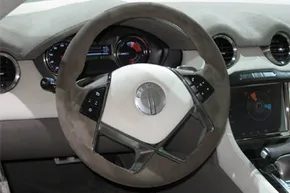
Functions are migrating. For decades, the dashboard and center console were the command centers of a vehicle. Now, those controls are moving. They are relocating to the steering wheel. This shift isn’t just aesthetic. It’s a safety strategy.
Multi-function steering wheels place the most critical inputs right where your fingers naturally rest. The logic is blunt: keep hands on the wheel. Keep eyes on the road. Reduce distraction. Increase survival odds.
The most common features have already made the move. You won’t need a manual to find these. They are ubiquitous.
- Cruise control: Set speed. Resume. Cancel. All accessible without shifting grip.
- Audio management: Volume up/down. Skip tracks. Tune presets. Integrated directly into the rim.
- Hands-free communication: Bluetooth pairing allows call answering without touching a phone.
Some manufacturers go further. Air conditioning adjustments. Heated steering wheels. Even access to onboard computers like the Ford Fusion’s 2010 SmartGauge system. These aren’t just gimmicks. They are attempts to minimize cognitive load and physical movement while driving.
“Keep your eyes on the road, your hands upon the wheel.”
This isn’t just a lyric. It’s engineering philosophy.
Why Steering Wheel Integration Matters
The argument for this integration is rooted in basic physics and psychology. Every time you reach for the center console, you create a blind spot. You remove a hand from its optimal position. You glance down.
In a best-case scenario, this takes a second. In a worst-case scenario, it takes longer. The reaction time gap widens. The risk compounds.
Steering wheel buttons eliminate this motion. You use a thumb. You press. You don’t look. You don’t let go.
At first, it feels clumsy. You might glance down to remember which button changes the station. This is normal. The brain needs to map the new interface. After a few trips, muscle memory takes over. Your thumb finds the volume knob. It finds the skip button. It happens automatically. No thought required. No eyes off the road.
This becomes critical with phone use. Many states mandate hands-free devices. Physical phone handling is illegal or heavily penalized. Built-in steering wheel controls make compliance easy. Answer a call. End a call. Select a contact. All without touching the device. The car becomes a cockpit. Not a living room.
The Factory vs. Aftermarket Reality
These features usually come standard or as optional upgrades from the factory. They are integrated into the vehicle’s electrical architecture. The buttons talk directly to the head unit or the ECU.
Aftermarket solutions exist. Pioneer and other brands sell steering-wheel-mounted remotes. These adapt older stereo systems to modern safety expectations. You can add controls to an older car. But the integration is rarely as seamless as factory units.
The question remains. Do these controls actually make driving safer? Or do they add complexity?
The answer lies in familiarity. A new feature is a distraction until it becomes instinct. Once it is instinct, it is a safety tool.
But what lies beyond the basic volume and cruise functions? The technology is advancing faster than most drivers realize.
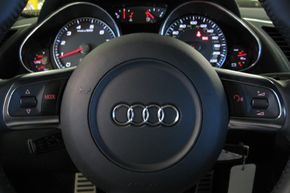

Beyond the Horn: How Integrated Controls Redefine Modern Driving Safety
The shrinking cost of consumer electronics didn’t just fill our pockets with gadgets. It migrated into our dashboards. And nowhere is that shift more visible, or more safety-critical, than in the buttons mounted directly on the steering wheel.
This isn’t about convenience alone. It’s about keeping your eyes forward. When electronics become cheap enough to embed in high volumes, they become standard. And when standard features allow a driver to ignore the radio or the phone, the road gets safer for everyone. Every second your hands stay on the wheel and your gaze stays on the asphalt reduces the odds of a split-second failure to react.
Adaptive Cruise Control and the High-Tech Button
We’ve had cruise control for decades. But the button press to engage it now often triggers a complex dance of radar and algorithms.
Old-school cruise control held a fixed speed. If traffic slowed, you braked. If traffic cleared, you accelerated to that limit. It was simple. It was also dangerous in heavy flow.
Enter adaptive cruise control.
This feature uses sensors—usually radar or laser located in the front bumper—to monitor the vehicle ahead. Set your desired speed using the steering wheel controls, and the system adjusts your speed automatically. It maintains a safe following distance, or a set time gap, between your car and the one in front. You don’t have to tap the brake unless the situation gets extreme.
Not every new car has this yet. But most modern steering wheels include the up/down or +/- buttons required to manually adjust the set speed or following distance. It’s a small interface, but it manages a high-tech safety net.
The Ford Fusion Hybrid and SmartGauge
Take the Ford Fusion Hybrid. It doesn’t just accept inputs; it displays the feedback in real-time.
The steering wheel controls interface with the SmartGauge on-board computer. Look at the dashboard. You see two LCD displays flanking a traditional analog speedometer. The driver can toggle between data streams using the dedicated wheel controls.
Power usage. Battery life. Fuel economy. Range estimates.
All of this is accessible without taking your eyes off the road for more than a glance. And because the Ford also integrates the Microsoft SYNC voice-activated system, accessed via the wheel, the driver can make calls or change tracks without manual fumbling.
It’s a practical application of an old rock philosophy. Keep your eyes on the road. Hands on the wheel. Let the buttons do the heavy lifting.
Why This Matters Now
The trend is clear. As cars become computers on wheels, the interface must move to the driver’s natural point of contact. The steering wheel is it.
If you want to dig deeper into the tech behind these systems, look into how brake assist or drive-by-wire technologies complement these controls. The more integrated the safety features, the less cognitive load on the driver. And that’s where the real accident prevention happens.
It’s not just about going faster. It’s about staying aware. And the buttons on your wheel are the first line of defense in that awareness.


