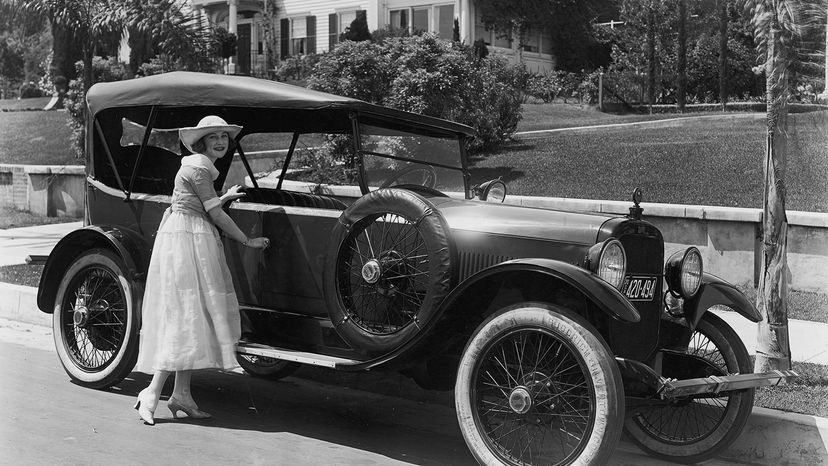
In 1900, there were only 4,192 cars on US roads. This is something new. But by 1908 the number had swelled to 63,500. The horse and buggy lost the battle to the combustion engine, and chaos began to ensue. The government needed a way to track these noisy new machines. The solution was crude, practical and completely homemade: a thin piece of metal engraved with a few letters and numbers that linked the car to its owner.
New York didn’t just suggest this; it mandated it. According to Ian Lang, senior car advice editor at Bumper.com, the New York State Legislature required vehicle registration on April 25, 1901. California followed later that year. The first results were embarrassingly informal. The first license plates in New York were actually just the initials of the car owner. There are no numbers. There is no standardization. Just a signature on a plate.
In fact, Massachusetts issued its first “official” license plate in 1903, but the United States was not even a pioneer in this field. France had been issuing license plates since 1893. Its precedent dates back to 1783, when Louis XVI forced carriage drivers in Paris to wear metal plates bearing their name and address. It was a metal-built bureaucracy long before engines.
By 1918, all 48 contiguous states had joined the registration party. However, don’t expect uniformity. The plates were a wild west of materials. Some are made of leather. Some are made of metal. Most look like printed tax forms. They typically featured the state name or abbreviation, the registration number and the year. That was it. No barcode. No hologram. Enough information to know who owns the car and when they paid their dues.
“Early license plates often only had the name or abbreviation of the state, the registration number and often the year.”
The system was functional, if barely. This solves the immediate identification problem. But the patchwork design it produced would take decades to standardize.
The hidden life of #numberplates: from prison work to digital screens
Renewing your registration changes everything. Before the 1920s, license plates were one-time purchases meant to last the life of the vehicle. Then the state got creative. They started experimenting with different formats. The front of the card has a large registration number in the middle. On the back there is the state abbreviation and a two- or four-digit expiration date. It is a system built on chaos and trial.
In the 1950s, standardization finally began. If you look at an American or Canadian plate today, it is exactly 6 x 12 inches (15 x 30 cm). This size was locked after 1956. The previous year, in 1954, the vehicle identification number (VIN) was introduced. This provides a reliable way to link registration documents to specific vehicles and eliminates confusing logistical issues.
Decoding State Plate Conventions
US states do not agree on how license plate numbers are determined. Some use randomness. For example, the state of Idaho assigns numbers and letters based on the issuing county. Each state offers designs based on local slogans and symbols.
“Whether it’s a national symbol, a famous landmark or a historical figure, Every plate has a story to tell,” Lang said.
Requirements vary. Some states require both front and back stickers. Some use only the rear plate. Wikipedia maintains a detailed list of license plate appearance and naming conventions for each state.
Customized license plates allow the driver to pick their own characters. You can create any word or phrase as long as you don’t spell out profanity. Most passenger car license plates now have six or seven characters. Some states allow personalized license plates to contain up to eight characters. The letters I, O and Q are generally prohibited. These are easily confused with the numbers 0 and 1.
Numbers and letters are often embossed or painted. Some states are moving to completely flat sheet metal. The choice depends on your state’s budget and design preferences.
Prison Labor and Plate Production
Prison labor has been used in the DMV system for decades. It meets the constant demand for new license plates. An estimated 80 percent of license plates in the United States are made in prisons. Multiple factories manufacture plates for multiple states.
In prisons, this process is done precisely by hand. The actual metal plates are stamped. Next, the plastic sheeting is applied.
California license plates are a good example. They are cut and stamped from aluminum at Folsom State Prison. The plant uses around 120 inmates. They churn out over 45,000 license plates per day. The process consumes 15,000 pounds (6,800 kilograms) of sheet metal.
Advocacy groups such as the American Civil Liberties Union have condemned the practice. Prisoners often work for less than $1 an hour. It is a low-wage labor model disguised as rehabilitation.
Some people find these skills valuable. They claim inmates learn enough to find work in the outside world when they were released. Working in the license plate factory is also a very popular job in prisons. Only those with a good conduct record are eligible.
The Shift to Electronic Plates
Most license plates ever issued are inanimate, unchanging pieces of metal. Recent developments have changed this. Electronic plates are being introduced.
California, Arizona, Michigan and Texas have all jumped on the bandwagon. In addition to old metal materials, digital registration is also possible. This is not just a sticker. This is a small flat screen. It is about the same size as a regular plate.
The technology is simple. It can be hardwired into a vehicle’s electrical system. Or it can be supplied with an internal battery. The battery life is about 5 years. When it dies, you replace the unit. No more paper tags. No more fading ink. Just a screen that updates in real time.
Will this become a standard? Maybe. Or maybe states will keep the metal plates as a backup. Change is slow. But the technology is here.
Although the main selling point of the Reviver digital license plate is the convenience factor, the price tells a different story. Registration information can be updated online and the e-ink screen is updated in real time. No more waiting for mail. No more peeling off stickers! This sounds like a dream setup for anyone tired of administrative hassles.
But convenience is not free. The monthly fee is $19.95. A four-year contract will cost you $215.40. This does not include government fees for standard registration. If you want to hardwire the plate to your vehicle’s electrical system instead of using it with a battery, there is an additional installation fee. It is adds up fast.
Who really needs digital tags?
For the average driver, renewing standard metal tags online is already cheap and easy. Why pay extra for a screen if the government doesn’t charge extra for older versions? This economics problem suggests that digital license plates will not take over personal cars anytime soon.
Instead, you can find their niche with commercial fleets. Companies managing dozens of vehicles have different needs. They can track mileage and location directly from the license plate data source. For logistics managers, this is a feature worth paying for. It turns a static identifier into real-time asset trackers.
Although consumer demand is increasing, stamped aluminum is not going away. The infrastructure for physical plates is too fixed. We’re likely to see a combination of the tech and tin on America’s roads in the coming years.
“Convenience is the main selling point…but the price tag tells a different story.”
A piece of history
The future is digital, but the past still has value. In August 2022, the first license plate issued in Illinois went up for auction. It fetched $34,000. Experts estimate it to be worth between $2,000 and $4,000. This license plate was issued by the City of Chicago in 1904. The number “1” is bold in the center of the license plate. a small piece of metal. A huge price. This is yet another reminder that there is a market for older technology.