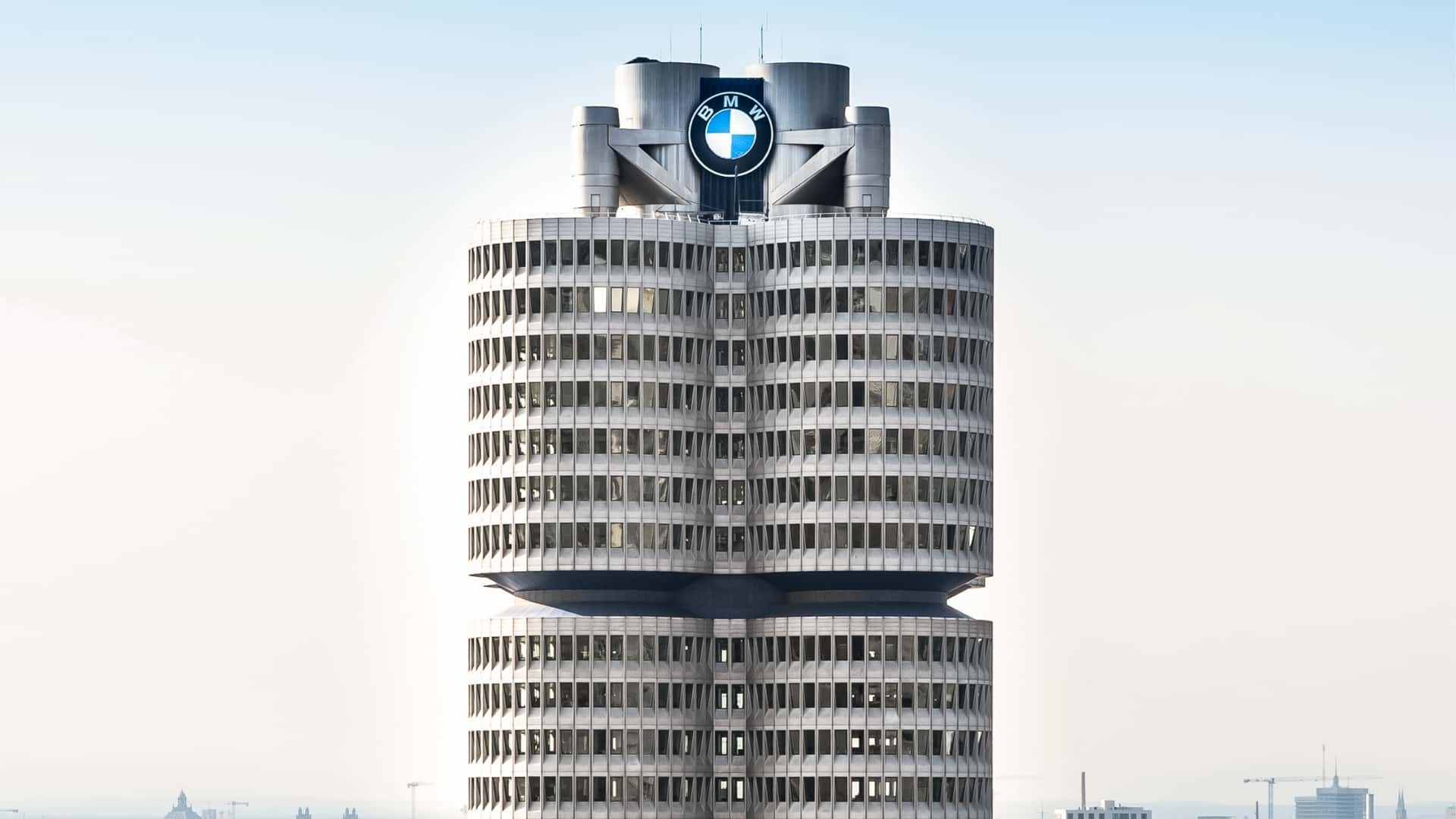
You’ve seen the towers.
Big, cylindrical things looming over Munich. They don’t look like office space. They look like props from a mid-century spy film where Bond fights a villain in a volcano lair. But they aren’t fiction.
This is where BMW lives. Specifically, the BMW World Headquarters, known to locals as the Vierzylinder or Four Cylinder.
If you’re asking yourself why a car company decided to build their administrative brain inside four massive tubes, you aren’t alone. The shape is confusing if you ignore the context. But BMW didn’t build it randomly. It’s a giant sculpture of their product history.
Why was the BMW Headquarters built to look like an engine?
The short answer is brand identity.
It’s also a little bit about urban planning during a specific moment in history. The early 1970 were a busy time for Munich. Germany was preparing to host the 1972 Summer Olympics. The city wanted to show the world a modern face. Not the past, but a future defined by design.
Enter Austrian architect Karl Schwanzer.
BMW commissioned him. He looked at Brazilian modernism—specifically Oscar Niemeyer’s work in Brasília—and had a thought. Instead of a box, what if the building was the brand?
BMW is defined by engines. Specifically, inline engines. Schwanzer proposed four vertical towers. Each tower represents a cylinder in a classic four-cylinder engine block.
It wasn’t just aesthetic flexing.
“The biggest four-cylinder in the world.”
That’s how BMW described it in 1973. They wanted a landmark that matched the engineering of their cars. The “New Class” of admin buildings.
How did they build four giant floating tubes?
Constructing the BMW Tower required some serious lifting. Literally.
The building stands 99.5 meters tall. It has 22 floors. But those floors weren’t stacked on top of each other like Legos.
Schwanzer wanted the towers to feel light. Technical. Precise.
To achieve that, he changed how the floors were made.
- Office floors were built horizontally at ground level.
- Hydraulic jacks lifted the entire floor into place.
- The floors were suspended around the four central structural cores.
This was radical for 1972.
Traditional towers support floors from the bottom up. These floors hang from the sides. This created that signature look. The structure appears to hover above the base. It doesn’t rest heavily on the ground. It floats.
Does that matter? To an architect, yes. It creates tension. To a driver, it feels like speed even when stationary.
Which architectural features define the BMW campus today?
The four cylinders aren’t alone.
If you walk around the site, you see other shapes that confuse casual tourists but make perfect sense to car nerds.
- The BMW Museum : Located next door, this circular building is often called “the salad bowl” because it resembles the top view of an engine cylinder or a carburetor bowl.
- BMW Welt : Opened much later, in 2007, this glass structure serves as the delivery center and exhibition hub. It feels futuristic, bridging the gap between the 70s engineering past and the electric future.
Together, they form one of the most photographed auto campuses on Earth.
Why does the four-cylinder design still matter?
Because the brand changed.
When the towers were built in 1972, BMW made sedans. Small, sporty ones. The four-cylinder engine was their bread and butter. It was their signature sound and feel.
Today? They make giant SUVs. High-performance M cars. Electric vehicles.
The engine layout of modern BMWs is different. You rarely see a simple four-cylinder on a flagship model. But the tower remains.
It’s a anchor. A physical reminder of where they started.
Standing 326 feet in the air, it doesn’t look outdated. If anything, the raw concrete and glass feel cleaner than many glass boxes built after it.
Architecture is frozen music, or in this case, frozen mechanics.
We look at the sky in Munich and see cylinders. Not clouds.
It makes you wonder. What does your commute look like if your office is an engine?
Does it change how you drive?