The transition to electric vehicles (EVs) was supposed to be a golden age for automotive design. Without the mechanical constraints of massive internal combustion engines and bulky cooling systems, designers theoretically gained a “blank canvas.” However, as new models hit the market, a troubling question emerges: Are we trading timeless elegance for polarizing experimentation?
A Shift Toward the Radical and the Aggressive
Recent flagship releases suggest that manufacturers are moving away from subtle beauty in favor of high-impact, often controversial, aesthetics. Looking at three major recent debuts, a pattern of “loud” design becomes apparent:
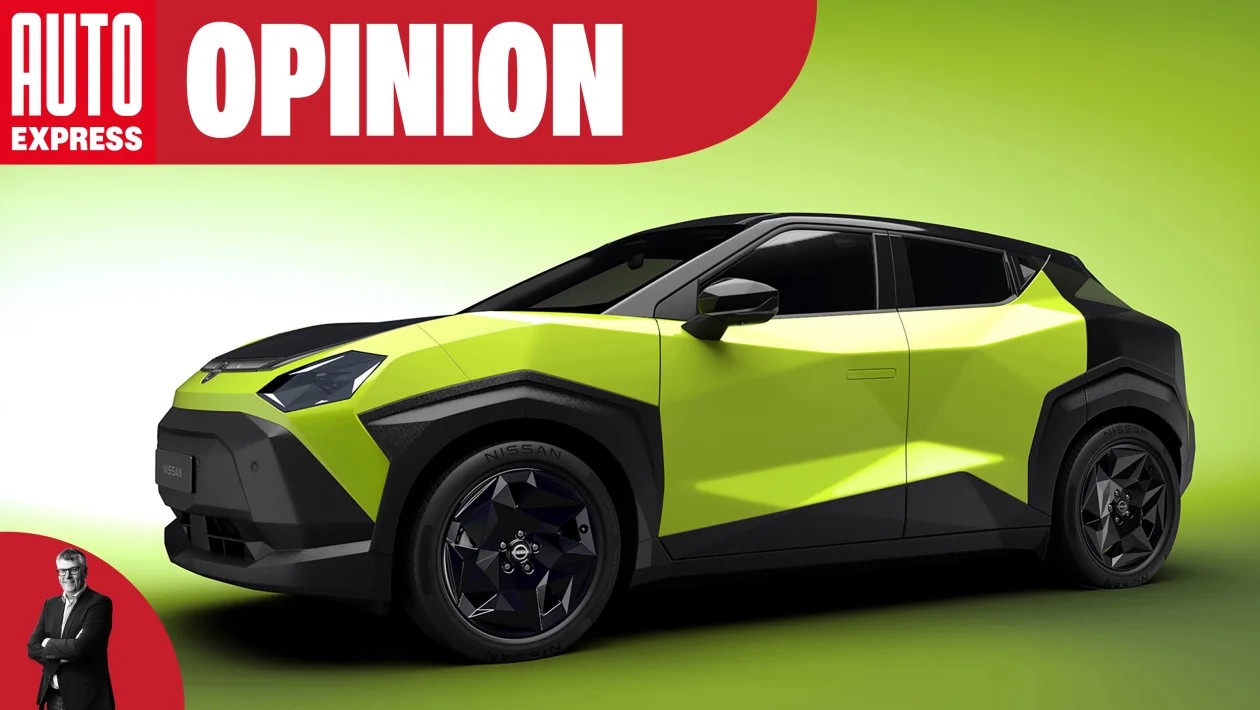
- The Nissan Juke: Moving far beyond the quirky charm of its predecessor, the new Juke embraces an aggressive, “origami-style” surfacing. While its radical departure from tradition is brave and avoids the trap of being boring, its complex lines may prove polarizing for both photographers and long-term buyers.
- The Mercedes C-Class Electric: Mercedes has leaned heavily into a maximalist aesthetic. The signature oversized grille, which has defined much of the brand’s recent identity, feels particularly “in-your-face” on this mid-sized model. It is a design that demands attention, even if it struggles to achieve grace.
- The Hyundai Ioniq 3: Standing in contrast to the others, the Ioniq 3 offers a more balanced approach. In a market increasingly crowded by budget-conscious EVs like the upcoming VW ID. Polo and the Kia EV2, the Hyundai manages to be stylish without being divisive, proving that “neat and intelligent” packaging can still win hearts.
Why Design Matters in the EV Transition
This trend toward radical or aggressive styling isn’t just a matter of personal taste; it reflects a broader shift in how car companies approach brand identity in a rapidly changing market.
In the era of petrol engines, car silhouettes were often dictated by physics. In the EV era, design is being used as a primary tool for differentiation. Because many electric platforms are becoming modular and similar under the skin, manufacturers are using “loud” exterior styling to create a sense of uniqueness and to signal “the future” to consumers.
However, this raises a significant long-term risk. There is a fine line between being pioneering and being transient. While a radical design might spark conversation today, the true test of automotive excellence is longevity—whether these cars will be viewed as icons or as dated experiments 30 years from now.
The Competitive Landscape
The battle for the “affordable EV” segment is intensifying. As brands like Renault, Skoda, and Kia race to capture the sub-£25k market, the ability to deliver a car that is both technologically sound and visually pleasing will be the deciding factor. The Hyundai Ioniq 3 currently holds an advantage by finding the “sweet spot” between being interesting and being approachable.
While the current wave of EVs succeeds in being provocative and conversation-starting, the industry has yet to prove it can maintain classic elegance in a world without engines.
Conclusion
The move to electric power has unlocked unprecedented creative freedom, but manufacturers seem to be using that freedom to favor shock value over subtlety. The success of this era will depend on whether brands can balance bold innovation with the timeless principles of beautiful design.