Fiat is currently navigating a delicate balancing act: how to modernize an icon while keeping it affordable enough for the masses. At the heart of this mission is the future successor to the Pandina (the Italian iteration of the Fiat Panda), a vehicle that remains a cornerstone of Italian mobility.
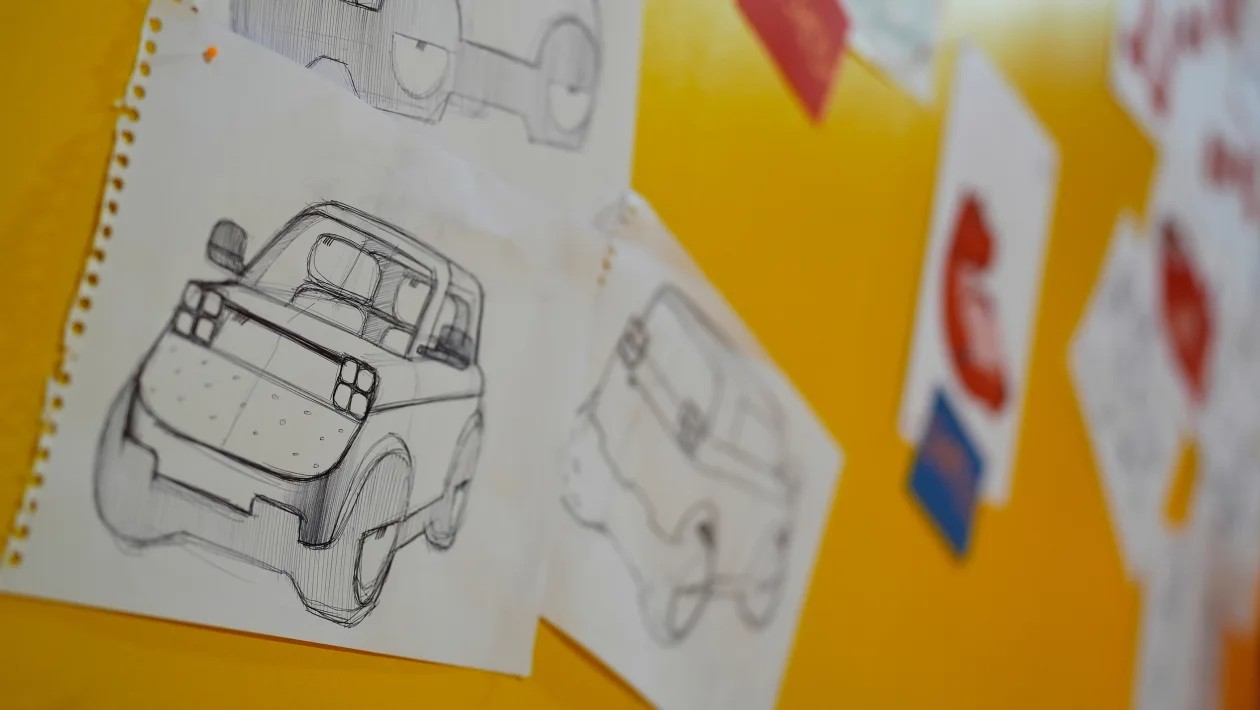
To decide which direction to take, Fiat is turning to the next generation of designers. At this year’s Milan Design Week, three student-led concepts were unveiled under the theme ‘Ciao Futuro!’. Rather than deciding behind closed doors, Fiat CEO Olivier Francois has invited the public to vote, aiming to make the development process “democratic.”
Three Visions for Urban Mobility
The three design studies presented represent vastly different philosophies on how a small city car should function in a changing world:
- The Ippo: A practical, upright four-seater with a raised ride height. It stays closest to the traditional Panda DNA, emphasizing utility and a “human-centric” design that fits the rhythm of small-town life.
- The Lumo su Misura: Focused on extreme versatility and personalization. This concept suggests a modular approach where the car can evolve with the user—transforming from a city commuter to a campervan or an off-road vehicle through interchangeable parts.
- The Fizz: The most radical departure from tradition. The Fizz treats the car as a “mobile meeting place.” Designed with a wide, glass-heavy body and bench seating, it prioritizes the experience of being stationary, turning the vehicle into a social space when it stops.
The “Multi-Energy” Strategy: Why One Engine Won’t Fit All
One of the most significant challenges for the next Pandina is the transition to greener technology without alienating its core customer base. Gaetano Thorel, Head of Fiat Europe, highlights a critical reality: the “one size fits all” approach to electrification does not work for the Pandina demographic.
The Pandina serves a massive, diverse population in Italy—from low-income families using a single car for everything to wealthy households using it as a secondary urban runabout. Because of this, Fiat is pursuing a multi-energy strategy :
- Mild-Hybrid Petrol: For drivers who need to travel long distances (e.g., from Milan to Naples) without the “range anxiety” or charging delays of an EV.
- Full Electric (EV): For urban dwellers or those with secondary homes who can utilize home charging for short, efficient trips.
This dual approach ensures that the car remains a practical tool for real-world needs rather than a purely lifestyle-driven gadget.
The Battle for Affordability
As Fiat looks toward 2029, the economic landscape is shifting. Meeting stricter Euro 7 emissions standards and the rising costs of new technology makes the traditional “budget car” price point harder to hit.
To combat this, Fiat is focusing on radical simplicity. CEO Olivier Francois has emphasized a philosophy of “what can we leave out?” By stripping away unnecessary sophistication and focusing on what actually makes sense for the driver, Fiat hopes to keep the Pandina accessible.
There is also a technical puzzle to solve. While many new Stellantis vehicles use the “Smart Car” platform, that architecture is currently too large for a sub-4-meter car. This means the new Pandina might instead leverage the Fiat 500 platform, which would allow for shared components and better economies of scale, helping to keep the sticker price within reach of the “Popolo di Pandina.”
“A car should be useful before it is sophisticated,” says Olivier Francois. “Customers aren’t asking for bigger displays; they are asking for more things that just make sense.”
Conclusion
The future of the Pandina is a high-stakes experiment in democratic design and technological pragmatism. By blending student creativity with a multi-fuel engineering strategy, Fiat aims to prove that even in an era of high-tech EVs, there is still a vital place for the simple, affordable, and essential city car.