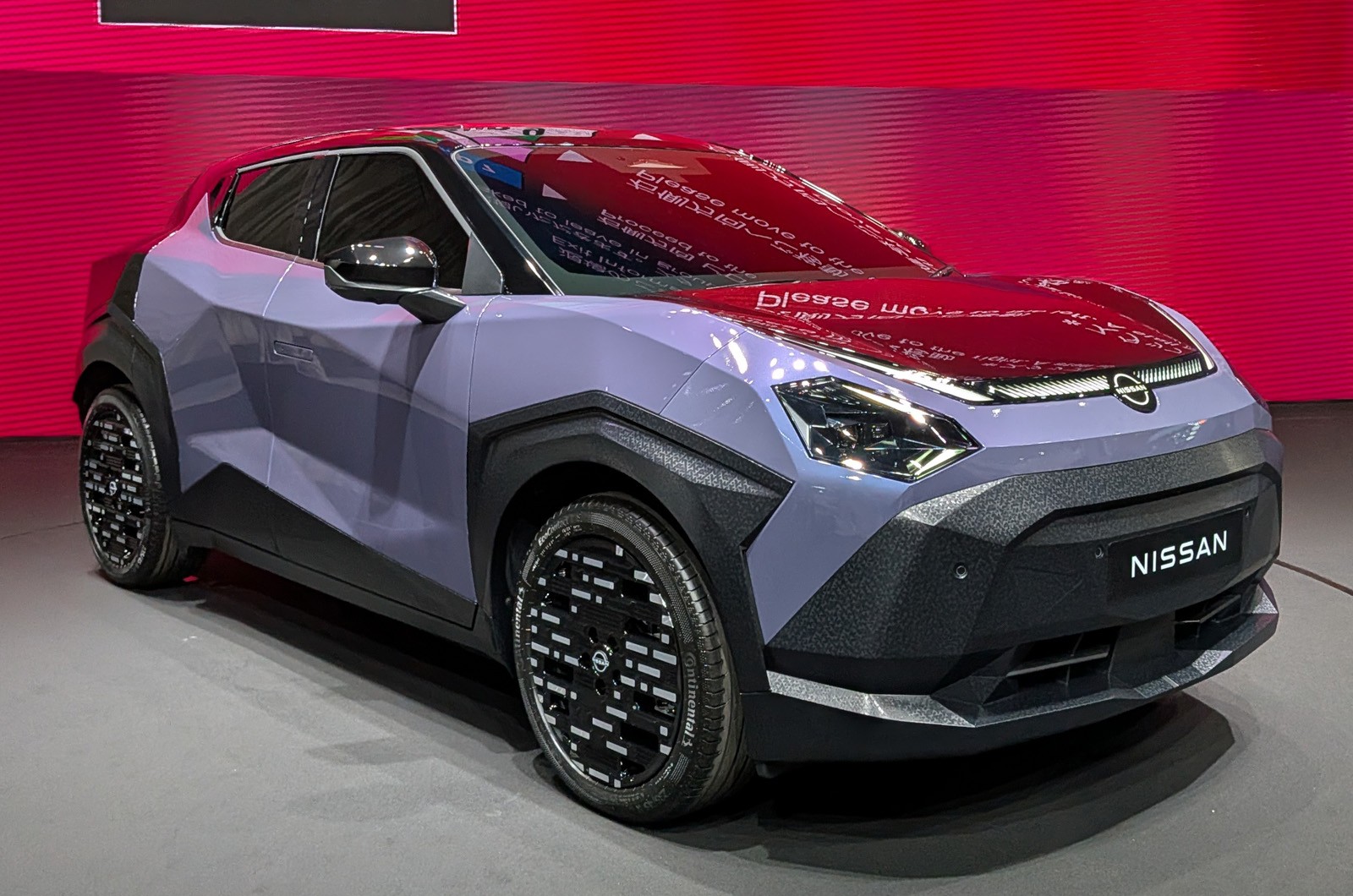
Nissan has officially pulled the curtain back on the third-generation Juke, marking the brand’s fourth foray into the fully electric market. Unveiled at the company’s “Vision Event” in Japan, the new model represents a bold stylistic pivot designed to attract a fresh demographic of drivers through unconventional design.
A Design Evolution: From Concept to Reality
The new Juke moves away from traditional SUV silhouettes, embracing a “reimagined” aesthetic that draws heavy inspiration from the 2024 Hyper Punk concept. Key features include:
– A highly sculpted, distinctive exterior.
– A unique, signature light pattern at both the front and rear.
– A radical departure from the more conservative styling of previous generations.
This design-led approach is a strategic move. By “challenging convention,” Nissan aims to differentiate itself in a crowded compact SUV market, where many electric vehicles are beginning to look increasingly similar.
Technical Foundation and Manufacturing
Built on Nissan’s dedicated CMF-EV platform, the new Juke is an exclusively electric vehicle. While specific performance metrics remain unconfirmed, technical expectations are high:
– Platform Sharing: The Juke will share much of its architecture with the Nissan Leaf.
– Production: The vehicle will be manufactured at Nissan’s Sunderland factory in the UK, alongside the Leaf.
– Expected Specs: Based on the Leaf’s current capabilities, the Juke may offer battery options ranging from 52kWh to 75kWh, potentially providing a range of up to 386 miles and power output reaching approximately 215bhp.
The Dual-Powertrain Strategy: Navigating the EV Transition
In a move that reflects the current volatility of the automotive market, Nissan will not immediately retire its hybrid models. Instead, the all-electric Mk3 Juke will be sold alongside an updated version of the current second-generation hybrid Juke.
This decision highlights a significant trend in the industry: the uneven pace of EV adoption. While Nissan remains “firmly committed to a fully electric future,” the slower-than-expected growth in electric vehicle sales forced the company to adjust its timeline. Originally, Nissan intended to replace the Mk2 entirely with the Mk3, but maintaining the hybrid option provides a necessary bridge for consumers not yet ready to commit to full electrification.
Bridging the Gap
To ensure continuity, the existing Mk2 Juke is slated for an update that will:
1. Refresh its seven-year-old technology.
2. Align its visual design more closely with the new electric model.
Competitive Landscape
The new Juke enters a highly competitive segment, positioned to battle directly against rising electric compact SUVs such as the Ford Puma Gen-E and the Kia EV3. Its success will likely depend on whether its radical styling can convert “concept enthusiasts” into mainstream buyers.
Nissan’s decision to offer both electric and hybrid powertrains is a pragmatic response to market realities, providing consumer choice while simultaneously accelerating the brand’s long-term transition to zero-emission mobility.
In summary, the new Nissan Juke represents a high-stakes attempt to combine radical design with electric performance, using a dual-track sales strategy to navigate the complex transition from hybrid to fully electric motoring.