BMW is preparing to launch a significant evolution of its flagship performance model. The upcoming seventh-generation BMW M5 will mark a pivotal moment for the M division, introducing plug-in hybrid (PHEV) technology for the first time. This shift represents a broader trend in the automotive industry: the marriage of high-output internal combustion engines with electrification to meet stricter emissions standards without sacrificing raw power.
A Powerhouse Powertrain
The new M5 will move away from being a pure petrol machine, instead utilizing a hybrid setup derived from the BMW XM SUV. The core of this system is a twin-turbo 4.4-litre ‘S68’ V8 engine, paired with an electric motor integrated directly into the eight-speed gearbox.
Key performance specifications are expected to include:
– Total Output: Approximately 708bhp in its initial launch tune (a significant jump from the 591bhp found in the current Competition model).
– Hybrid Integration: The electric motor will supplement the V8 to provide instant torque and massive acceleration.
– Electric Range: Despite the focus on performance, the 18.6kWh battery is expected to offer an electric-only range of over 43 miles, making it viable for short, emission-free commutes.
The Weight Challenge: Power vs. Mass
While the increase in horsepower is impressive, it comes with a technical trade-off. The addition of a heavy battery and electric components is expected to push the car’s weight to roughly 2,435kg —nearly half a tonne more than previous generations.
To combat this added mass and maintain the driving dynamics expected of an M car, BMW is focusing on:
– Aggressive Aerodynamics: A wider track, a larger rear diffuser, and a chunkier roof spoiler to increase downforce.
– Enhanced Stance: The car will sit lower than the standard 5 Series, featuring wider tyres (285mm at the front and 295mm at the rear) to manage the power and weight.
– Braking and Handling: Large cross-drilled discs and bespoke alloy wheels will be essential to manage the kinetic energy of such a heavy, high-speed vehicle.
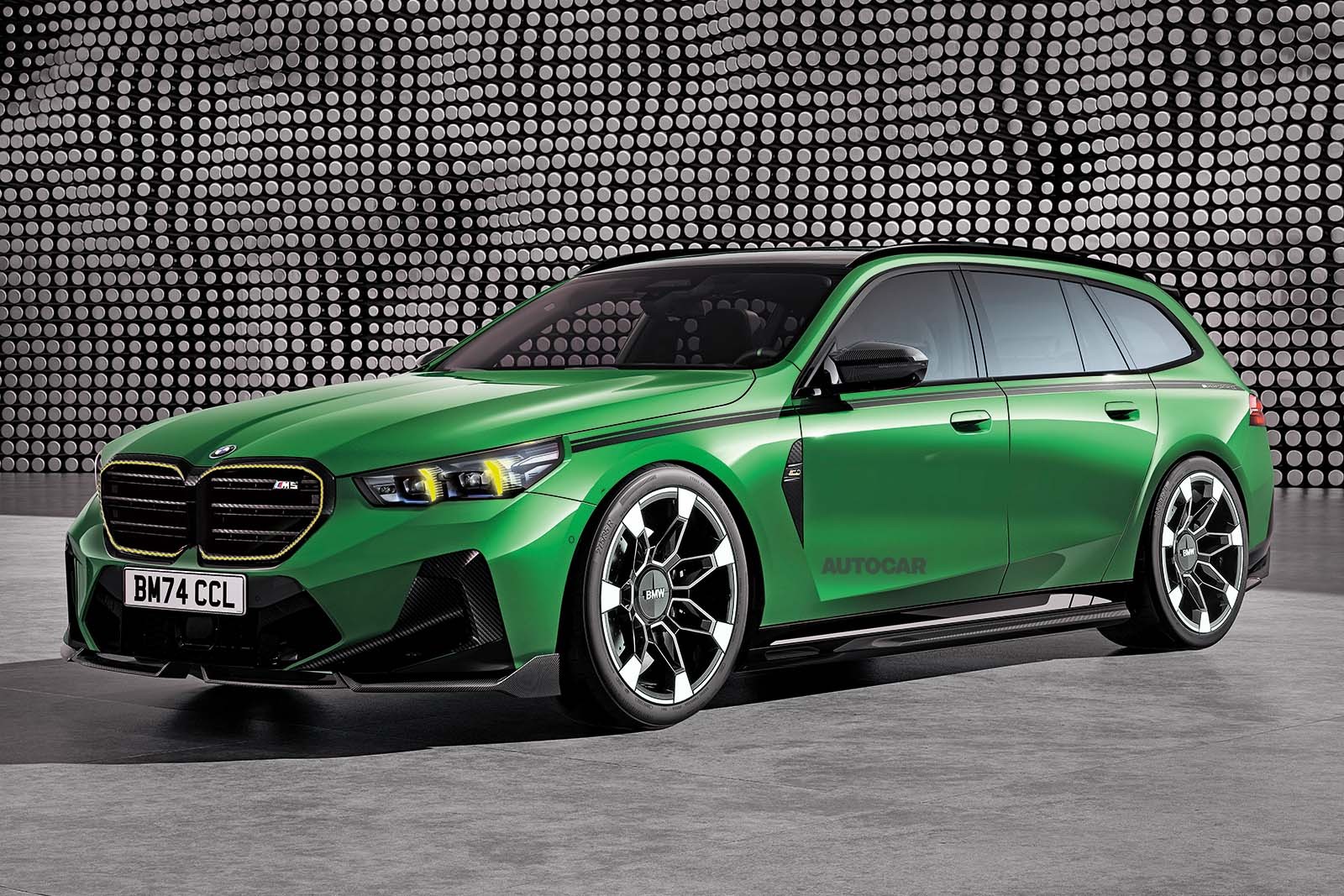
The Return of the M5 Touring
In a move that will delight enthusiasts, the new generation will include an M5 Touring (estate) model. This marks the first time since the V10-powered E60 generation that BMW has offered a full-performance estate in the M5 lineup.
The M5 Touring aims to bridge the gap between a track-focused machine and a practical family vehicle. It is expected to outperform rivals like the Audi RS6 and the Mercedes-AMG E53 in terms of raw power, positioning it as one of the most potent estates currently on the market.
The End of an Era for Combustion?
The arrival of the hybrid M5 is a strategic bridge in BMW’s long-term roadmap. While the M division is not abandoning internal combustion engines (ICE) immediately, the direction is clear:
1. Hybridization: Using electrification to keep high-performance petrol engines compliant with modern regulations.
2. Pure Electric Future: BMW is already planning a pure-electric M sports saloon based on the next-generation 3 Series for 2026.
3. Neue Klasse: The eventual transition to an all-electric lineup via BMW’s new “Neue Klasse” platform.
The new M5 represents the “last hurrah” of the traditional high-displacement V8, reimagined through the lens of electrification to survive in a changing regulatory landscape.
Conclusion
The upcoming BMW M5 is a complex balancing act between extreme performance and the practical necessity of hybridization. While the added weight poses a challenge for handling, the massive increase in horsepower ensures that BMW’s flagship remains a dominant force in the high-performance segment.