The automotive industry is witnessing a strange shift in how manufacturers approach “luxury” and convenience. Seres, the manufacturer behind the Aito brand, has officially been granted a patent for an integrated in-vehicle toilet system. While the concept may initially seem unusual, the patent reveals a sophisticated attempt to solve one of the most persistent problems in modern vehicle design: maximizing interior space without sacrificing utility.
The Design: A “Drawer” for Personal Hygiene
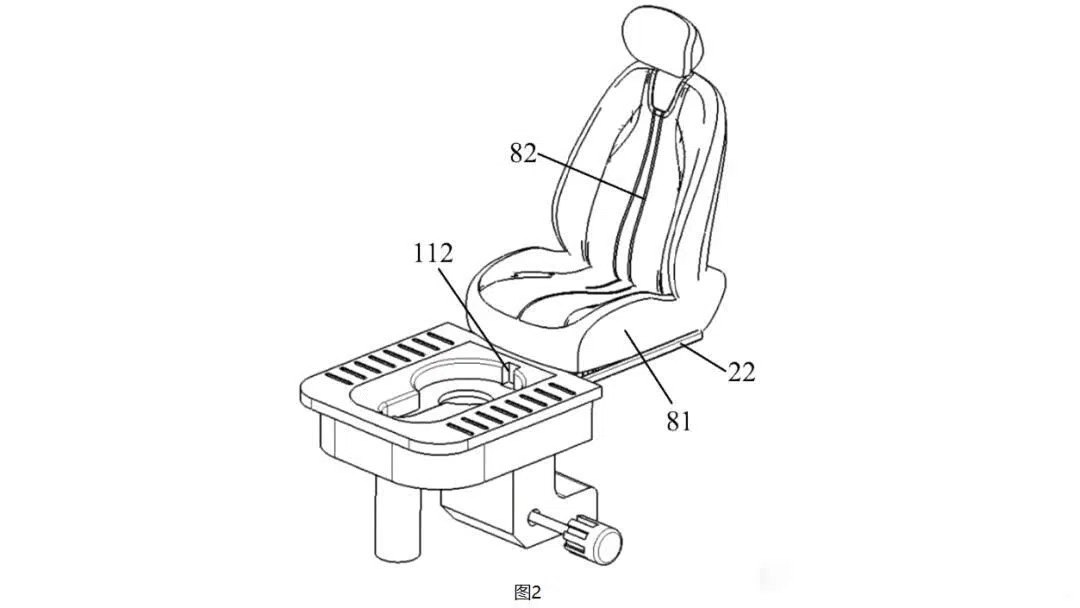
According to the utility model patent (CN224104011U), the system is not a bulky, permanent fixture. Instead, it utilizes a highly compact, retractable mechanism.
The core components include:
– A toilet body integrated into the vehicle’s architecture.
– A sliding rail assembly that allows the unit to be pulled out from beneath a passenger seat when needed and pushed back into concealment once finished.
By utilizing the “dead space” beneath the seats, Seres aims to provide a functional amenity that remains invisible to passengers during normal driving, maintaining the aesthetic and spatial integrity of the cabin.
Engineering vs. Convenience: How it Differs from Previous Concepts
This patent represents a significant leap in integration compared to previous industry attempts. To understand why this matters, one must look at how “portable” solutions have traditionally functioned:
- Traditional Portable Solutions: Most existing ideas, such as those proposed by Polestone, involve storing a toilet seat ring in a central console to be used with disposable plastic bags. These are essentially “add-on” kits that require manual setup.
- The Seres Approach: Seres is pursuing true integration. Rather than a kit, the toilet is a built-in component of the vehicle’s interior, functioning more like a sliding drawer than a piece of camping equipment.
The Hurdles: Engineering and Psychology
Moving from a successful patent to a mass-produced reality involves overcoming several high-level engineering obstacles, particularly for New Energy Vehicles (NEVs).
- Space Constraints: In electric vehicles, the chassis is heavily occupied by large battery packs. Finding room for drainage pipes, wastewater storage tanks, and mechanical rails without compromising battery safety or passenger legroom is a massive challenge.
- Sanitation and Odor Control: For a built-in system to be viable, it must achieve absolute sealing. Any failure in odor prevention or wastewater management would render the luxury feature a liability.
- The “Ick” Factor: Perhaps the greatest barrier is psychological. Even with advanced deodorization, the concept of a permanent waste management system inside a passenger cabin faces significant consumer resistance.
Market Context: A Push for Innovation Amidst Declining Sales
The timing of this patent is notable given the current market position of Aito’s flagship models. Data indicates that Aito M9 sales have seen a downward trend in China, with recent figures showing a 44.2% year-over-year decrease.
As Huawei and Seres prepare to launch updated variants of the M9 to revitalize demand, this patent suggests a strategy of hyper-differentiation. By offering highly unconventional, high-tech “lifestyle” features, the companies are attempting to capture the attention of a premium market that is increasingly looking for more than just standard transportation.
While the technical feasibility of a built-in toilet is high, its success will depend on whether manufacturers can solve the complex plumbing and odor issues inherent in compact EV chassis.
Conclusion
Seres’ patent represents a bold attempt to redefine vehicle utility through extreme space optimization. However, whether this becomes a genuine luxury standard or remains a niche novelty depends on overcoming significant engineering and psychological barriers.