Mercedes-Benz is doubling down on its “digital-first” philosophy with the upcoming 2027 C-Class EV. As the brand transitions toward a fully electric lineup, the interior design is shifting away from traditional tactile luxury and moving toward a heavy reliance on high-tech displays.
The Three-Screen Standard
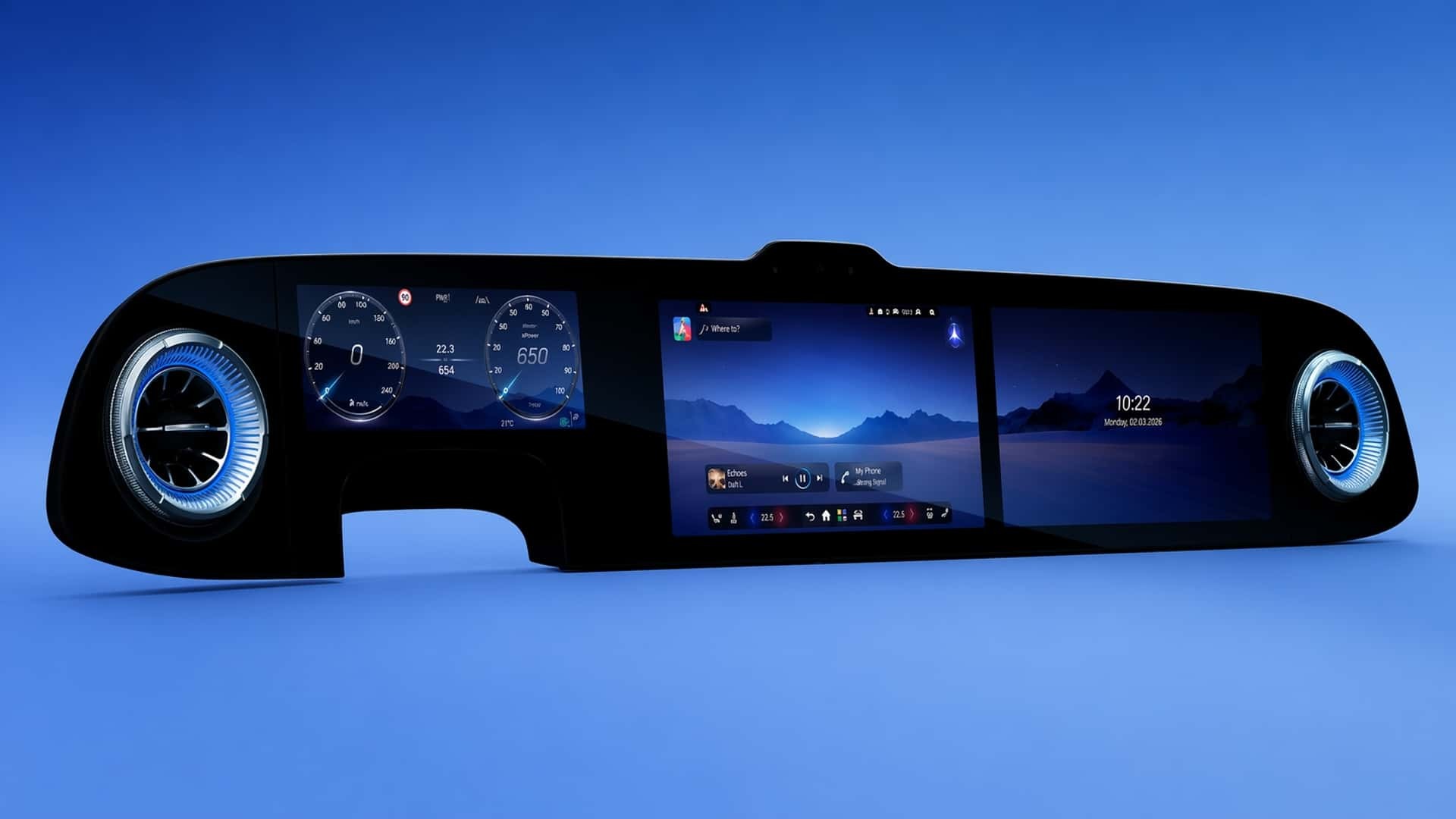
Unlike some entry-level models where screens are stripped away to save costs, the base configuration of the C-Class EV (codenamed W520) arrives with three distinct digital elements housed under a single piece of glass:
- A 10.3-inch digital instrument cluster for the driver.
- A 14-inch central infotainment touchscreen for vehicle controls.
- A “digitally animated trim panel” located on the passenger side.
It is important to note that in the base setup, the passenger-side display functions essentially as a digital photo frame. While it can display user-selected images, it lacks touch capabilities. To turn this panel into a functional touchscreen, buyers must opt for the “Superscreen” package.
The Tiered Display Hierarchy
Mercedes offers three distinct levels of digital integration, allowing customers to choose how much “screen real estate” they want in their cabin:
- The Base Setup: Three separate displays under one glass cover, with a non-touch passenger panel.
- The Superscreen: An upgrade that adds touch functionality to the passenger-side display.
- The Hyperscreen: The premium option featuring a massive, continuous 39.1-inch display that eliminates bezels entirely, creating a seamless glass wall across the dashboard.
A Shift in Design Philosophy: Screens vs. Luxury
This move reflects a broader trend in the automotive industry. Competitors like BMW and Audi are also pushing for larger, more immersive digital interfaces. Mercedes design chief Gorden Wagener has defended this direction, noting that large screens are necessary for modern functions like media consumption and detailed visual references.
However, this trend raises a significant question regarding the definition of luxury. There is a growing tension between technological capability and material craftsmanship :
- The Benefit: Massive screens allow for unprecedented integration of software, navigation, and entertainment.
- The Trade-off: The dominance of glass and plastic can limit the use of traditional high-end materials. As Wagener himself once noted, “screens are not luxury.”
By prioritizing digital real estate, Mercedes risks sacrificing the tactile, beautifully crafted switchgear and physical textures that historically defined the brand’s premium identity.
Two Different Worlds
Despite sharing a name, the 2027 C-Class EV and the current internal combustion engine (ICE) C-Class are fundamentally different vehicles. While the gas-powered model is due for a facelift later this year, the electric W520 is built on a dedicated EV platform. This means the electric model is not merely a “converted” gas car, but a ground-up redesign centered around electrification and digital integration.
The transition to electric power is acting as a catalyst for a total interior overhaul, moving Mercedes from the era of physical buttons to an era of seamless glass.
Conclusion
The 2027 C-Class EV signals Mercedes-Benz’s commitment to a digital-centric future, prioritizing massive, integrated displays over traditional tactile controls. Whether this “screen-heavy” approach will be perceived as cutting-edge innovation or a loss of classic luxury remains to be seen.