


You know the sound. It’s a chaotic, mechanical stutter that announces a semi-truck is descending a steep grade. Some drivers love the reassurance of that noise. Others hate it with a passion. But beneath that aggressive, rhythmic chugging is a serious engineering solution designed to keep multi-ton vehicles from turning into molten metal projectiles.
The phenomenon is widely known as a Jake brake, named after its primary manufacturer, Jacobs Vehicle Systems. While the nickname has stuck, the technology is technically an engine brake. These systems are standard in heavy-duty commercial vehicles like semitrailers and buses, where traditional friction braking isn’t enough.
The Physics of Downhill Speed
Braking is fundamentally a battle against energy. Friction converts kinetic energy into heat. In a passenger car, this is manageable. But a fully loaded 18-wheeler carries massive momentum. When that rig hits a steep downhill grade, gravity is constantly accelerating it.
If the driver relies solely on standard friction brakes, the pads and rotors generate immense heat. Too much heat leads to brake fade. Eventually, the brakes overheat and fail completely. In that scenario, you don’t have a stopping problem; you have a fatal accident waiting to happen.
Passenger vehicles can mitigate this by simply downshifting. The engine’s compression helps slow the car. But for a heavy-duty truck, the sheer weight difference makes standard engine braking insufficient. The truck needs more resistance than the engine alone can naturally provide.
How an Engine Brake Actually Works
This is where the Jake brake changes the game. It turns the engine into a braking mechanism. Instead of just burning fuel to create power, the system modifies the engine’s cycle to absorb energy.
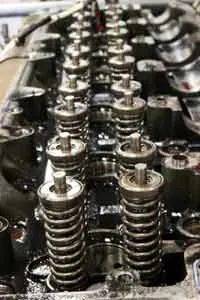
Standard diesel engines release exhaust gases to create a slight vacuum. This exhaust flow actually helps pull the pistons down, aiding efficiency. An engine brake reverses this. It keeps the exhaust valves open longer, allowing the high-pressure exhaust to escape prematurely. This prevents the exhaust stroke from providing a “boost” to the piston.
Instead, the piston has to push against the trapped air in the cylinder. The engine compresses the air, then releases it rapidly through the exhaust. The energy required to compress that air is drawn from the vehicle’s motion. The result? The truck slows down without wearing out the service brakes.
Safety, Savings, and Noise Complaints
The benefits are straightforward. By using the engine to manage speed:
* Safety increases: Drivers maintain control on long descents without risking brake failure.
* Costs drop: Friction brakes and tires last significantly longer because they aren’t doing all the work.
* Efficiency improves: Less wear on the entire braking system means lower maintenance bills for fleet owners.
But this safety feature comes with a social cost. The noise is distinctive. It’s a loud, staccato rat-a-tat-tat that echoes through neighborhoods. Because of this, many municipalities have banned the use of engine brakes in populated areas. If you drive through a city or residential zone, you’ll often see signs explicitly prohibiting their use.
The debate continues to simmer. Is the noise a necessary evil for highway safety, or an unjustified disturbance? The answer depends on who you ask and where you are.


