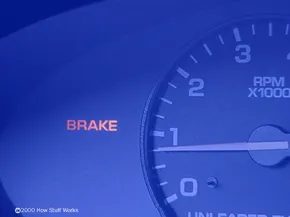
You turn the key. The dashboard floods with amber and red icons. It’s a quick bulb check, a momentary theater of warnings that should vanish within three seconds. If that red brake symbol stays lit, or worse, if it never lights up during that initial scan, you’re dealing with a mechanical issue or a burnt-out bulb. But if that brake warning light persists after startup, it’s screaming for attention.
It’s rarely just one thing. The light is a binary switch for two very different scenarios. First, you’ve likely left the parking brake engaged. A simple release usually clears the code. But if the lever is down and the light remains, you aren’t just dealing with a stuck handbrake. You’re looking at a loss of hydraulic pressure in one half of the braking circuit.
The Split-System Failure
Modern passenger vehicles rarely rely on a single master cylinder pushing fluid to all four wheels. Instead, they use a split system. This is a safety redundancy. If one line fails, the other half of the car still brakes. The combination valve monitors this split. When pressure drops significantly in one circuit—say, the front-left and rear-right diagonal pair—the sensor trips. The brake warning light illuminates to tell you that your stopping power is halved.
This isn’t a “check engine” light that can wait until next Tuesday. You have half your brakes working. The car will pull to one side under heavy braking. The pedal may feel spongy or travel further to the floor. If you suspect fluid loss or a leak in the master cylinder, do not drive the vehicle. Find a safe spot, engage the parking brake firmly, and call for a tow. The next step involves checking the reservoir, but if the light is on due to pressure loss, simply topping off fluid won’t fix the underlying leak or air in the lines.

When the Red Light Won’t Turn Off
Pull over. Calmly. Slowly.
If the emergency brake release doesn’t kill that red warning light, something is wrong. You’re not in a panic situation yet, but you’re no longer in the clear. The light staying on usually means one half of your braking circuit has less pressure than the other. This is a fail-safe design. Dual-circuit brakes are standard for a reason. If one line blows, the other still has work to do. But your stopping power is already cut in half.
Two things usually cause this split. A leak somewhere in the hydraulic system. Low brake fluid levels. Either way, the pressure imbalance is real. Do not drive this car. Period. Pull over, engage the parking brake, and call for a tow or a mobile mechanic. If you must move the vehicle a few feet to get off the road, do it. But don’t plan on driving it to the shop. The brakes will fade. They might lock. You could lose control.
The Yellow ABS Warning
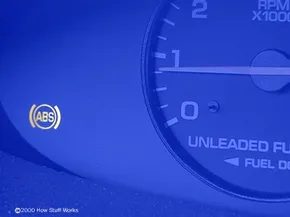
Not all warning lights are created equal. If your dashboard flashes an amber or yellow light marked ABS, the situation is different. It’s less urgent than the red brake warning. The antilock braking system has detected a fault and disabled itself.
This is not a failure of the brakes themselves. It’s a failure of the computer that prevents wheel lockup. Your base hydraulic brakes still work. You can stop the car. You just can’t slide over snow or lock up on wet pavement without skidding. The controller has essentially thrown a wrench in the gears to keep you safe from erratic ABS behavior.
You can drive the car to a mechanic in this state. Just drive carefully. Avoid hard braking. Leave extra stopping distance. ABS isn’t just a luxury feature for sporty driving; it’s a safety net for emergency stops. Without it, you’re relying on muscle memory and good tires to keep the wheels turning.
What to Do Next
If your brakes are failing, address the root cause. Check for leaks. Look under the car. Inspect the master cylinder. Top off the fluid if it’s low, but know that low fluid usually means a leak somewhere else. It’s never just “low fluid” for no reason.
For deeper dives into the mechanics at play, look into how hydraulic pressure transfers through brake lines. Understand how the antilock system modulates that pressure. And always know what to do when the pads wear out or the fluid boils.