Turbochargers used to be the exclusive domain of race tracks and exotics. Now? They are in your daily commuter. The real question isn’t just how much hp does a turbo add? anymore. It is about efficiency. Modern turbos squeeze more life out of smaller displacements. They keep highway speeds attainable while sipping fuel. This shift changes everything. It is not just about raw power. It is about doing more with less.
The Mechanics of Forced Induction
A turbocharger is a forced induction system. It works by compressing incoming air. Compressed air allows the engine to pack more oxygen into each cylinder. More oxygen means you can burn more fuel. The result? Bigger explosions. Stronger pushes on the pistons. A turbocharged engine outperforms its naturally aspirated counterpart of the same size. The power-to-weight ratio skyrockets. A 2.0-liter engine can rival a 4.0-liter V8 in output. This is why manufacturers downsize engines. Smaller engines mean fewer trips to the pump.
The magic happens in the exhaust.
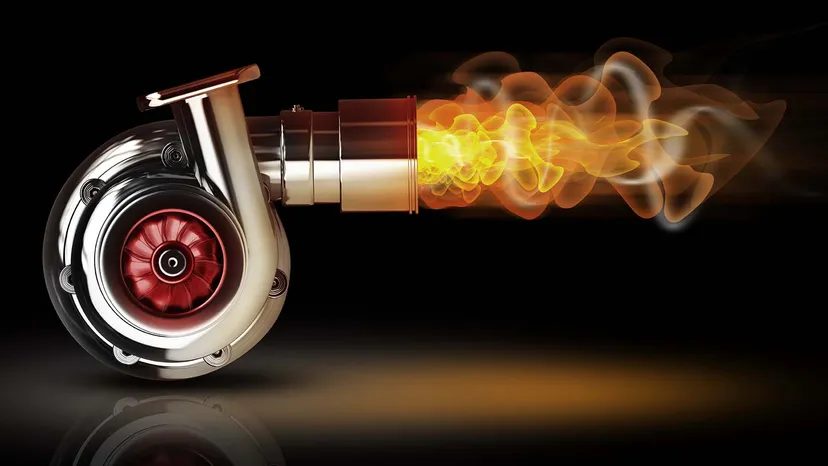
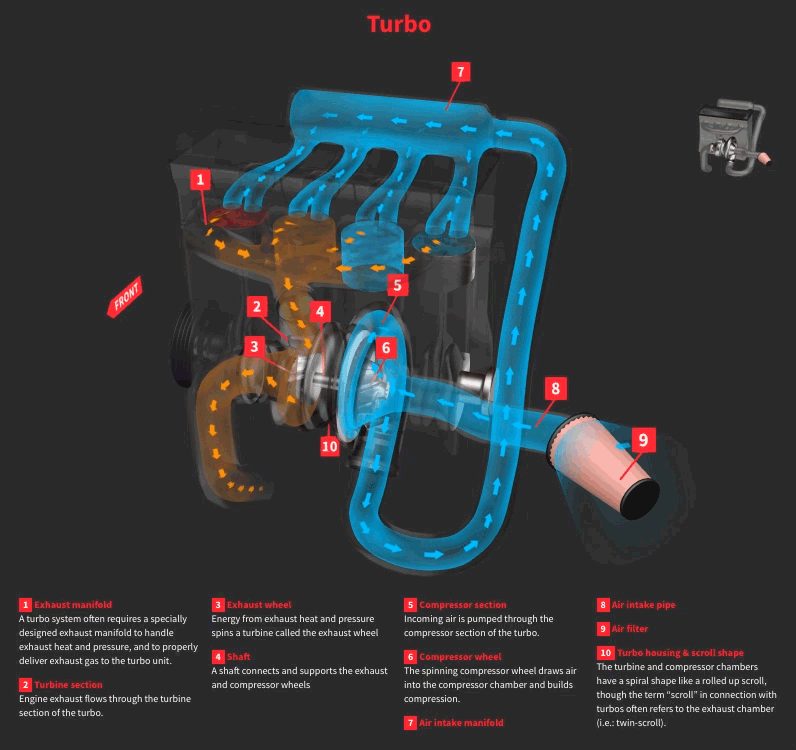
The system captures waste exhaust gas. This gas spins a turbine wheel. The turbine is connected to a compressor wheel via a central shaft. The compressor forces air into the intake manifold. The turbine spins insanely fast. We are talking 80,000 to 200,000 rpm. Think about that. Your car engine idles at 800 rpm. Redlines around 7,000. The turbo spins up to 30 times faster. It also operates in extreme heat. The exhaust gases are hot. The turbine survives this by using ceramic bearings or advanced alloys. It is a delicate, high-speed dance.
Turbos and Engine Longevity
Adding a turbo stresses an engine. It increases cylinder pressure. Temperatures rise. The engine block and head must handle these loads. Modern engines are built stronger. They use reinforced blocks. They have better cooling systems. Direct injection helps control combustion. These advancements allow smaller engines to tolerate turbocharging. They don’t blow up. They last. The key is proper maintenance. Oil changes matter. High-quality synthetic oil helps the turbo bearings. Cool down periods after hard driving help the turbine. Neglect kills turbos. Speed kills them. Turbo lag is another factor. The turbine needs exhaust flow to spool. At low rpms, the turbo might not be helping. This creates a delay. Modern variable geometry turbos reduce this lag. They adjust the vane angle. They spool up faster. The result is power when you need it. Not just at high revs.
Fuel Economy vs. Performance
Why choose a turbo? The answer depends on your driving style. If you tow heavy loads, the extra torque helps. If you commute, the efficiency wins. Smaller engines use less fuel at cruising speeds. The turbo only engages when needed. This dual nature is the turbo’s superpower. It offers the best of both worlds. You get punchy acceleration. You get decent mpg. It is a compromise. A naturally aspirated engine is smoother. It has linear power delivery. No lag. No extra complexity. But a turbocharged engine can produce significantly more power from a smaller footprint. The debate continues. Some purists hate turbos. They claim it

Boost is the cheapest horsepower you can buy. It’s also the most misunderstood. You want more power? You need more air. Simple physics. You can bore out the cylinders, add a whole new bank of them, or slap a turbo on the existing setup. The last option wins for most enthusiasts who don’t want to rebuild their engine from scratch.
How Much Horsepower Does a Turbo Actually Add?
Let’s cut the fluff. A stock engine breathes at 14.7 psi at sea level. That’s atmospheric pressure. It’s the baseline. When you bolt on a turbo, you’re forcing more air into those cylinders.
Typical boost levels sit between 6 and 8 psi. Do the math. Add that to the existing 14.7, and you’re looking at roughly 20–23 psi total. That’s nearly 50% more air density. In a perfect world, 50% more air equals 50% more power.
It’s not a perfect world.
Thermodynamics is cruel. Turbos are not 100% efficient. Heat kills power. Friction kills power. The turbine spinning in the hot exhaust stream isn’t free energy; it costs work. This creates back pressure. During the exhaust stroke, the piston has to fight against that pressurized gas leaving the cylinder. It’s a tax. A small one, but it exists.
So, what’s the real number? Expect a 30% to 40% gain.
If your base engine makes 200 horsepower, a well-tuned turbo might push it to 240–280 hp. Not double. Not even close. But it’s noticeable. It’s visceral. It’s enough to make daily commuting less boring.
Turbine vs. Compressor
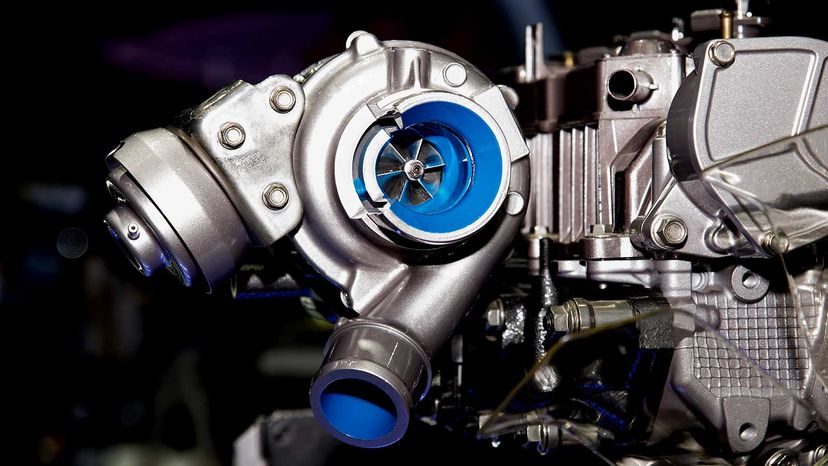
The magic happens on a single shaft. Two wheels. One axis.
The exhaust manifold feeds hot, fast gas into the turbine. This is the exhaust side. The gas hits the turbine blades, spinning the wheel. Faster exhaust flow equals higher RPMs. Simple.
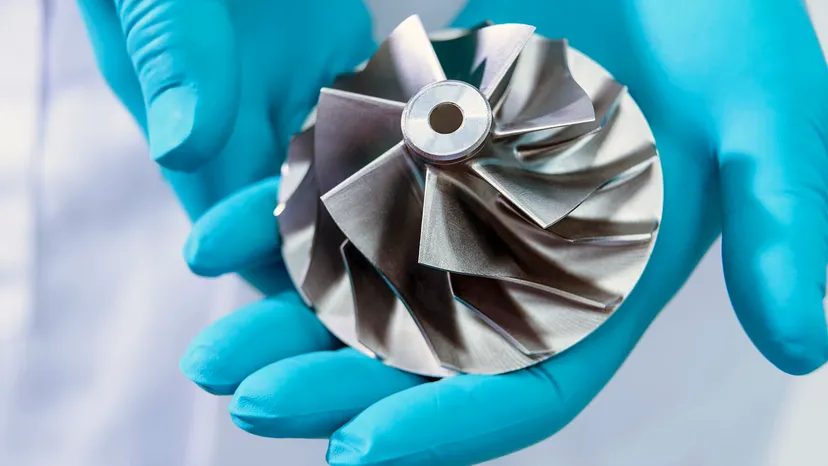
That shaft connects to the compressor on the intake side. This wheel sits between the air filter and the intake manifold. It’s a centrifugal pump. It sucks air in the center and flings it outward via centrifugal force. Pressurized air follows.
The result? Dense air. More oxygen. More fuel can be burned. More explosions per minute. More torque at the wheels.
Why Your Gains Aren’t Linear
You might think that 10 psi of boost always equals the same power gain. It doesn’t.
Engine architecture matters. A 2.0L four-cylinder reacts differently than a 5.0L V8. Turbo size matters. A small turbo spools fast but chokes out at high RPMs. A big turbo makes massive power at the top end but lags until you’re already passing someone. Tuning matters. Ignition timing, fuel mixture, and intercooler efficiency all dictate how much of that potential actually hits the pavement.
“Turbochargers allow an engine to burn more fuel and air by packing more into the existing cylinders.”
But the inefficiency isn’t just about heat. It’s about restriction. The turbine sits in the exhaust path. It’s a filter with a fan inside. It restricts flow. The engine works harder to push exhaust out. That’s the back pressure we talked about. It subtracts power from the firing cylinders. You gain by compressing intake air. You lose by restricting exhaust flow. The net result is the 30–40% sweet spot.
Design and Placement
The turbocharger bolts directly to the exhaust manifold. It’s not a bolt-on accessory you just hang off the frame. It integrates into the engine’s breathing cycle.
Look at the **

Get a shaft spinning at 200,000 rpm and you will destroy standard hardware. Most bearings would literally explode under those loads. That is why turbochargers rely on fluid or hydrodynamic bearing technology. Instead of metal grinding on metal, the shaft floats on a thin layer of pressurized oil.
This setup does two critical jobs. First, it keeps friction low enough for the shaft to spin freely. Second, it acts as a heat sink, pulling thermal energy away from the shaft and other hot components. Without that constant oil circulation, the turbo would melt itself into a solid lump of steel within seconds.
But there is a ceiling to how much boost you can safely run. The turbo forces air into the cylinders. The piston then compresses that air further. More compression means higher temperatures. When air gets hot enough, it can ignite the fuel mixture before the spark plug even fires.
This is knocking.
Knocking is destructive. It happens because compressed air heats up. If that temperature spikes past the fuel’s auto-ignition point, you get uncontrolled combustion. It sounds like a metallic ping in the exhaust, but it feels like a hammer in the engine block.
To fight this, turbocharged cars often require high-octane fuel. Higher octane resists premature ignition. If boost pressures get really aggressive, engineers may have to lower the engine’s compression ratio. It is a brutal trade-off. You sacrifice some low-end efficiency to keep the engine from tearing itself apart at high load.
Many systems use an intercooler to solve part of the heat problem. This device sits between the turbocharger and the engine cylinders. It cools the compressed air before it enters the combustion chamber. Cooler air is denser. It also reduces the risk of knocking.
Designing a turbocharger is mostly about managing these compromises. The next section breaks down the specific parts that make this possible.
Turbocharger Parts
Solving Turbo Lag and Boost Control
Turbo lag is the Achilles’ heel of forced induction. You hit the pedal. Nothing happens. Then, suddenly, the car kicks you in the back.
The delay exists because the exhaust gas has to physically spin the turbine up to operating speed. It takes time to build momentum. During that brief window, you are just driving a naturally aspirated car.
Manufacturers use a wastegate to manage this. It is a pressure relief valve. It senses boost pressure directly. If the turbine spins too fast, the wastegate opens. Exhaust gas bypasses the turbine blades. The turbine slows down. This prevents over-boosting and protects the engine.
A smaller turbocharger spins faster. It reduces lag. But it chokes out power at high RPMs. The wastegate lets you use a small turbo for quick response and dump excess exhaust to keep it from destroying itself.
Precision Bearings for Faster Spool
Fluid bearings are standard. Oil cushions the shaft. But oil creates drag.
High-end turbos use ball bearings. These are not your hardware store parts. They are ceramic or steel hybrids. Precision machined to microns. They handle extreme heat and speeds.
Less friction means less inertia. The shaft spins up faster. The turbine spools quicker. Lag shrinks.
Some manufacturers also use a lighter shaft. Less mass means less energy is required to accelerate the assembly. The result is a turbocharger that responds almost instantly to throttle input.
Twin Turbo Setups for Broad Torque
One turbo is a compromise. It is either fast but small, or slow but large.
Twin turbochargers solve this. You install two units of different sizes. A small turbo handles low RPMs. It spools fast. You get immediate throttle response. No lag.
When RPMs rise, the small turbo maxes out. The large turbo kicks in. It provides massive airflow. The engine retains power at high speeds.
This setup mimics the power curve of a larger engine. It feels linear. It feels powerful. It eliminates the gap between low-end torque and high-end horsepower.
Intercoolers: Density Beats Pressure
Compression creates heat. Hot air expands. It becomes less dense.
A turbocharger compresses air to force more molecules into the cylinder. But if that air is hot, it expands. You might have 7 psi of pressure. But if it is hot, it contains fewer oxygen molecules than cooler air at the same pressure.
Power comes from oxygen. More oxygen means more fuel can be burned. More burn means more power.
An intercooler or charge air cooler fixes the heat issue. It looks like a radiator. Air flows through sealed internal passages. Outside air is blown across the fins by the fan.
The intercooler drops the temperature of the compressed air. Cooler air is denser. At 7 psi, intercooled air contains significantly more oxygen molecules than hot air. The engine burns more efficiently. Power increases. Knocking decreases.
High Altitude Performance
Mountains thin the air. A naturally aspirated engine loses power at high altitude. Fewer oxygen molecules enter the cylinder. The engine chokes.
A turbocharger compensates for this. It compresses the thin air. It forces a denser mixture into the cylinder.
The power loss is not gone. But it is far less severe. The turbo maintains manifold pressure. The engine breathes. It performs closer to sea-level output.
Fuel Management and Tuning
Modern engines use oxygen sensors in the exhaust. They monitor the air-to-fuel ratio.
When you add a turbo, more air enters the engine. The ECU detects this. It adds fuel automatically. This maintains the correct stoichiometric ratio.
However, there are limits.
If you install a turbo with too much boost capacity, the stock fuel system may fail. The fuel pump might not deliver enough volume. The injectors might be at their maximum flow rate. The ECU software may also limit fueling to protect the engine.
In these cases, stock components are insufficient. You need larger injectors. A high-flow fuel pump. ECU remapping.
Without these upgrades, the engine runs lean. It overheats. It knocks. It breaks.
FAQ: Turbocharger Myths and Facts
What is the difference between a turbocharger and a supercharger?
Superchargers are mechanically driven by the crankshaft via a belt. They draw power directly from the engine. Turbochargers use exhaust gas energy. They are technically a type of supercharger, but they are self-powered by waste heat.
How much horsepower does a turbocharger add?
A properly installed turbo can increase horsepower by 30% to 40%. For a typical sedan, that is 70 to 150 additional HP. It depends on the engine size and the turbo spec.
Is a turbocharger bad for your engine?
Not inherently. But it increases stress. Compression raises temperature. High heat can cause pre-ignition or knocking. If the cooling system or compression ratio is not managed, it damages the engine. Proper tuning and cooling mitigate this risk.
What is the best turbocharger brand?
There is no single best brand. Garrett, BorgWarner, and Honeywell are major OEM suppliers. Aftermarket brands like Precision Turbo or BorgWarner’s S200 line are popular for builds. Research your specific engine platform. Visit a specialist.
How much does a turbocharger cost?
Prices vary by vehicle. Smaller cars are cheaper. Trucks are more expensive. Aftermarket turbos range from $1,500 to $7,500. This price is often just the part. Labor for installation and tuning adds thousands more.