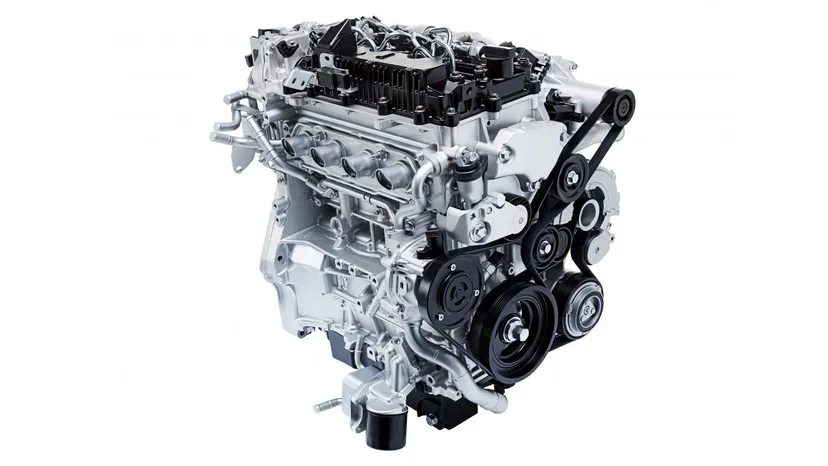
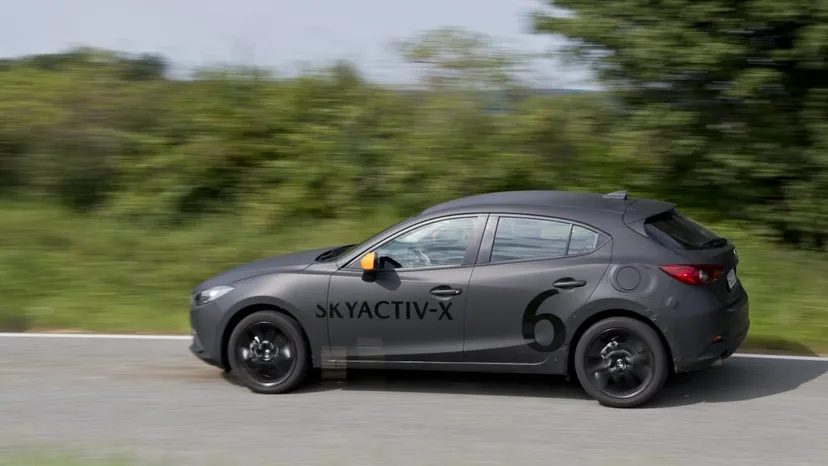
Summer 2017. Mazda dropped a bombshell on the auto industry. They claimed to have tamed the beast: a compression-ignition gasoline engine ready for passenger cars. The promise? A 20 to 30 percent jump in fuel economy. That is not a typo. For a gasoline engine, that is a massive leap.
Before you dismiss this as marketing fluff, consider the history. Compression-ignition isn’t new. Formula 1 has dabbled with it. Other manufacturers have tried and failed to make it viable for the street. Mazda’s Skyactiv-X is different. It is the first of its kind to hit the production line.
Jay Chen, a powertrain engineer at Mazda, walked us through the mechanics. To understand the breakthrough, you need to understand the basics.
The Spark vs. The Squeeze
Gasoline engines rely on spark plugs. You know the drill. Air and fuel mix in the cylinder. The plug fires. Boom. Combustion. It is precise. It is reliable. It works in almost every condition. But it has limits.
Diesel engines play by different rules. They do not use spark plugs. They use extreme compression. The air gets squeezed until it gets hot enough to ignite the fuel on contact. No spark needed. This process is more efficient. Hence, diesels often get better EPA ratings than their gas counterparts with similar specs. But diesels are heavy. They are expensive. They are not exactly sporty.
So, what if you could combine them? What if you could squeeze gasoline like a diesel, but keep the lightness and responsiveness of a gas engine?
That is the goal. Higher compression equals higher efficiency. Mazda figured out how to do it.
How Skyactiv-X Works
The engine traps exhaust gases inside the cylinder. It adjusts the timing of the intake and exhaust valves to keep this mix contained. Then, the fuel injectors spray gasoline into this highly compressed, hot mixture. The pressure alone ignites the fuel. No spark plug required for the main combustion event.
It is a hybrid approach. It borrows the best parts of both worlds.
There are two ways to achieve this. Homogenous Charge Compression Ignition (HCCI) mixes air and fuel before compression. Gasoline Direct Compression Ignition (GDCI) squirts fuel into an already compressed mix. Mazda’s Skyactiv-X uses a variation of HCCI. It is the first mass-produced engine of this type.
The Catch: It’s Not Simple
Achieving compression ignition in a gasoline engine sounds easy in theory. In practice, it is a nightmare of precision. The engine must switch between spark-ignition and compression-ignition modes constantly. At low loads, it uses spark plugs. At higher loads, it switches to compression ignition.
This transition is where the magic happens. And where most engineers have failed.
Why It Matters
Fuel economy numbers are nice. But efficiency is the real story. By burning fuel more completely, you waste less. You get more miles per gallon. You reduce emissions. Mazda claims a 20 to 30 percent improvement. If true, that changes the landscape for small displacement engines.
The Skyactiv-X is not just a new engine. It is a proof of concept. It shows that combustion engineering still has room for innovation. It challenges the idea that diesels are the only path to high efficiency.
The next sections will dive deeper into the pros and cons. We will look at the real-world performance. We will see if the 20 to 30 percent claim holds up on the road. For now, just remember: Mazda didn’t just tweak an engine. They reinvented how gasoline burns.
“The lack of ‘spark’ helps diesel engines achieve higher EPA ratings than gasoline engines with otherwise similar specs.”
This shift marks a departure from traditional internal combustion. It is not a minor update. It is a fundamental change in how we think about burning fuel. The Skyactiv-X engine represents a significant step forward in automotive engineering. Whether it becomes the standard remains to be seen. But the technology is here. And it is working.

The Fine Line Between Power and Explosion
Compression-ignition engines boast a distinct efficiency profile compared to their spark-ignition counterparts. They consume less fuel. They convert more of that fuel into usable work rather than wasting it as heat or ignition loss. Consequently, they emit fewer pollutants.
Mazda powertrain engineer Jay Chen describes the mechanical difference with a simple analogy. Spark-ignition is like lighting one corner of kindling and watching the flame crawl across the paper. Compression ignition resembles spontaneous combustion. The air-fuel mixture hits critical pressure and temperature simultaneously. The entire charge changes phase at once. This releases energy abruptly.
“[Compression ignition] can extract more power… from the same amount of air while using two to three times less fuel and at much cooler combustion temperatures.”
Theoretically, this is superior. In practice, it is fragile. These engines are finicky. If they were robust, we would be driving them already.
Diesel fuel gels in freezing weather. Gasoline remains liquid. Ambient conditions and fuel quality heavily influence compression ignition performance. Until recently, these engines only existed in stable labs or rough prototypes unsuitable for production.
The cylinder environment must be precise. Incorrect pressure or temperature breaks the process. Cold temperatures risk damaging sensitive components. High temperatures cause knocking. This occurs when the mixture detonates prematurely. It wastes fuel and degrades performance. Spark-ignition engines tolerate a wider margin of error.
Reliability demands a precise ratio of air, fuel, and exhaust gases. Compression must be exact. Heat application must be timed correctly. Since no one has built a reliable compression-ignition gasoline engine yet, the process requires further refinement.
The Future of Gasoline Engines
Speculation hit hard after Mazda’s announcement. Would a mass-market compression-ignition engine rescue the internal combustion engine? With the industry pivoting toward hybrids and EVs, could a refined gas engine be efficient enough to compete?
Chen, a Mazda engineer, outlines the logic. The goal is to squeeze every drop of efficiency out of the internal combustion engine. Once perfected, this tech—used alongside electrification—aims to deliver powertrains that last well into this century. The metric is strict. Mazda believes it can match or beat the “well to wheel” CO2 emissions of pure battery electric vehicles, even those charged via fossil fuel-heavy grids.
In short. A gas-powered car can be as efficient as an electric one. Maybe more so. Let’s look at why this breakthrough differs from past attempts.
Previous Attempts: Saturn, Mercedes, and Hyundai
Back in 2007, Motor Trend tested a Saturn Aura with a compression-ignition engine. Fuel consumption dropped by 15 percent compared to the standard model. GM planned to release similar vehicles by 2015. Then Saturn died. GM shifted focus to the Chevrolet Volt and pure electric platforms.
Mercedes-Benz was working on a system called DiesOtto. Ford had a project too. Neither made it to production.
Hyundai offers a clearer explanation of why these projects stall. Their efforts surfaced around 2013. The goal was a spark plug-free compression-ignition engine. Target release: 2023.
Promising on paper. Reality checked hard in 2016.
The components weren’t strong enough for the required compression. You can strengthen the block, crank, and bearings. That’s how diesel engines survive the pressure. But it costs money. It adds weight. It reduces overall efficiency.
Hyundai planned to use a turbocharger to maintain compression and boost power. They quickly realized a supercharger was also needed. That busted the budget. Worse, the pollution output wasn’t nearly clean or efficient as planned. The project was scrapped. It was too expensive. Too dirty.
How Skyactiv-X Solves the Spark Problem
Mazda has been developing this tech just as long as its competitors.
“Skyactiv-X was always in the plans even before the first generation Skyactiv was launched,” Chen says.
The roadmap started in 2009 with Skyactiv Technology. The key was unconventionally high compression ratios. This improved efficiency and powertrain performance. It required a synergistic combination of existing techniques. Things believed impossible for production engines became reality.
So what is Skyactiv-X? It’s Mazda’s strategy of boosting compression for efficiency. But they had to tweak the process. They added a spark plug.
Why? The engine switches between compression-ignition and spark-ignition based on what is most efficient at the moment. This seems to contradict high-compression basics. Chen says it works.
“This breakthrough, which we call spark-controlled compression ignition (SPCCI), greatly expanded useable range of compression-ignition operation and control,” Chen explains. “It provided the solution for a seamless transition between CI [compression ignition] and SI [spark-ignition] combustion modes used at high engine speeds.”
The spark plug is the magic ingredient. It enables smooth running. It adjusts for conditions. It is used only when absolutely necessary.
The engine monitors itself. It adjusts operation based on environmental conditions. Driving style. Driver preferences. Settings.
The Supercharger and Market Timing
After conceiving the idea, Mazda took another two years to develop the engine. One major decision emerged.
Vehicles with Skyactiv-X engines will feature superchargers. The goal is to boost horsepower specs. This improves driving dynamics. It helps convince buyers to take a risk on new technology.
When can drivers expect it? A Mazda spokesperson declined to disclose which vehicles will be first equipped. Availability dates are also undisclosed.
We don’t know if these cars will cost more than comparable spark-ignition models. Speculation suggests they will. While Mazda is first to market, other manufacturers are almost certain to follow. The race is on.