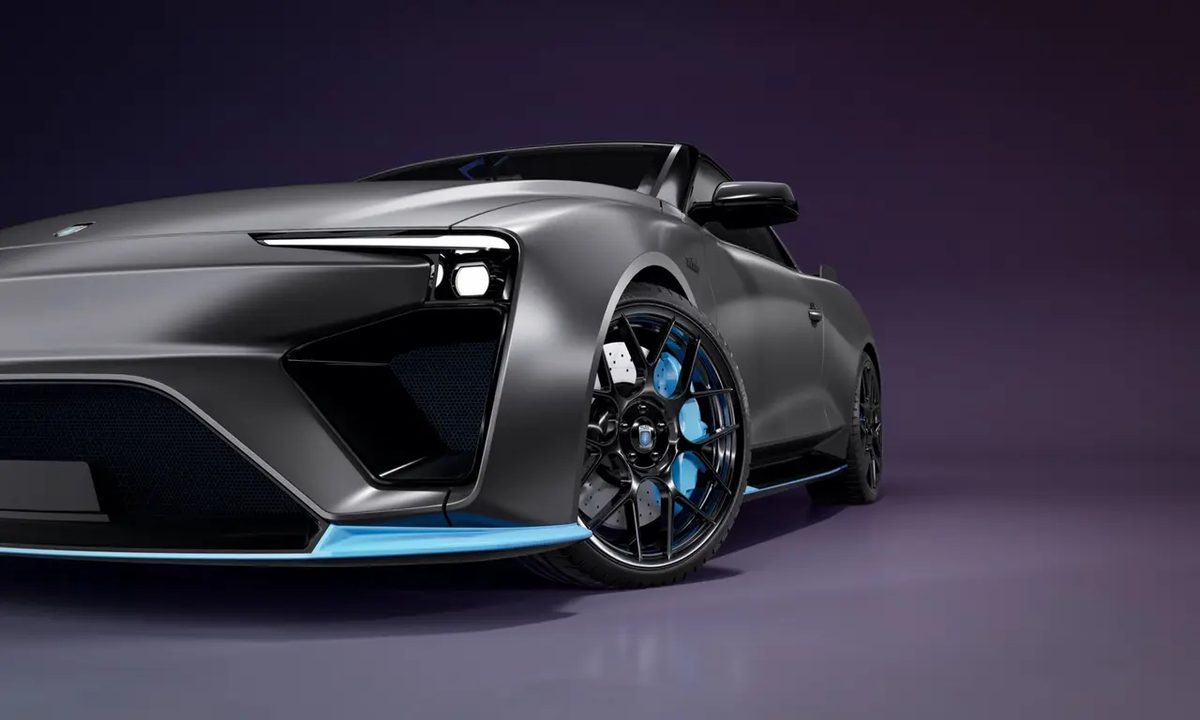
Supercars are rarely just about speed. They are rolling laboratories. Budget constraints disappear when you are building a halo car for the global stage. Engineers push concepts to the breaking point. Take the Koenigsegg Gemera. It is a 1,700-horsepower hybrid GT. It runs on E85 superethanol. It proves that alternative fuels can coexist with insane performance.
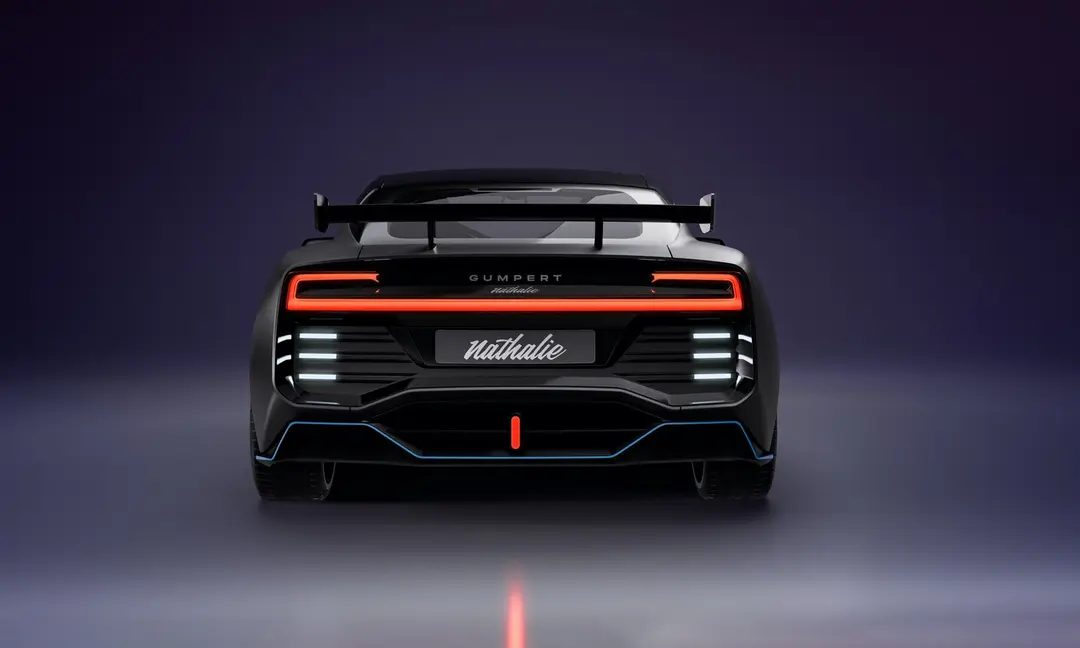
Germany’s Gumpert Automotive has taken a different path. They did not just tweak an engine. They rebuilt the powertrain from the ground up. The result is the Nathalie. It is named after the daughter of founder Roland Gumpert. The name is personal. The technology is radical.
First-Electric Methanol Supercar
This is not a plug-in hybrid. It is not a battery-electric vehicle in the traditional sense. The Nathalie uses a fuel cell stack. It runs on methanol. Also known as wood alcohol. This makes it the first supercar of its kind. A pure electric drivetrain fed by chemical energy stored in liquid fuel.
Most enthusiasts associate methanol with racing dragsters. Or early industrial chemistry. Here it powers a high-performance grand tourer. The logic is sound. Methanol is cleaner than gasoline. It is easier to produce and transport than hydrogen. It does not require the massive infrastructure of hydrogen refueling stations.
Design and Performance Specs
Let us be honest about the looks. The Nathalie is not a masterpiece of aerodynamic sculpture. It borrows heavily from the Nissan GT-R. The silhouette is familiar. The front end is aggressive but not unique. If you are judging by aesthetics alone, you will be bored.
The interest is under the skin. And on the axles.
Every wheel has its own electric motor. There is no central combustion engine. No gearbox. No driveshafts. Just four electric hubs. The total output is 400 kW. That translates to 544 horsepower. It sounds modest for a supercar. But torque delivery is instantaneous.
Gumpert claims a 0 to 100 km/h sprint in 2.5 seconds. The top speed is limited to 300 km/h. Those numbers are serious. They place the Nathalie in the conversation with the top tier of modern electric performance cars. The acceleration profile will be brutal. The lack of shift lag means power is always available.
“The Nathalie uses a fuel cell stack running on methanol, making it the first supercar of its kind.”
Why Methanol Matters
Why go this route? Battery weight is a constant enemy. Electric supercars often struggle with range and charging times. The Nathalie sidesteps these issues. Methanol can be refueled in minutes. It has a high energy density. It is also carbon-neutral if produced sustainably.
This setup removes the need for massive battery packs. It reduces the overall weight of the vehicle. It also simplifies the thermal management system. The fuel cell generates heat. That heat can be used for cabin heating or battery conditioning.
The Real Question
Can a methanol-powered supercar scale? Gumpert says yes. The Nathalie is not a prototype. It is a production-ready concept. The technology exists. The supply chain for methanol is
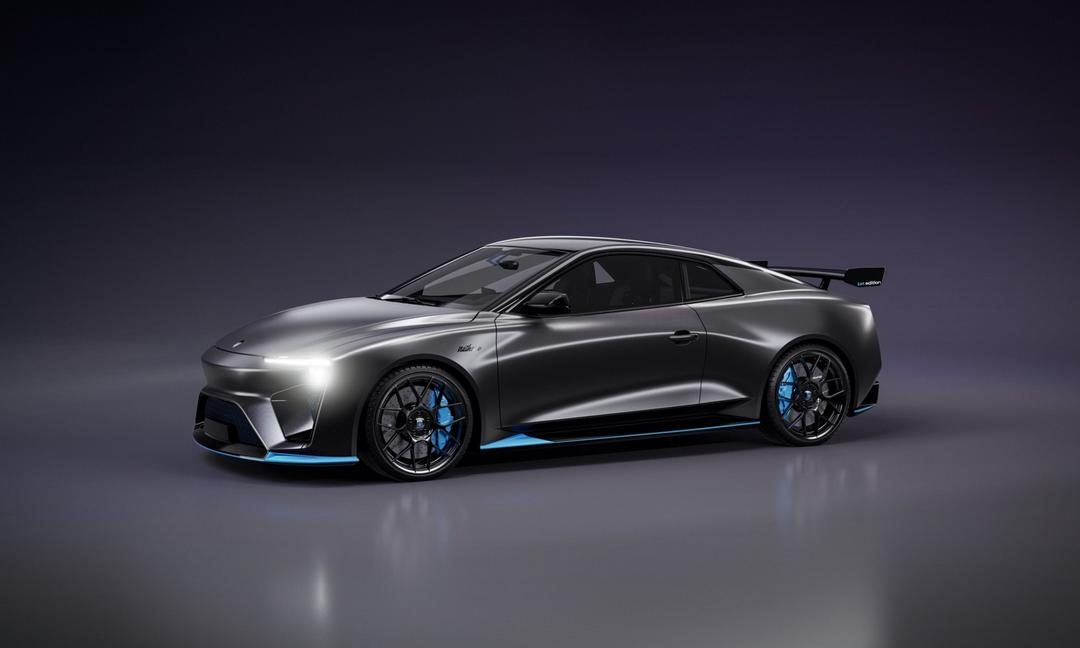

Range anxiety? Not with a tank of methanol
The math is brutal but simple. Roland Gumpert’s team built a powertrain that doesn’t just charge a battery. It pairs a 15 kW methanol fuel cell with a buffer battery. Think of that small battery as a turbocharger for the supercar. It smoothes out the power delivery. It gets recharged via regenerative braking and low-speed driving. The fuel cell itself handles the heavy lifting. It pulls from a 65-liter methanol reservoir.
Refueling takes about three minutes. That’s not a typo. Three minutes.
The result is staggering range. The Nathalie claims 820 km at an average of 120 km/h. In eco mode, that jumps to 1,200 km.
“It is my vision of an electric car that doesn’t stop when the battery is empty that paved the way for this innovation,” says Gumpert.
Sounds ideal. Until you consider the chemistry.
Methanol is highly toxic. It’s heavily regulated. You can’t just pull into a standard gas station and ask for a fill-up. The infrastructure simply isn’t there for consumer-grade methanol yet.
Gumpert knows this. He’s not ignoring the logistics problem. He’s sidestepping it with a direct-to-consumer model. The plan involves express delivery of methanol to owners in Germany, Austria, and Switzerland. For North America and the Middle East, the goal is to build out a dedicated supply chain. It’s not a quick fix. It’s a logistical gamble.
The car itself isn’t cheap. Production is capped at 500 units. The price tag sits at €407,000 per vehicle. It’s an exclusive club.
First deliveries were originally slated for the second half of 2021. The timeline has shifted in the real world, but the engineering ambition remains. You’re buying a car that treats refueling like a pit stop, not a chore. You’re also buying the right to store a chemical that can kill you if handled incorrectly.
It’s a trade-off. Massive range for a complicated fuel supply. Is the convenience of a three-minute fill-up worth the regulatory headache? The Nathalie suggests yes. The rest of the auto industry is still trying to figure out if it’s worth the risk.
The V8’s Final Stand: Why the Mustang and Camaro Are Doubling Down
The V8 isn’t dead. It’s just getting weird.
Ford and GM didn’t panic when the writing was on the wall. They leaned in. While European rivals were quietly swapping thunder for electrons, American muscle cars doubled down on displacement. The result isn’t nostalgia. It’s a final, defiant scream before the electric era takes over the showroom floor.
This isn’t about efficiency. It’s about sound. Torque. The smell of unburnt hydrocarbons.
The Mustang’s Last Hurrah
Ford’s approach to the final internal combustion Mustang is aggressive. The 2024 Shelby GT500 was the peak. But even in standard form, the Coyote V8 got a bump. The 5.0-liter engine now pushes 480 horsepower in the Dark Horse trim. That’s not a typo. Ford engineered it to redline at 7,500 rpm. Most modern cars barely hit 6,500.
“The goal was simplicity. No hybrid assist. No battery weight. Just steel, rubber, and a big block.”
The Dark Horse isn’t just a badge. It has a unique crankshaft. Hardened connecting rods. A bigger oil pump. It’s built to survive a lap at Nürburgring without melting down. You can still spec it with a manual transmission. Six speeds. No torque converter. Just you, the clutch, and a V8 that screams like it’s trying to break the sound barrier.
Is it practical? No. Is it fun? Hell yes.
Camaro’s Echo
Chevrolet had it tougher. The Camaro died in 2024. But before the shutters came down, GM gave us the ZL1 1LE. The 6.2-liter supercharged LT5 engine made 650 horsepower. That’s a lot of power for a car that weighs under 3,500 pounds.
The ZL1 1LE came with a carbon fiber wing. Stiffer suspension. Michelin Pilot Sport Cup 2 tires. It wasn’t just for drag strips. It was track-ready. And it was available with a 6-speed manual.
Why does this matter now? Because the Camaro was the last American sports car with a manual option that cost under $60,000 new. That window is closing. Fast.
The SS trim with the 6.2-liter pushrod V8 still offered 455 horsepower. Smooth. Reliable. Loud. But it’s gone from the lineup. You can only find them now. In used lots. With depreciating values.
That’s a good thing. If you want a V8 Camaro, buy one today. Wait, and you’ll pay a premium for a car that’s no longer made.
The Supra’s Special Case
Toyota didn’t follow the pack. The Supra got a B58 inline-six. Three cylinders. Twin-scroll turbo. Bore and stroke optimized for response. It made 382 horsepower in the A91-Masstransmission version.
It’s not a V8. It’s smaller. Lighter. More efficient. But it sounds great. And it drives like a go-kart.