BMW M is back. Or at least, it’s loud, everywhere, and weirdly desirable. Track days used to be about purists in beat-up 3-series with coilovers. Now? It’s an ocean of modern M badges. Four-thousand-pound sedans with all-wheel drive and enough tech to land a shuttle. Why? I don’t know. But they’re there. So many of them.
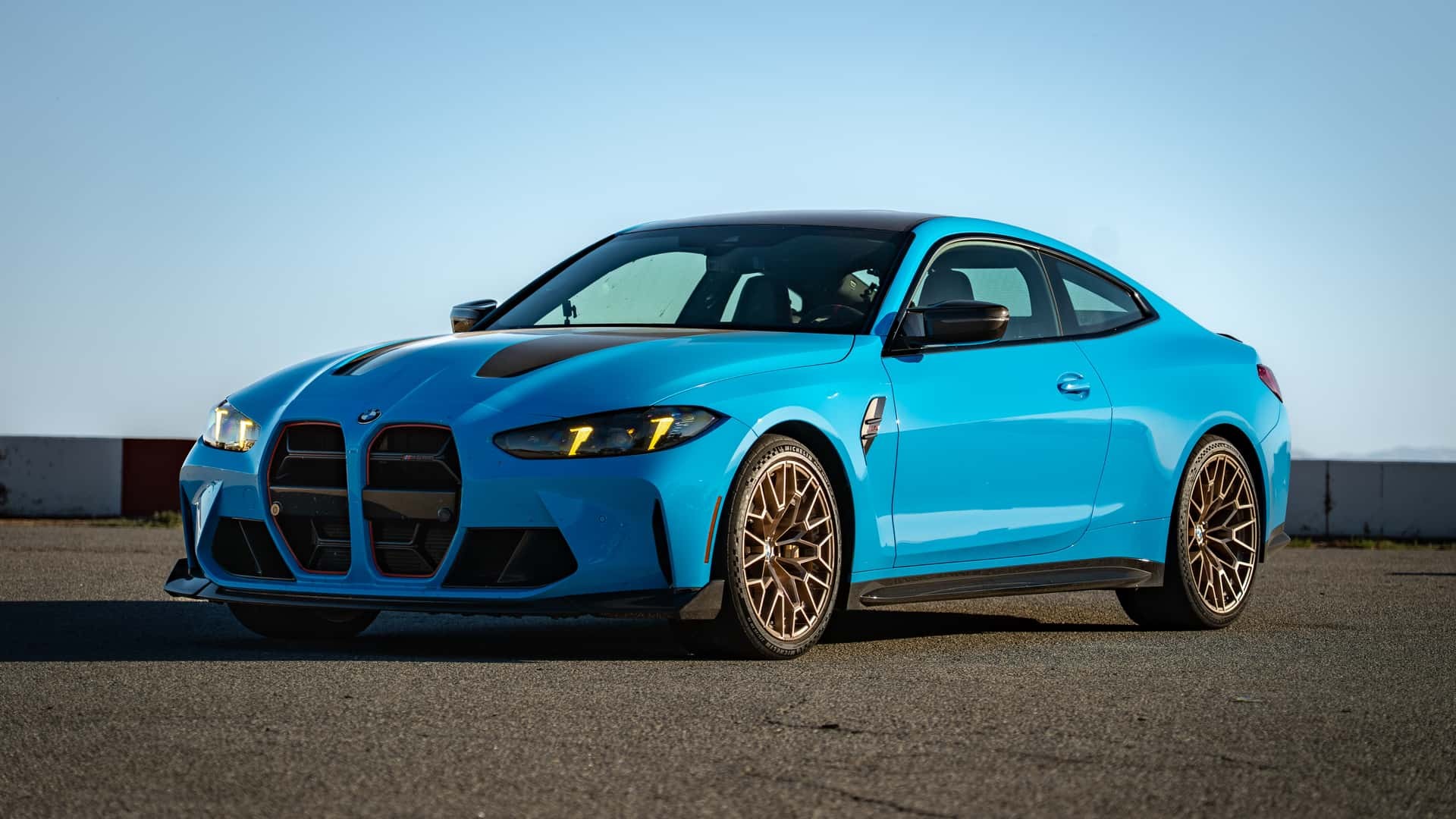
That’s why I flew out to California’s Buttonwillow Raceway. Specifically to borrow the BMW M4 CS. The hardcore, carbon-laden, expensive variant. I needed to understand the hype. I really did.
Turns out. The hype isn’t just marketing fluff.
Old Ghosts, New Machines
First off, the “unreliable German tuner” myth is dead. Buried. Modern BMWs, especially the turbocharged ones, are tank-like. The S58 inline-six feels indestructible. The brakes work. The suspension sorts itself out. It’s not finicky anymore. It’s robust.
And fast. Blazing fast.
Look at national time attack podiums. Nearly every top finisher has a BMW logo somewhere on the badge plate—even the Supra is built on a BMW floor pan. The F80 generation still holds value because people trust it to survive punishment. The current G80/G82 platform? It’s catching up.
This car—the M4 CS—exists because BMW wants you to think “track-ready” means “buy the most expensive one.” CS stands for “Competition Sport.” Not Club Sport. Not Coupe Sport. It’s a label. A premium one.
The price tag is $124,675 base. You’re buying weight reduction. 77 pounds vanished. How? Carbon fiber everywhere. Hood. Roof. Center console. Seats. The brakes are ceramic, which screams luxury but screams “expensive replacement” just as loud. Power bumps by 20 horsepower to 543. That’s nice. The weight loss? That’s the story.
Then there’s the aero. Lots of it. Big splitters. Unique grilles. Yellow DRLs. It looks meaner. Maybe sharper. Probably overkill for most.
The Buttonwillow Gauntlet
The sun at Buttonwillow is cruel. It was 84°F in the shade. 101°F on the tarmac. Not a place to test your thermal management lightly. Especially with 543 horses on tap.
BMW said “set pressures, go.” I checked the wheels. Torque spec is a monstrous 105 lb-ft. Tight. Tighter than usual.
Under the hood, BMW hid a thermal fortress. Six heat exchangers in the nose. Central radiator. Auxiliary side radiators. A dedicated oil cooler. Water-to-air intercoolers. Gearbox cooling for that ZF eight-speed. Most track cars need to breathe. This one wants to burn things up without melting itself.
And it worked. Shocking.
Oil temps stabilized at 240°F. Coolant actually dropped from 210 to 190°F during the hard sessions. That is engineering sorcery. Most cars from Germany—even the ones that look similar—suffocate after three laps. Not this one. It cooled down. It kept pulling.
The tires, however. Did not appreciate it.
I was driving the Michelin Pilot Sport Cup 2s. Not track rubber. Street rubber that happens to grip. I cooked them. Fast. After three laps, they were boiling. Over 200°F. And when the heat rose, so did my frustration.
Doughy
Let’s be blunt. The chassis feels wrong.
Doughy. That is the word.
Pushing through a corner? Understeer. Pulling on the wheel? Still understeer. Braking to rotate? The ABS fires aggressively. Panic. It cuts engine power. It yanks the nose straight. It hates you wanting to drift. The steering wheel is thick, numb. Nothing travels back to your hands. You’re steering blind.
It doesn’t communicate. It just drags itself toward the exit.
But here is the twist. If you give up. If you stop fighting it. If you just point the nose and let the xDrive system work? It launches off corners like it’s being pulled by a helicopter. The transitions are smooth. The dampers absorb Buttonwillow’s bumps effortlessly. The gearbox snaps. The turbo lag? Minimal.
Turn off the all-wheel drive? Suddenly, it’s a rear-wheel drift monster. Clumsy initiaton, but once sliding, it stays put. Competent. But you have to coax it.
Lap time: 1:58.64.
Fast? Yes. The Civic Type R, cheaper, lighter, manual—did a 1:59.5. The Civic also melted its brakes. This car finished. Both. Times are close. But one left the driver smiling. This one left him checking tire temps and wondering why his inputs didn’t matter.
The Value Trap
The M4 CS is competent. It’s built well. It won’t break.
But it’s not great to drive. Not really. The handling is mediated. Managed. Safe.
Most buyers of this car will modify it anyway. New tires. New wheels. Brakes. Because stock is… stock. You spend $124k on a carbon roof and seats just to immediately change the tires.
Is it worth it?
If you want the badge. If you love carbon fiber for the aesthetic of being rich and serious—yes. Buy it.
If you want a fast, dual-purpose car? Buy the M4 Competition. Same cooling. Same engine. Cheaper brakes (steel). Save $30,000+. Throw the money into actual track tires and a proper roll cage. You’ll be happier. The CS is a statement piece. It’s safe, it’s cool, it’s expensive. And it refuses to dance.