Most of us live in fear of that three-digit credit score. It dictates whether you can buy a home, land a job, or even get a credit card. It is a mysterious number that hangs over your head, constantly judging your worthiness. But what if that same pressure applied to the machine you drive? What if your used car had a report card that followed it from dealer to dealer, revealing secrets the seller might prefer to keep buried?
That reality is already here.
AutoCheck, a service owned by Experian—the same giant behind your personal credit reports—has been applying its massive data-crunching algorithms to vehicles since 2002. They maintain a national database containing information on roughly 500 million cars. For about $30, you can get a score for a single vehicle in two seconds. Pay $45, and you can run multiple checks. It is fast, cheap, and potentially life-saving for your wallet.
Yet, despite Experian’s financial clout, AutoCheck remains the quieter sibling to Carfax. Why? It comes down to data sources. While both services share some common ground, their exclusive feeds differ significantly. According to Lynn Kator, senior director of marketing at Experian Automotive, AutoCheck’s exclusive strength lies in accident information, specifically frame damage.
“We take a lot of info and distill it into one easy-to-understand number,” Kator says. “Instead of you trying to figure out the data, we built the algorithm to do that on the back end.”
The goal is simplicity. A complete picture helps you make a confident decision. But how complete is that picture? Let’s look under the hood of how AutoCheck calculates these grades.
Making the Grade
AutoCheck doesn’t guess. It pulls from a wide array of authoritative sources to build its history reports. These include Department of Motor Vehicles (DMV) records, salvage and recycling yards, dealer auctions, police reports, and even Federal Emergency Management Agency (FEMA) data.
Automotive auctions are particularly valuable. When inspectors physically examine a vehicle at these venues, they uncover specific details that might not appear in a simple DMV pull. This data feeds into four main check categories:
- Title Check: If a car has been salvaged, rebuilt, or destroyed by fire, it will show up on the title. There is no hiding a burnt chassis.
- Odometer Check: Tampering leaves a trace. If the mileage has been rolled back or the instrument cluster is broken, it will be flagged. AutoCheck also flags suspiciously low mileage. Imagine a 1995 Toyota Camry with only 10,000 miles on the clock. That is likely a odometer rollback, not a miracle. Even Ferris Bueller couldn’t fool the system with that Ferrari.
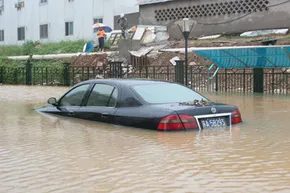
- Problem Check: This section hunts for structural issues. It looks for frame damage, water intrusion (think Hurricane Katrina), and vehicles that have earned official “lemon” status from manufacturers.
- Use and Event Check: This reveals how hard the car was treated. Was it a rental? A taxi? A police cruiser? These vehicles often have higher mileage but also benefit from rigorous maintenance schedules. However, if the car was stolen or involved in a serious accident, those events will appear here.
There is a limit to this technology. AutoCheck cannot see the rips in your seat or the coffee stain on the floor mat. For cosmetic condition, you still have to trust your eyes.
Branded Titles: Yeehaw!
The term “branded title” is central to understanding AutoCheck’s warnings. Much like cattle marked for ownership, a car’s title carries a brand for life. These brands are permanent markers of a vehicle’s past trauma.
Kator explains that there are many types of brands, including junked, salvaged, and flooded. A clean title has no brands. It is unblemished. But once a car takes on a brand, that label travels with it forever.
Why does this matter for your next purchase? Because a branded title often signals significant prior damage. It doesn’t necessarily mean the car is undriveable, but it does mean it has been through the wringer. Knowing this before you hand over cash separates a smart buyer from a victim.
The algorithm behind AutoCheck aims to turn this complex web of DMV records, auction inspections, and insurance claims into a single, digestible score. It strips away the noise. It highlights the danger.
But does a higher score guarantee a better car? Not always. A high score means the history is clear. It doesn’t mean the transmission won’t slip next month. It just means no one has lied about what happened to it before.
In a market where half a billion cars move through the system, transparency is a luxury. AutoCheck provides that lens. It asks you to look past the shine of the paint job and read the paper trail.
The question remains: are you willing to pay $30 to avoid a $3,000 mistake? Or are you hoping the seller forgot to mention the flood?
Read the Fine Print on the Score
AutoCheck hands you a report where you control the depth of your obsession. Most buyers are already drowning in decision fatigue. You see that blue box on page one. You grab the score. If it’s green, you buy. If it’s red, you walk away. It’s lazy, sure, but it works for some.
But you can look at the comparison data. It costs nothing extra. It just costs your time.
The report lists a “Similar Vehicles Score” range right under the main number. This is context. Say you find a 2008 Mazda Miata with a sad score of 40. Panic? No. Look at the peer group. If similar Miatas usually score between 30 and 45, you’ve just found a unicorn. A dirty one, maybe, but the cleanest of a trash pile.
Now flip it. You see a 75. It looks okay. But the comparison range for that model is 85–95. That 75 is an outlier. It’s an anomaly. It suggests hidden damage, missed maintenance, or a title brand AutoCheck didn’t catch yet. You have two choices: dig into the details or delete the listing.
The obsessives among you won’t settle for a summary. You want the raw data. The full history. AutoCheck provides case numbers for police-reported accidents. You can see the timeline. You can see the gaps. It’s granular. It’s messy. It’s the truth.
There is one blind spot. Price. AutoCheck tells you the car’s history, not its market value. For that, you need NADA, Kelley Blue Book, or Edmunds. Use them together. History plus value equals a real purchase decision.
The Buyback Safety Net
You spent the money on the report. Now you’re spending thousands on the car. What happens when the seller lied? What happens when the “minor fender bender” was actually a structural collapse?
AutoCheck offers protection. It’s not a warranty. It’s a buyback guarantee.
If you discover the car had a branded title (salvage, flood, fire) that was hidden from you, or if it was used as a police cruiser, AutoCheck will buy it back. They pay 110% of the NADA Guide retail price. They also cover up to $500 in aftermarket parts you’ve installed. That means your aftermarket stereo in your junker Dodge Neon isn’t total loss.
But the hoops are specific. You have to jump through them in order.
- Buy the report for the VIN.
- Buy the vehicle.
- Register the car with AutoCheck within 90 days of purchase.
- Still own the car when you request the buyback.
- Start the process within one year of the original purchase.
If the car was stolen and recovered, you’re on your own. The policy covers hidden brands and specific misuse. It does not cover every lie a seller tells.
Also, note that scores are dynamic. They change as new data enters the database. Accident reports update. Emissions records change. A branded title, however, is permanent. Once it’s there, it stays. You can run the same VIN multiple times if you’re paranoid. But if you’re that anxious about a single used car, maybe the stress isn’t worth the metal. Go look at something else.
Verdict
AutoCheck isn’t a crystal ball. It’s a mirror. It shows you what has happened, not what will happen. The score is a starting point, not a verdict. Compare it to the market. Check the price elsewhere. Read the case numbers. If the history is clean and the price is right, buy it. If the score is low but the peers are worse, you might have found a deal. If the score is high but the peers are higher, run.
The report won’t tell you if the transmission will slip next month. No report can. It only tells you if the seller tried to hide the past. That’s usually enough to go on.
Why vehicle history reports miss the ugly truths
Spotting fraud is difficult. Car history reports like AutoCheck know this. Not every scrape makes it into the database. Why document a dinged fender if you can just buff it out? Why report a landscaping truck mounting your hood if your brother works at a body shop? He can swap the front end after hours. The paint might look slightly off under sodium streetlights. But the report stays clean.
This works both ways.
Consumer Reports tested AutoCheck and CarFax. They found both services generally accurate. But they aren’t infallible. Researchers compared clean reports against photos of vehicles on auction sites. Some cars were crumpled beyond recognition. Yet the digital records showed no accidents.
Why do wrecks keep clean titles?
- No collision insurance. If you don’t have coverage, you aren’t required to report damage.
- Self-insured fleets. Rental companies and large fleets often self-insure. Their internal thresholds differ from state laws.
- Below the total loss threshold. States have different rules for “total loss.” Minor damage often escapes the radar.
This doesn’t mean the reports are useless. Consumer Reports still recommends them. You should also check other sources.
- AutoCheck
- CarFax
- National Insurance Crime Bureau (NICB)
- National Highway Traffic Safety Administration (NHTSA)
The green checkmarks on an AutoCheck report are comforting. But they are not proof of perfection. You cannot verify every data point yourself.
The industry consensus is clear. Take the car to a professional. Have a mechanic inspect it before you buy. Lynn Kator at AutoCheck agrees. No report replaces a physical inspection.