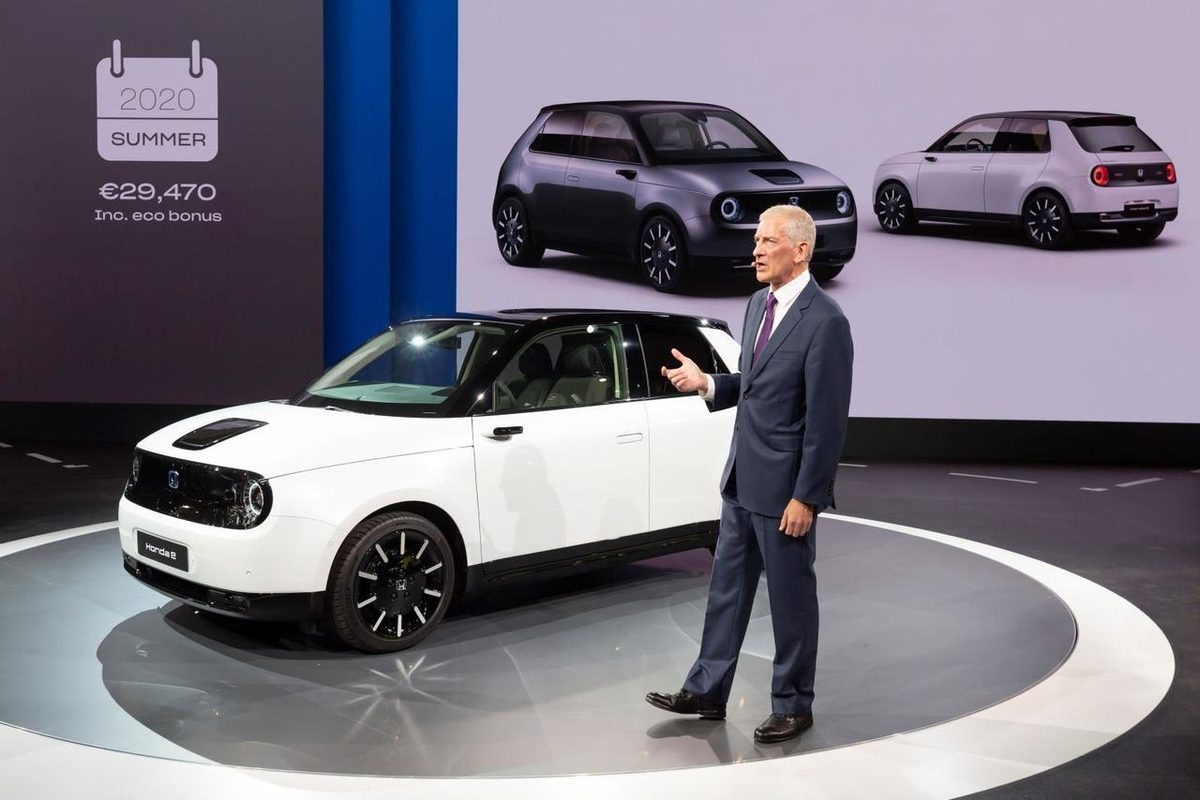
Honda finally delivered on its promise. The Honda e, a compact electric car that refuses to blend in with its surroundings, will be presented at the Frankfurt Motor Show. This is more than just a boxy electric car. It has a unique identity.
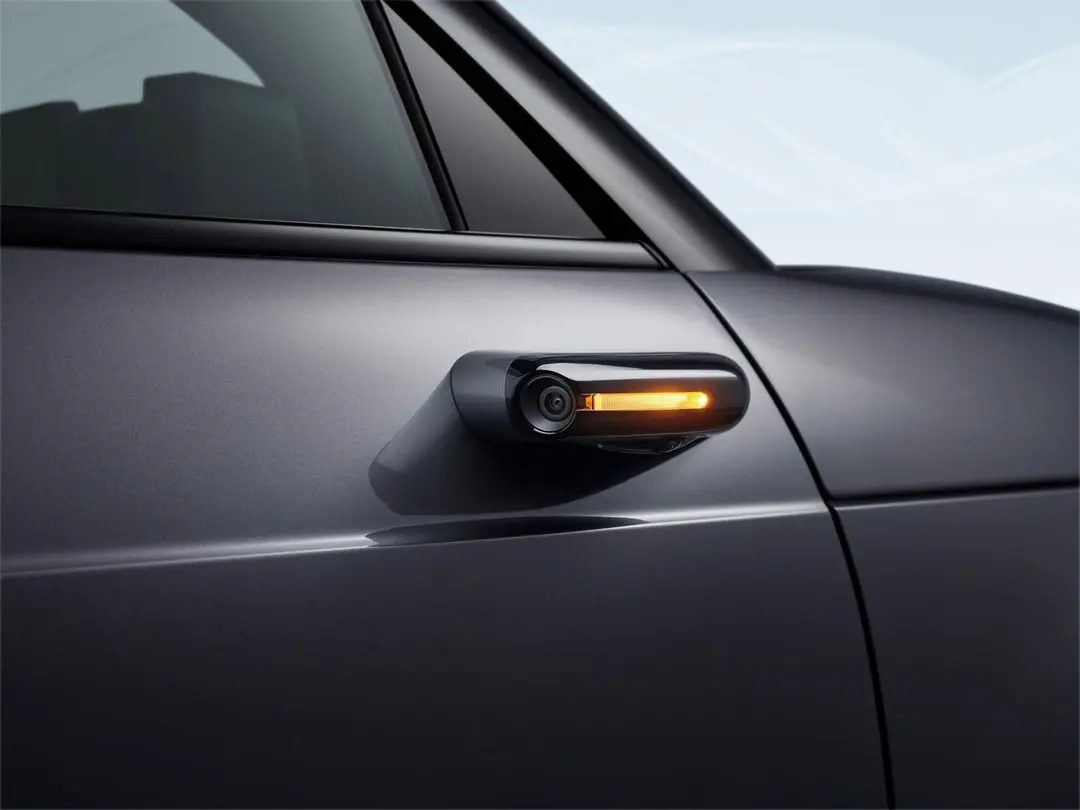
Vintage but modern silhouette. Think 1970s proportions and 2020s technology. A striking feature is the exterior mirror system. Honda has abandoned the traditional glass mirrors. They replaced them with cameras. This setup mimics Audi’s approach, but Honda integrates it seamlessly into the car’s design. The camera transmits a video image to a screen inside the cockpit, which reduces air resistance and improves aerodynamics.
Then there’s the door. The handle is almost invisible. It is placed flush with the body, maintaining a clean and rounded beauty. You can open it with your smartphone. The digital key unlocks the car and the handles pop out or retract automatically. It’s a small detail, but the way you interact with the car changes every time you get close to it.
This is not a concept car hidden in storage. Honda brought this production-ready prototype to Germany to show how serious the company is about electrifying cities. Honda e is aimed at city dwellers who want style without sacrificing practicality. It’s compact, easy to park and looks more like a museum exhibit than a traffic jam.
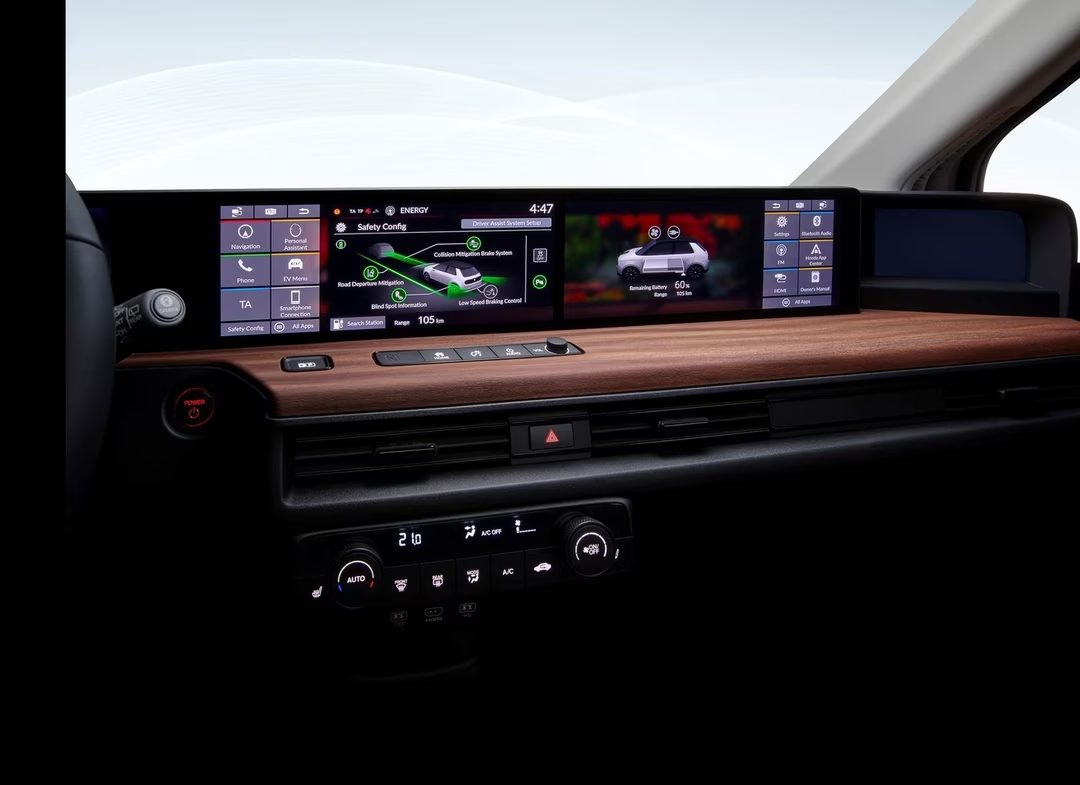
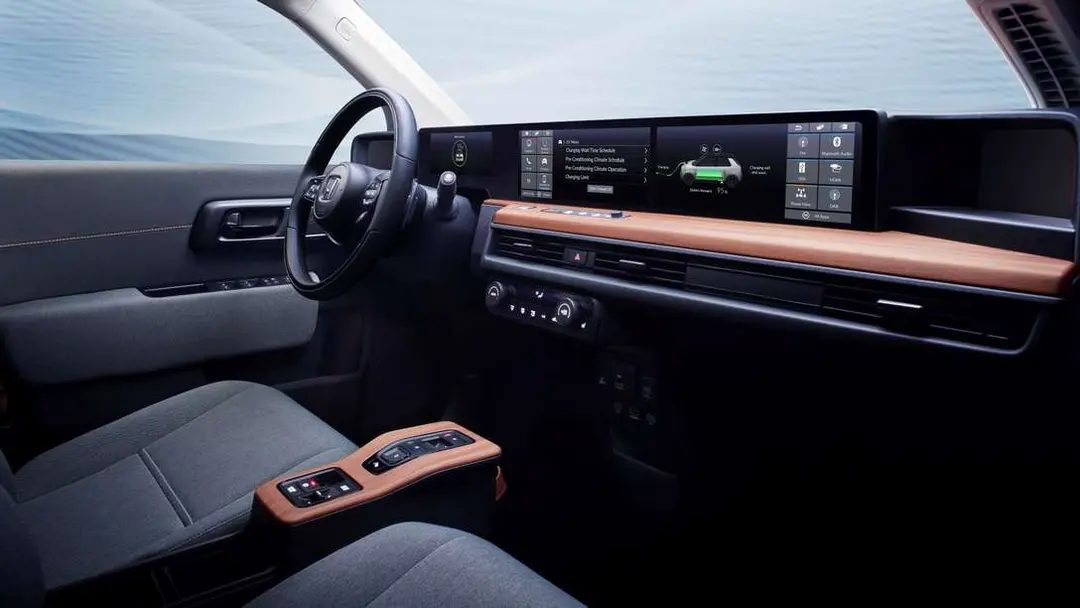
The interior design continues this theme. minimalistic. clean. The dashboard has a large central screen flanked by smaller screens for air conditioning and navigation. The material feels very luxurious. Its build quality suggests that this product is ready for street use.
Honda’s entry into this field is strategic. They’re not just chasing Tesla or Renault. carving out a niche with character. Honda e is more than just zero emission. It’s about bringing the joy back to small car ownership.
Honda e represents a bold step in the design of urban electric vehicles, as it replaces the traditional rearview mirror with a camera and uses smartphone integration for access control.
The show floor was full of life. Photographers circled the car. Potential buyers stared through the windows. The reaction was clear. People are looking for a different car.
これはほんの始まりにすぎません。 フランクフルトのデビュー戦はそれを象徴するものだった。 しかし、本当の試練はこれからだ。 どのように駆動されるのでしょうか? 毎日の通勤中のバッテリーのパフォーマンスはどうですか?コメントをお待ちしております。 一つ確かなことがある。 ホンダも注目のクルマで会話に加わった。

The moment everyone was waiting for arrived with the price tag. Honda managed to keep the entry-level version under the 30,000 euro mark. With the eco-bonus included, you are looking at a starting price of 29,470 euros.
The German and British markets get first dibs. The rest of Europe waits until summer 2020.
The entry-level Honda e specs
The base model is a true city car. It packs a 100 kW motor. That translates to 136 horsepower. Torque sits at a solid 315 Nm.
The battery capacity is 35.5 kWh. The official range stretches to 220 kilometers on a single charge. This isn’t a cross-country cruiser. It is built for short and medium urban trips.
Charging speed matters here. A fast charger can replenish 80 percent of the battery in just 30 minutes.
The mid-tier upgrade and tech
Spend around 33,000 euros for the second trim. You get more power. The motor jumps to 113 kW. That is 151 horsepower.
Both trims share the same dashboard setup. It is an impressive panoramic digital display made of five screens. Two of those are 12.3-inch touch panels.
The connected services run through the Honda Personal Assistant. You control it with your voice. Just say “OK Honda” to activate the assistant.

本田 e 规格:功率、续航里程和摄像头镜技术说明
本田 e 的量产版不再只是来自法兰克福的耳语。 本田已经剥离了其全电动城市汽车的最终规格,这些数字讲述了城市敏捷性战胜高速公路主导地位的故事。
该系列分为两个功率输出。 您将获得 100 kW 版本(136 hp)和更强的 113 kW 版本(153 hp)。 射程上限为220公里。 当然,它很紧。 但对于城市跑步呢? 这足以在里程焦虑开始之前消除它。 0-100公里/小时加速仅需8秒。 虽然不是超级跑车那么快,但对于走走停停的交通来说足够快了。
数字驾驶舱内部
走进去,复古酷炫的外观让位于数字指挥中心。 本田在这里对屏幕很疯狂。 机舱内共有五个显示器。 两个最大的尺寸各为 12.3 英寸,专用于信息娱乐系统。 他们处理导航、应用程序和连接服务。
语音控制通过本田个人助理 运行。 你可以和它交谈。 它回应了。 简单的。
最引人注目的视觉变化? 没有后视镜。 本田用紧凑型相机取代了传统的玻璃。 它们将实时视频传输到直接安装在仪表板上的 6 英寸屏幕。 这对于量产城市汽车来说尚属首次。 外观很干净。 空气动力学可能会受益。 它在雨天或雪天是否有帮助是完全不同的问题。
智能手机充当钥匙。 锁定它。 解锁它。 全部来自您的手机。
重量分布与操控动态
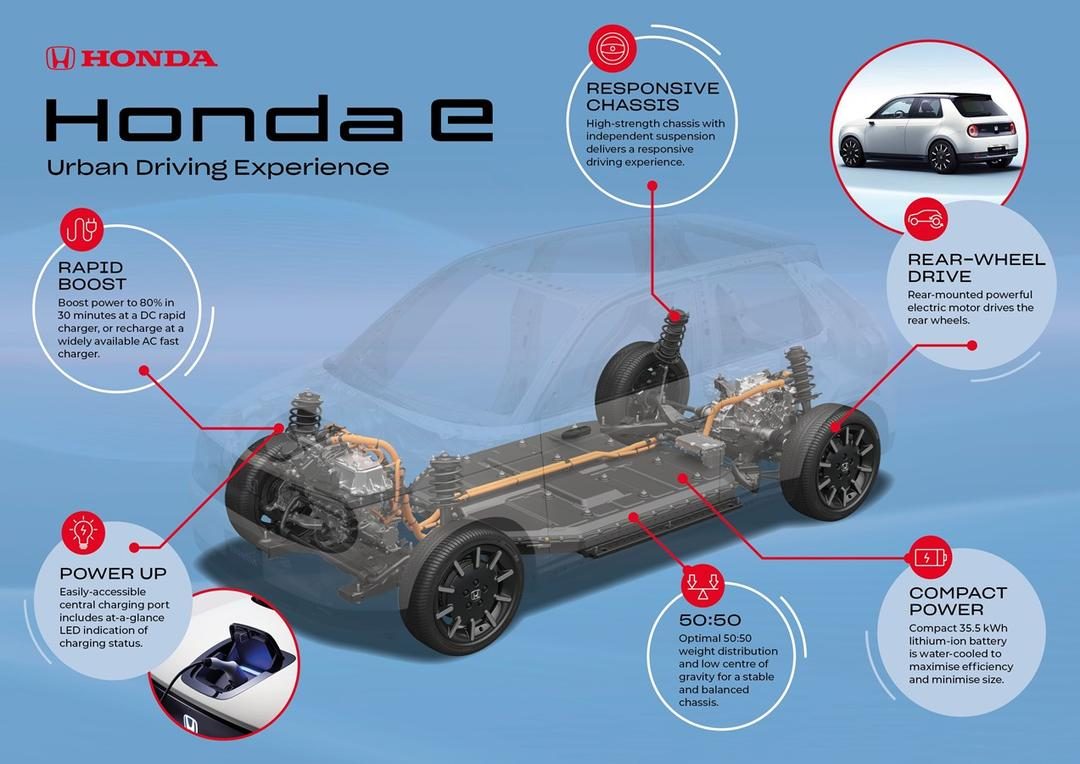
本田不仅仅是在制造买菜车。 他们在打造驾驶者之车。 The battery is a liquid-cooled 35.5 kWh lithium-ion pack that sits flat under the floor between the axles. This provides a perfect 50/50 weight distribution.
Why is this important?
中性操控。 无转向不足。 无转向过度。 只有平衡的抓地力。 The car is rear-wheel drive. The torque is 300 Nm. The final engine was a synchronous permanent magnet unit producing 110 kW (148 hp), although some early reports put it at 98 hp. This difference suggests that Honda tuned the engine with an emphasis on punch, not just efficiency.
The turning radius is only 4.3 meters. It’s small. You can swing it like a go-kart even in a tight parking lot.
One pedal control and charging
To maximize the range of 220 km, Honda has equipped it with 单踏板控制. It’s not just regenerative braking. This system allows you to accelerate and decelerate simply by using your right foot. When you release the pedal, 电机施加 powerful regenerative braking. Unless you’re 紧急制动, you rarely need to press the brake pedal.
Charging supports standard AC and CCS2 DC fast charging. Battery technology has matured. Liquid cooling guarantees a long service life.
市场热度与可用性
Interest is already growing. Honda reports that it has received 31,000 expressions of interest since publishing its reservation list. The car will debut at the Frankfurt Motor Show in September 2019. Pre-orders are now available, with delivery planned for spring 2020.
The price remains unknown. Honda has not announced the exact figures. Don’t expect the price to be low considering the technology load and niche. It’s not an entry-level commuter. This is a statement.
The design is faithful to the 2017 Urban EV concept. 极简内饰。 A nostalgic look. A Zen machine in a chaotic city.
Can the 摄像头后视镜 be used in real-life situations? This is the real test. It’s all guesswork until an independent driver puts it through the wringer. But on paper, the Honda e promises something rare in electric cars: genuine driving pleasure.

35.5 kWh battery technical data
Honda has finally pulled back the curtain on the Honda e Battery, revealing details of the lithium-ion battery powering the urban electric vehicle. This is a water-cooled 35.5 kWh unit, which is necessary to maintain smooth operation under pressure. Fully compatible with standard AC charging and CCS2 DC fast charging.
The numbers are accurate. Using the DC charger for 30 minutes will restore 80% of your range. This is the most important indicator for city dwellers who cannot wait for hours. The official range is a little over 200 kilometers. Not top class, but good enough for its purpose.
There are also clever visual details. The charging port is located on the front edge of the hood. There is no need to open the flip cover to check the level. The LED indicators light up through the glass panel, so you can quickly and easily know the charging status.
启动预订和可用性
这不再只是一个概念。 本田 e 正在进入预订阶段。 本田在法国、英国、德国和挪威推出了预订服务。 但是呢? 您需要缴纳 800 欧元押金。 如果您退出,则可以退款,这降低了急于预订的早期采用者的风险。
时间表是具体的。 预订将于今年晚些时候开放。 销售将于 2020 年春季开始。
该车将于 7 月 4 日至 7 日在英国古德伍德速度节上首次公开亮相。它早些时候曾在法兰克福车展上亮相,但这是你第一次看到它在人群面前真正自行行驶。
Why It Matters
Honda developed the production version of the Honda e from the Urban EV concept announced in 2017. The enthusiasm of the prototypes forced their hand. The details are now starting to become clear.
This car is aimed at the same market as Renault Zoe and Peugeot e-208. Honda has been tight-lipped about the specs, but the pre-order page has enough information to pique your interest. The barrier to entry for refundable deposits is low, but it is a sign of confidence. They want buyers to commit early, even if official bookings are still months away.
Can the 200 km operating range cope with real winter conditions? Liquid cooling shows that they know thermal management is important for longevity. The LED glass panel on the hood is purely aesthetic and fits the retro-futuristic vibe they were going for.
Goodwood is a test. It’s one thing to see it in action. How it handles track pressure is another story. Currently, the deposit is only €800. The rest is speculation until spring 2020.

First, some numbers on the powertrain. Honda e is a rear wheel drive car. Honda promises a range of over 200 kilometers on a single charge. Find a fast charger and you can restore 80% battery in just 30 minutes. This is a standard electricity bill. What’s missing is a performance seat. We don’t know exactly how fast it is yet. Autocar claims that this engine produces over 98bhp and over 300Nm of torque. This number was obtained at the Geneva Motor Show and is not an official press release. So until Honda confirms these numbers, take it with a grain of salt.
This car is available in 5 special colors. Choose from Crystal Black Pearl, Metallic Modern Steel, Electric Yellow, Metallic Crystal Blue and Platinum White Pearl. The design is consistent with the concept of urban vehicles. Keep the lines smooth. Holds on to doorknobs. It is also possible to replace the traditional rear view mirror with a camera. The results are definitely fascinating. The price remains a mystery. Honda has not released information on costs.
インストルメントパネルからはミニマルなコックピットが見えます
ホンダは、社内で「アーバンEV」として知られるコンパクト電気モデルのインテリアダッシュボードの画像を公開した。 プロトタイプは来月のジュネーブモーターショーで発表される予定だ。 物語は2017年のフランクフルトモーターショーから始まります。 ホンダは当時、目を引く都市型電動EVコンセプトを発表した。 クラシックなホンダ シビックから大きなインスピレーションを得ています。 このコンセプトは、2019 年初めに発売予定の量産モデルをプレビューすることを目的としています。
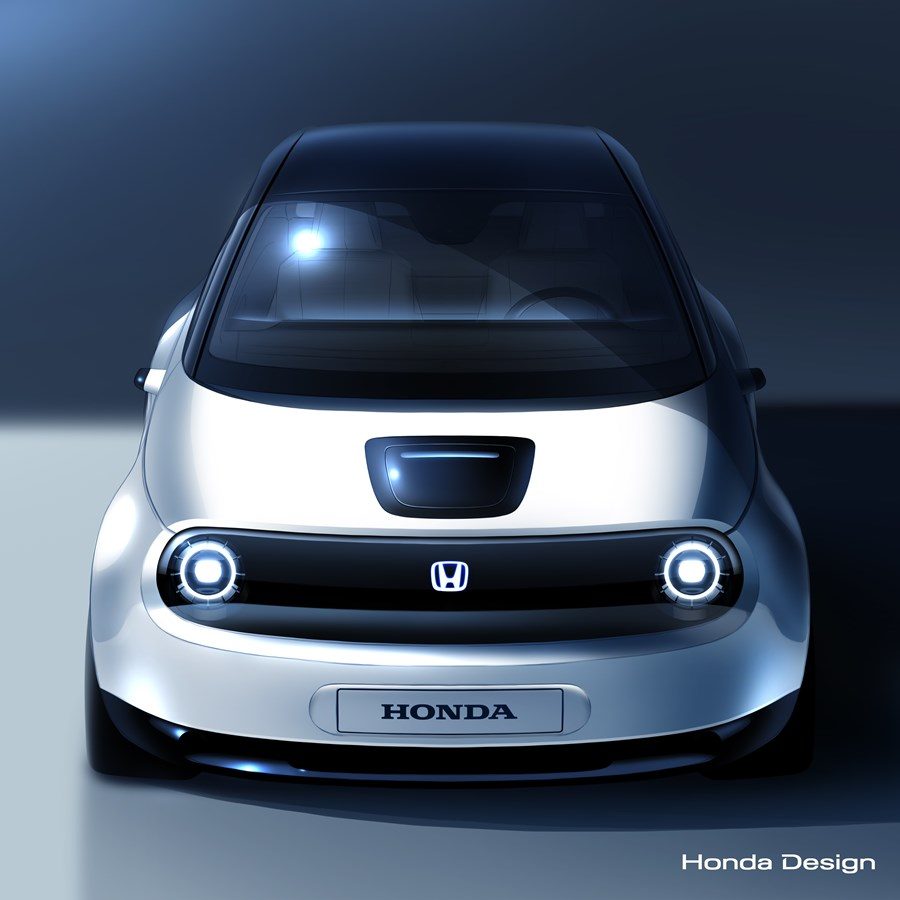
ホンダは先月、3月上旬にジュネーブでプロトタイプを発表すると発表した。 スケッチも公開してくれました。 精神は同じですが、プロトタイプは2017年のコンセプトカーとはかなり異なっています。 フロントガラスのピラーが細くなりました。 フロントフェイシアは必要なものだけを削ぎ落としました。 ヘッドライトは丸くて特徴的なままです。 ボンネットには充電用の跳ね上げカバーがまだ見えます。 インテリア画像からは、従来のダッシュボードの乱雑さを避けようとする現代の電気自動車に典型的な、すっきりとしたドライバー重視のレイアウトが明らかになりました。 目に見えるインフォテインメントタワーや不要なボタンはまだありません。 必要なものだけ。 ホンダはコスト削減のためにどれだけの技術を放棄するのでしょうか? プロトタイプがいつリリースされるか見てみましょう。 それまでは、仕様と価格を推測することしかできません。

Digital cockpit
Honda continues to share snippets of the story. This time you can see the dashboard of the A prototype destined for Geneva. The layout is unique. The three displays are arranged in a line perpendicular to the main instrument cluster. It feels very clean. Minimalist, even.
But don’t be too satisfied with this simplicity. The physical buttons dotted all over the panel look… tricky. Is it hard to read? Is it hard to reach? perhaps. But remember what this is. A prototype. This is not the final product. The quirkiness of the design can be a placeholder rather than destiny.
The interior finds a balance between high-tech minimalism and practical uncertainty.
That’s the vibe. Honda has not disclosed any information about the engine. There are no range figures. There are no price tags. The name of this potential candidate has not yet been confirmed. This is all speculation now.
Are they digging into the archives? Civic-EV? Or just E-Civic? The naming game is wide open.
One thing is certain. This car lining up against the new Renault Zoe 2. This is a benchmark. The question is how Honda’s stripped-back, screen-heavy approach compares to the established players. See you in Geneva. Until then, everything is just screens and shadows.