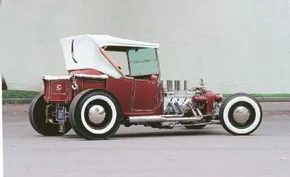
TV Tommy Ivo didn’t start out as a builder. He started as a kid with a microphone.
Acting credits from the 1940s and 50s earned him the moniker. Films. The Mickey Mouse Club. You know the vibe. Then came 1952. He turned 16.
He walked into a Buick dealer in Burbank, California. Threw down cash. Bought a new car.
Straight to the strip. The car was slow. Terrible.
Fast forward three years. 1955. He picked up a Buick Century. This one was different. Fast. He won his first race at Pomona. A/Stock Automatic record. The win changed everything.
He wanted more speed. He needed a lighter car. He needed a bigger engine.
The inspiration hit him in the form of Norm Grabowski. Grabowski had just built a T-bucket. Ivo needed one too.
He found a 1925 Ford Model T touring body. It was a desert derelict. Broken down. Abandoned. He didn’t care. He cut it down. Made it a two-door.
But the chassis needed work. The battery needed a home. The fuel tank needed a spot.
So he grabbed a Model A truck bed. Shortened it. Even more than the body. It became the storage compartment for his new creation: the Ivo T.
The Engine That Broke Records
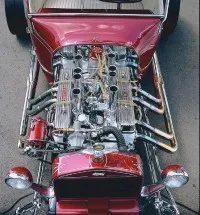
You want to know what made that ’57 T-bird sing? It wasn’t just the looks. It was the heart Max Balchowsky helped carve out. Tommy Ivo didn’t just slap an engine in there. He built it. First, it ran a 402-cid Buick nailhead with four two-barrel carbs. Then, Hilborn fuel injection changed the game. Tony Nancy handled the upholstery. Leather and vinyl didn’t stand a chance against that torque.
Quarter-Mile Dominance
The August 1957 issue of Hot Rod didn’t sugarcoat it. Light weight plus massive torque equals trophies. Twenty-one trips to the strip. Twenty-one wins. The timesheet didn’t lie either. E.T.s just under 11 seconds. Top speeds of 119 mph. That is fast for 1957.
From Strip to Silver Screen
Beauty sells. But speed keeps you relevant. The T didn’t just sit on a trailer. It hit TV shows. Movies. Hollywood took notice. Ivo didn’t keep it long though. A year later, he sold it. Why? Because he was ready to tour. He became one of drag racing’s first traveling pros. Top Fuel was his next target. He wasn’t just playing anymore. He was competing for real.
The Barris Touch and Legacy
Retirement wasn’t the end. The car lived again. George Barris got his hands on it. He swapped in square headlights. The look shifted from raw hot rod to polished show car. It toured the circuit in the sixties. But the real impact? It inspired thousands. Every fiberglass “Fad T” that rolled off a line in the late sixties owed a debt to this car. Grabowski’s T inspired the wave. Ivo’s T defined it.
Did the square headlights make it better? Or just different? The answer is in the numbers. The legacy is in the copies.
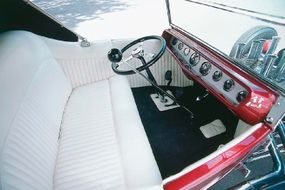
The Ivo T sat in silence for years. A dormant relic of a young Hollywood actor’s obsession with speed. Then Jack Rosen stepped in. He had inherited the car from his father, Hy. His mission was clear. Restore it to its original factory configuration. No modern upgrades. No compromises.
Ron Jones handled the heavy lifting. He didn’t just fix it; he honored the craftsmanship of the past. The work reflected the high standards a speed-obsessed star would demand in his heyday. Every bolt and panel was treated with the precision the build required.
Restoring the Original Spec
The goal wasn’t to make the Ivo T faster. It was to make it authentic. Jack knew that value lay in the history. Hy Rosen had kept it pristine, or at least intact. Jack ensured it stayed that way. Ron Jones brought the car back to life without altering its soul.
The restoration wasn’t about modification. It was about preservation.
This approach separates true hot rod enthusiasts from casual modifiers. They understand that some cars are art pieces. History matters more than horsepower in these cases. The Ivo T remains a testament to that philosophy.
Related Reads
- History of Hot Rods
- Custom Car Profiles
- Hot Rod Profiles