The Chevrolet Impala isn’t just a car. It is an institution. Few automotive badges have endured as long, or as fiercely, as this one. To understand why it outlasted rivals that vanished into history, you have to look past the badge and into the shifting tides of American consumer taste. The story begins not with a standalone model, but as a trim level for a giant.
The Birth of the Top Dog
For the 1958 model year, Chevrolet needed a new flagship. The answer was the 1958 Chevrolet Bel Air Impala. It started life as a gussied-up Bel Air. More trim. More chrome. A lot more attitude.
It arrived as a two-door hardtop. That year, it was the only full-size Chevy to offer a convertible body style. Buyers who wanted the ultimate status symbol in a Chevy bought this. It sat at the top of the heap. For eight years, that was its job.
The Caprice Takeover
By 1966, General Motors realized the “personal luxury” segment was where the money was. The Impala name was too good to waste, but it was also too good for the top spot anymore. Chevrolet gilded the Impala further to create the Chevrolet Caprice.
Now the Impala floated down the hierarchy. It rested comfortably just below the Caprice for a decade. This was the era of the personal luxury crossover. The Impala became a bridge between the mundane and the opulent.
The Entry-Level Pivot
In 1976, things flipped. Chevrolet did something counterintuitive. They used the once-line-topping nameplate to identify the entry-level big Chevy model. The Impala became the affordable option in the full-size lineup. The Caprice moved up. The hierarchy inverted.
Was this a mistake? Maybe. Or maybe it was a survival tactic. In an era of rising fuel prices and shrinking budgets, the Impala name provided brand recognition without the premium price tag. It kept the badge alive when other full-size names were dying out.
The SS Resurrection
The nameplate didn’t truly flourish again until 1994. Chevrolet needed a full-size muscle car. They looked at the Corvette platform. They slapped an Impala SS badge on it.
This wasn’t just a trim package. It was a statement. A Corvette-powered full-size sedan. It brought back the performance heritage that had been dormant since the early days. The Impala SS proved that the name could still mean something in the modern era.
Why the Impala Stuck
So why did it last? The name is short. Easy to say. Easy to remember. It doesn’t sound like a corporate code. It sounds like a car. While other brands chopped and changed naming conventions every five years, Chevrolet kept the Impala on the shelf. It waited. It adapted. It moved from top dog to entry-level to performance icon.
The badge survived because it was flexible. It could be luxury. It could be budget. It could be speed. That versatility is why it outlasted so many others. The question isn’t why the Impala survived. It’s why other names didn’t.
The 1958 Bel Air Impala Redefined the Top Shelf
You might assume the name “Impala” started as a standalone model line. It didn’t. In 1958, it was merely the top-tier trim of the Chevrolet Bel Air. This wasn’t some entry-level badge-stamped discount bin item. It was a lavishly equipped, soft-riding luxury cruiser. But Chevy kept it exclusive. You could only get this beast as a Sport Coupe or a convertible. No sedans. No two-door hardtops in the traditional sense unless you counted the specific Impala hardbody structure.
Looking at it from the C-pillar back, the differences were structural, not just cosmetic. The greenhouse on the hardtop was shorter. The rear deck was longer. This created a visual stretch that made the car look like a full-size flagship, even though it sat on a shorter wheelbase than the full-size Chevy models. Bright rocker moldings ran along the sides. Dummy rear-fender scoops added aggression. It looked purposeful.
Mercedes Inspiration and Unique Styling Cues
The roofline told a different story. Simulated extractor vents were molded into the uniquely contoured roof. Designers lifted this idea straight from Mercedes-Benz. It was a high-end cue that separated the Impala from the garden-variety Chevrolets sitting in the driveway next door.
Rear lighting was another differentiator. Each side featured three taillights. The lesser models got two. The wagons got just one. Above the side moldings sat special crossed-flag insignias. These weren’t just decals. They were distinct badges that screamed status.
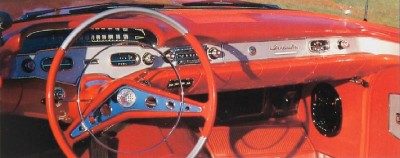
Inside, the cabin was stunning. Think competition-inspired two-spoke steering wheel. Color-keyed door panels with brushed aluminum trim. It felt like a cockpit. No other series in the Chevy lineup offered a convertible with this level of detail. The Impala was the only game in town for open-top luxury at that price point.
Pricing and Production Numbers
Money matters. If you opted for the six-cylinder engine, a new Bel Air Impala started at $2,586. Step up to the V-8 and you were looking at $2,693. That’s just the base. Options pushed typical total prices far higher.
Chevy built 55,989 ragtops. They also built 125,480 Sport Coupes. Together, these accounted for 15 percent of total production. That’s a significant chunk of the factory output for a single trim designation.
Marketing the “Boss” Experience
Chevy introduced the Impala with a blaze of publicity. They wanted it to signal their entry into the mid-price field. The design was less radical than originally planned, but that didn’t matter. The ads didn’t just push style. They pushed performance. The copy promised “quick, eager-to-please handling that lets you know you’re the boss.”
It was a psychological play. You weren’t just buying a car. You were buying authority. As an exclusive model, the Impala name would soon become almost synonymous with Chevrolet itself. It stopped being just a trim level and started being a brand unto itself.
Engineering Under the Skin
Longer, lower, and wider. That was the recurrent theme for all Chevrolets in ’58. But the Impala benefited from specific engineering upgrades. Full-coil suspension replaced the old rear leaf springs. It was a big deal for ride quality.
The frame also changed. A new “Safety Girder” X-type frame reduced the car’s height without sacrificing headroom. It made the car feel planted. The engine bay housed a new standard V-8. The 283-cubic-inch small block. Ratings ranged from 185 to 290 horsepower.
For those who truly wanted to be “boss,” there was an option. A big-block
The 1959 Impala’s Radical Redesign
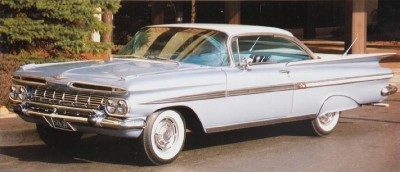
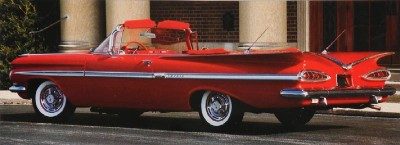
The tailfins stopped pointing at the sky. That was the shift. In 1959, the Chevrolet Impala ditched the vertical excess of the late Fifties. Instead of shooting upward, the fins flared outward. It was a radical rework. The car veered away from the standard GM pack.
Advertising men loved naming everything. But brochures for this year skipped the cute nicknames. No “bat wing” fins. No “cat’s eye” taillights. Those labels came later, added by enthusiasts who loved the car. The sales catalog only called the rear deck “saucy.” Simple. Direct.
Shared Platforms, Bigger Footprint
This was an era of economy. GM decided to share bodyshells across brands. The Impala shared its metal with lower-end Buicks and Oldsmobiles. It also rode with Pontiac. It was a cost-saving move. But the result was a larger car.
The wheelbase grew by 1 1/2 inches. New X-frame chassis sat beneath the sheet metal. Roofs dropped three inches. The bodies stretched more than two inches wider. Size meant poundage. It was a trend of the times.
Tom McCahill of Mechanics Illustrated had a witty way of describing the space. He said the decklid had “enough room to land a Piper Cub.”
A Standalone Series
The Impala was no longer just a trim level. It became its own series. You could buy it in specific configurations.
- Four-door hardtop
- Four-door sedan
- Two-door Sport Coupe
- Convertible
The 1959 Chevrolet Impala Sport Coupe shortened the roofline. It featured a wrap-over back window. The ads promised a “virtually unlimited rear view.” This complemented the new compound-curve windshield.
The hardtop Sport Sedan offered something different. It had a pillar-free back window. Scads of headroom sat beneath a slender “flying wing” roofline.
More glass. More width. A lower profile. The Impala was no longer playing nice with its siblings. It was building its own identity. And it was getting heavier.
1959 Chevrolet Impala Facts
- Model: Impala
- Weight range (lbs.): 3,570-3,670
- Price range (new): $2,592-$2,967
- Number built: 473,000 (approx.)
The baseline engine for the 1959 Impala remained the carryover 283 cubic-inch V-8. It was rated at a modest 185 horsepower. That was the entry point. But buyers who actually wanted to drive didn’t have to settle for the base tune.
Performance-oriented shoppers could select a higher-output version of that same 283. It pushed 290 horsepower. Or they could ignore the small-block entirely and jump to the big-block 348 cubic-inch V-8. That engine came with a dizzying roster of ratings. The top tier hit 315 horsepower. It was a massive jump from the base model.
Pricing reflected the mechanical choice. A V-8 equipped Impala convertible started at $2,967. If you chose the six-cylinder version, you saved $118. Not a fortune today, but in 1959, every dollar mattered.
Inside, the cabin was designed to scream “top-of-the-line.” It wasn’t just about the engine bay. The interior flaunted status symbols. Front and rear armrests were standard luxury. An electric clock kept time. Dual sliding sun visors protected the driver and passenger. Crank-operated front ventipanes allowed for basic airflow control.
The dashboard design was specific. The contoured instrument panel held deep-set gauges. They resided below hoods to prevent glare from the sun. It was a thoughtful touch for visibility.
Comfort also received an update. A new Flexomatic six-way power seat could be installed. It wasn’t just up or down. It was adjustable in multiple directions. For the era, it was a significant upgrade.
Total production numbers hovered around 473,000 units. The weight range sat between 3,570 and 3,670 pounds depending on the trim and engine.
1960 Chevrolet Impala
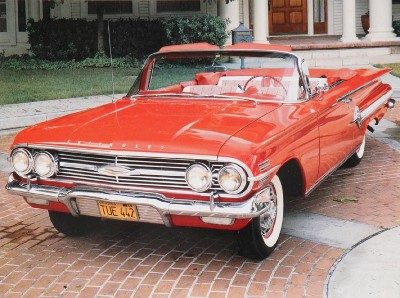
The Great Retrenchment: 1960 Impala Design Shift
The 1960 Chevrolet Impala didn’t just evolve; it blinked. After the architectural overreach of the 1959 model, General Motors pulled the steering wheel back toward sanity. It was a conservative pivot. A face-lift that looked like a retreat to the average buyer, though history has been kinder to the ’59.
Today, we look at those 1959 tailfins and see peak design. We see the reason collectors pay premiums. The bigger the fins, the better the check. But in 1959? The market was exhausted. Stylists knew the chrome-and-fins era was hitting a wall. They needed to calm the aesthetic down.
So for 1960, they toned it back.
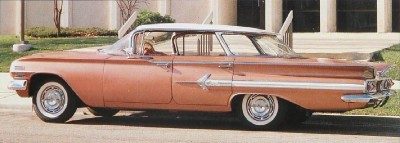
The horizontal lines didn’t vanish. They just got disciplined. The rear end lost its aggressive, upward-sweeping arrogance. In its place came an angular, tapered shape that merged cleanly into the quarter panels. It was temperate. Tasteful.
The 1960 Chevrolet Impala shifted direction a little, creating a more conservative look than was seen on the redesigned 1959 model.
Take the lighting. The top-of-the-line Impala got three round taillights on each side. Modest. Symmetrical. A far cry from the chaotic clusters of previous years. It suggested stability.
Up front, the change was surgical. The ferocious air intakes above the headlights—the ones that looked like snorting nostrils ready to bite—were deleted. Gone. The grille area smoothed out. By Fifties standards, the 1960 redesign was downright restrained.
Chevrolet marketed the new look with a slogan that felt almost apologetic in its modesty: “Space — Spirit — Splendor.” They weren’t promising speed. They weren’t promising dominance. They were promising a car that didn’t look like it was trying too hard.
It worked. For a while.
But the underlying architecture remained. The unibody construction held firm. The inline-six engine still pulled hard if you had the carburetor setup right. The performance potential was still there, buried under the new, quieter sheetmetal. You could still hammer the pedal. The car would still go. It just wouldn’t scream about it while doing so.
Is restraint a design flaw? Or is it maturity? The ’60 Impala answered by staying out of the way. It let the buyers decide what mattered. And for many, it mattered that their car didn’t look like a rocket ship that had crashed. It looked like a car.
1960 Chevrolet Impala Facts
- Model: Impala
- Weight range (lbs.): 3,530-3,635
- Price range (new): $2,590-$2,954
- Number built: 490,000 (approx.)
1961 Chevrolet Impala
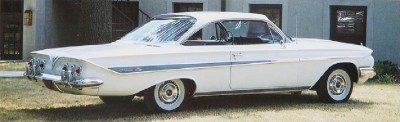
The chrome didn’t stop where the bumper ended. By 1961, the Impala had become the most lavish of the full-size Chevrolets. It wore more chrome plating than its cousins, the Bel Air or Biscayne, and buyers noticed. They bought them in droves. Nearly 560,000 units rolled off the line.
Visually, it was a study in excess. You had those fake air scoops sitting on the hood. They didn’t do a damn thing for airflow. They were just there to look fast. A thick white pinstripe ran along the rear fenders. Slimmer pillars framed the back window on the hardtops. The Sport Coupe and convertible kept the classic V-8 stance. The four-door sedan offered room for five, if you didn’t mind the legroom.
Price started at $2,644 for the basic Sport Sedan. Crank up the V-8 option and you were looking at $2,751. The convertible topped the food chain at $2,955. That was a lot of cash in 1961 money.
Under the hood, Chevy simplified the options list slightly. But they kept the heart of the beast intact. Seven V-8 ratings remained. You could pick a 283-cubic-inch unit or step up to the monstrous 348. The 283 came in two flavors: 190 horsepower or 230. The 348 was where the real power lived. The standard version pushed 250 hp. The Turbo-Thrust Special hit 285 hp. The top-tier Super Turbo-Thrust Special used triple two-barrel carburetors. 11.25-to-1 compression. Dual exhausts. It made 335 horsepower.
Fuel injection? Gone. The 283 FI was retired for full-size models. You had to carburete your way to speed now.
1961 Chevrolet Impala Facts
- Model: Impala
- Weight range (lbs.): 3,550-3,650
- Price range (new): $2,644-$2,955
- Number built: 560,000 (approx.)
Most people walking into a dealership in early 1961 saw a heavy, full-size sedan. They didn’t see the potential for a cultural icon. That changed when Chevrolet slipped a specific option code into the lineup. It wasn’t just about luxury anymore. It was about sport.
The Birth of the SS Package
Chevrolet priced the new 1961 Chevrolet Impala Super Sport at $5,380. That wasn’t cheap money in the sixties, but the marketing pitch called it a “highly personalized version” of the Impala body styles. In reality, it was a factory tuner package designed to make a boring cruiser look like it belonged on a drag strip.
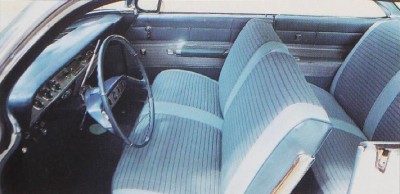
The visual cues were distinct. You got simulated knock-off wheel covers. You got 8×14 narrow-band whitewall tires wrapped around those hubs. The interior got a padded instrument panel and a Sun tachometer mounted on the steering column, redlining at 7,000 rpm. It was a lot of chrome for a car that sat on bench seats.
Even the front passenger had to earn their keep. There was a grab bar right there in front of them. It was the same setup found in Corvettes, suggesting Chevy wanted you to hold on tight. You weren’t alone in your struggles, though.
Under the Hood: Power Options
The suspension got upgraded too. Heavy-duty springs and shocks replaced the soft stock setup. Metallic brake linings were standard to handle the extra speed. But the real story was what sat under the hood.
You could spec the SS with any of three versions of the 348-cubic-inch V-8 engine. The output ranged from 305 to 350 horsepower. If you wanted the fastest shift feel, you ordered the four-speed transmission. That came with a special floor-mounted gearshift lever. It was sharply bent, designed to fit between the bucket-style centers of the time, even though the seats were still benches.
The Powerglide automatic was available, but only with the mildest engine option. It wasn’t meant for hard driving.
The 409: A Legend in Steel
This is where things get interesting. You could spec the SS with the big block. The 1961 Chevrolet Impala Super Sport 409 was a rare bird.
Only 453 Impalas left the factory with the SS option. Out of those 453 units, just 142 held the massive 409-cubic-inch engine. It was available in no other model that year. That exclusivity created a specific type of prestige.
The 409 breathed through a dual-snorkel air cleaner. It was a distinctive visual cue that promised power. Chevy rated it at 360 horsepower and 409 pound-feet of torque. The torque figure was almost exactly equal to the displacement number, a coincidence that stuck.
Cultural Immortality
Why do we still talk about this car? Part of it is the engineering. Part of it is the rarity. But a huge part is the song.
Brian Wilson and The Beach Boys heard about the 409. They turned it into
The SS badge was marketing speak for a specific demographic: buyers who wanted the aggressive stance of a sports car without sacrificing the grace of a full-size cruiser. You could get that combination in the form of the 409 cubic inch V8. Pair that with the 4.56:1 rear axle ratio and you’re looking at a zero-to-60 sprint in just seven seconds. It wasn’t fast by modern standards, but for a heavy land yacht in the early sixties, it was respectable performance.
Rooflines got interesting this year. Chevrolet offered three distinct profiles. The Sport Coupe stood out with its gently raked front pillars and a greenhouse full of glass. It felt less boxy, more aerodynamic, even if the rest of the car didn’t quite match that efficiency. And let’s be honest, the Impala wasn’t shy about its presence. The bodywork featured creased sides, tapered trim strips, and sculptured rear decks that screamed presence. If you wanted to stand out, you could load up the options. Deluxe wheel discs and wide bodyside moldings with contrasting insert panels were standard accessories for those who liked to show off.
Chevrolet’s internal marketing pushed the Impala as “unquestionably the finest car in its field.” Bold claim. They backed it up with volume. Production numbers stayed steady, matching the previous year’s total of roughly 491,000 units. Of those, 64,600 were convertibles. People still wanted tops they could drop, even as hardtops were gaining ground elsewhere in the market.
1961 Chevrolet Impala Specifications
-
Model: Impala
-
Weight range (lbs.): 3,440-3,605
-
Price range (new): $2,536-$2,954
-
Number built: 491,000 (approx.)
1962 Chevrolet Biscayne, Bel Air, and Impala
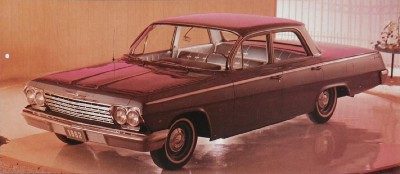
The Year the Impala Took Over
Chevrolet’s full-size lineup didn’t just change in 1962; it hardened. The 1962 Chevrolet Impala joined the Biscayne and Bel Air in a sharp, squared-off restyle that made the cars look bulkier, heavier, and significantly more serious. The body lines were tighter, dominated by a distinct trailing crease that ran the length of the doors.
Marketing didn’t miss the beat. Chevrolet ran ads at airports with the tagline “Jet-smooth Chevrolet.” The pitch was simple: room, zoom, and a ride that softened the road. But while the ads pushed the whole family, the Impala was clearly the flagship. It wasn’t just a car; it was the posh option.
Design Details That Set It Apart
The Impala stood out without trying too hard. It wore full-length upper bodyside moldings with contrasting-color inserts. Ribbed sill moldings and stainless steel window reveals added polish. The rear fenders carried special script badging that screamed identity.
Rooflines told the story best. Each model had its own silhouette. The slim-pillar four-door sedan lost the B-pillar look of older generations. Sport coupes featured rear roof creases that mimicked convertibles, even though they were hardtops. Underneath, new inner fenders were added to fight rust. Small detail. Huge difference in longevity.
The Numbers Don’t Lie
Sales figures show who won the year. The Impala moved 704,900 units. That’s a massive number for any era. The Bel Air, specifically the slim-pillar sedan, took second with 365,000. The 1962 Chevrolet Biscayne trailed with 160,000.
The Biscayne was minimally trimmed. Chevrolet marketed it for its “beautiful simplicity.” It was the entry point. But the Impala was the destination.
Under the Hood: The 409 V-8 Breakout
The real story wasn’t just style. It was power. For the first time, the big 409-cubic-inch V-8 could be installed in any full-size Chevrolet. Before this, that engine was reserved for Super Sport models. Now, anyone could buy it.
The numbers were stark. You could get 380 horsepower or 409 horsepower. Both used solid lifters. Both had dual exhausts. Both ran at 11.0:1 compression. The difference was induction.
The 409-horsepower engine breathed through twin four-barrel carburetors. The 380-horsepower version made do with a single four-barrel carb. It was the same block. Different lungs.
Enthusiasts could go further. Lightweights could order aluminum front body panels. Not for the faint of heart. Not for the budget-conscious. But for those who wanted every ounce of power-to-weight ratio they could find.
The 1962 Chevrolet Impala wasn’t just a car. It was a statement. And the statement was loud.
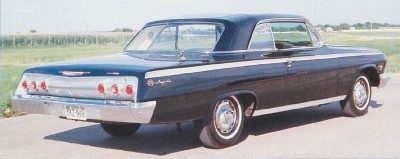
The big block was gone. In its place sat a smaller, meaner option. The 348-cubic-inch V-8 had been retired, replaced by a 327-cubic-inch mill that came in two flavors: 250 horsepower or a punchy 300. If you wanted the entry-level V-8, you got the 283-cubic-inch unit. It was rated at a modest 170 horsepower. Standard stuff. But the real story was in how GM packaged the performance.
The Super Sport option wasn’t a trim level anymore. It was a $156 package. You could slap it on an Impala Sport Coupe or a convertible. Pick any engine. Even the Hi-Thrift six-cylinder. It was a cheat code for style points.
For that extra cash, you got front bucket seats upholstered in “leather-soft” vinyl with aluminum edging. A passenger assist bar. A console with a locking compartment. Aluminum molding inserts. Knock-off-style wheel covers. It looked fast. It didn’t have to be.
Hard drivers could go further. Sintered-metallic brake linings. Heavy-duty springs and shocks. 8×14 tires. A tachometer. You paid for the hardware. You drove the rest.
1962 Chevrolet Biscayne, Bel Air, and Impala Facts
- Model: Biscayne
- Weight range (lbs.): 3,400-3,845
- Price range (new): $2,324-$2,832
-
Number built: 160,000 (approx.)
-
Model: Bel Air
- Weight range (lbs.): 3,405-3,890
- Price range (new): $2,456-$3,029
-
Number built: 365,000 (approx.)
-
Model: Impala
- Weight range (lbs.): 3,450-3,925
- Price range (new): $2,662-$3,171
- Number built: 704,900 (approx.)
1963 Chevrolet Biscayne, Bel Air, and Impala
The clock turned. The lineup shifted. The 327 was still there. The 283 stayed put. But the market changed. Demand for the Impala was skyrocketing. It wasn’t just a car anymore. It was a statement.
The Biscayne remained the workhorse. No-frills. No-flash. The Bel Air stepped up the game with better trim. More chrome. More interior comfort. The Impala? It was in a league of its own.
But the real change was under the hood. The 327 was getting more powerful. The 300-horse version was gaining ground. Enthusiasts were tuning. Modifying. Pushing the limits.
The Super Sport package evolved. It wasn’t just a look anymore. It was a performance badge. The knock
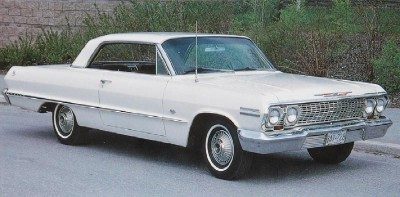
The 1963 Chevy Makeover
The 1963 Chevrolet lineup didn’t get a new body. It got a face-lift. The Biscayne, Bel Air, and Impala all shared that same boxy silhouette. But look closer. The bodyside contours shifted just enough to make you think the whole car had been redesigned. Chevrolet marketing sold it hard. They called the look “clean-cut as a jewel.” They promised a ride “smooth-riding as a jet.”
It wasn’t all about style. The ads focused on boring stuff. Things like “air-washed rocker panels.” Self-adjusting brakes. A longer-life exhaust system. That was the pitch. Keep the metal clean. Keep the brakes lazy. Keep the exhaust happy.
But under the hood, the real story was pure muscle.
Engine Specs and Power Figures
The standard engine was a Turbo-Fire 283-cubic-inch V-8. It pushed 195 horsepower. Solid. Reliable. But not for the speed freaks.
Step up to the mid-range 327-cubic-inch engine. That’s where it got interesting. You could get 250 horsepower in base trim. Or you could grab the high-output version and pull 340 horsepower.
Then there was the big-block 409.
This was the hero. Chevrolet cranked out three versions of this beast.
- 340 horsepower
- 400 horsepower
- 425 horsepower
The top-tier 425-horse version wasn’t playing around. It used twin four-barrel carburetors. That means two carbs fighting for air. Compression sat at a tight 11:1. That’s high for the era. You needed good gas. You needed a strong engine.
The 409 was a legend for a reason. It turned the mid-size Chevy into a drag strip contender. A small block like the 327 could scratch the surface. The 409 dug deep.
Why It Mattered
This year marked a shift. Chevrolet wasn’t just selling transportation. They were selling performance in a package that looked like a family sedan. The 1963 Chevy Impala became an icon because of this mix. Boxy. Clean. Deadly fast if you bought the right engine.
The sales brochures tried to sell you on the air-washed rocker panels. Ignore the panels. Look at the horsepower. Look at the compression. Look at the twin carbs.
That’s where the magic was. The body was just the wrapper. The powertrain was the gift.
Comparison: 327 vs 409
Which one should you buy? If you want daily drivers that can run with the best, the 327 is the choice. It’s lighter. It’s simpler. It makes 340 horsepower without breaking a sweat.
But if you want to win races? Get the 409. Specifically the 425-horse version. The 11:1 compression ratio demands respect. The twin four-barrel setup demands tuning. But the power delivery is instant. Brutal.
The 1963 models are sought after today. Not for the
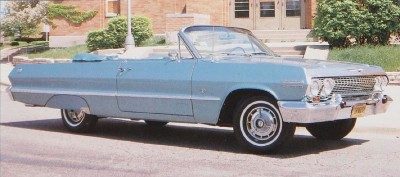
1963 Chevrolet Biscayne, Bel Air, and Impala Facts
- Model: Biscayne
- Weight range (lbs.): 3,205-3,810
- Price range (new): $2,322-$2,830
-
Number built: 186,500 (approx.)
-
Model: Bel Air
- Weight range (lbs.): 3,215-3,810
- Price range (new): $2,454-$3,028
-
Number built: 354,100 (approx.)
-
Model: Impala
- Weight range (lbs.): 3,310-3,870
- Price range (new): $2,661-$3,170
- Number built: 832,600 (approx.)
1964 Chevrolet Biscayne, Bel Air, and Impala
The 1963 lineup had already proven that the V-8 wasn’t mandatory for a sale. Buyers frequently skipped the big blocks, content with the 140-horse Turbo-Thrift six. But those who wanted speed knew exactly what to ask for. A tiny handful of drag racers managed to snag cars with lightweight aluminum front body panels and the 427-cubic-inch version of the 409 engine. It was rare. It was fast. It was expensive.
Impalas continued to dominate the charts, moving 832,600 units. That total included 153,271 Super Sports. The body styles were diversifying. Sport Sedans kept their distinct hardtop roofline. Sport Coupes finally got the option of a vinyl top. If you wanted the full package, the SS Impala convertible was the ticket. It looked mean. It cost more.
The base price for a convertible sat at $3,024. Add the SS package and you were looking at $3,185. That extra $161 got you heavy-duty springs, aluminum-trimmed bucket seats, and swirl inserts on the dashboard. Every SS Impala came with a floor shifter. The new console included a locking compartment. Security for your gloves. Or your speedometer keys.
1964 Chevrolet Biscayne, Bel Air, and Impala Facts
- Model: Biscayne
- Weight range (lbs.): 3,275-3,900
- Price range (new): $2,353-$2,850
-
Number built: 232,800 (approx.)
-
Model: Bel Air
- Weight range (lbs.): 3,285-3,900
- Price range (new): $2,487-$3,058
-
Number built: 458,600 (approx.)
-
Model: Impala
- Weight range (lbs.): 3,370-3,950
- Price range (new): $2,
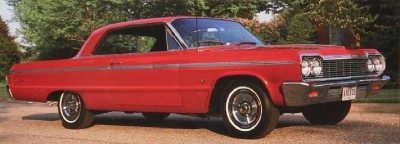
The 1964 Chevrolet Impala SS: A Distinct Series
The 1964 model year marked a shift for the Chevrolet Impala line. Chevrolet decided to treat the Super Sport not just as an option package, but as a distinct series. You could now buy an Impala Super Sport as either a convertible or a hardtop coupe.
Inside the cabin, the SS models stood out. They came standard with a pleated vinyl interior. The front bucket seats were part of the deal, along with a center console. This console featured a floor gearshift. It was standard when you equipped the car with a four-speed manual or the Powerglide automatic transmission.
Visually, the SS models had unique trim details. The rear cove outline moldings were decorated with swirl-pattern silver anodized material. Wider upper body trim strips matched this treatment. This gave the 1964 Impala SS a specific look that separated it from the base models.
The 1964 Impala Super Sport was no longer just an option. It was a distinct series with unique interior and exterior trim.
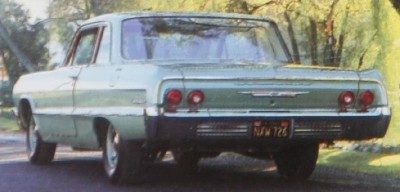
Engine Choices and Performance Options
Super Sports came with a choice of six-cylinder or V-8 engines, though buyers rarely opted for the slant-six. You could add a tachometer and a sports steering wheel to the mix. Quick-ratio power steering was an option. A seven-position Comfortilt column was also available.
Styling got squarer. The front end featured a new full-width sculptured grille. Impalas kept their signature triple taillights on each side. Brightwork was plentiful. Sales figures reflected this appeal. Total production hit 889,600 units. That included 185,523 Super Sports models.
Powertrain selection was complicated. There were seven engines and four transmissions to pick from. Options started with a 140-horsepower six-cylinder. V-8s ranged from 283 to 409 cubic inches. The 409 was noted for being “especially saucy in highway passing situations.” Horsepower for V-8s spanned from 195 to 425. Top-tier engines could get Delcotronic all-transistor ignition.
1964 Chevrolet Biscayne, Bel Air, and Impala Facts
| Model | Weight range (lbs.) | Price range (new) | Number built |
|---|---|---|---|
| Biscayne | 3,230-3,820 | $2,363-$2,871 | 173,900 (approx.) |
| Bel Air | 3,235-3,865 | $2,465-$3,039 | 318,100 (approx.) |
| Impala | 3,340-3,895 | $2,671-$3,181 | 704,300 (approx.) |
| Impala SS | 3,325-3,555 | $2,839-$3,196 | 185,325 |
1965 Chevrolet Biscayne, Bel Air, and Impala
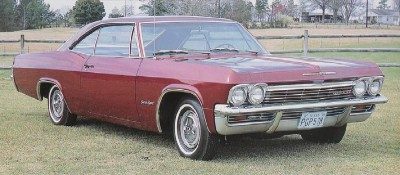
The 1965 Chevy Big Bodies: New Shapes and Harder Hitting Engines
The 1965 Chevrolet full-size lineup didn’t just rest on its laurels. The Biscayne, Bel Air, and Impala managed to grow even bigger than they already were. Big-bodied cars in any year, these Chevys got dramatic. The sides rounded out. Window glass curved to match. The front end was all-new with fresh hood contours. Underneath, a new Girder-Guard frame reduced the driveline tunnel. That meant more legroom. More space.
Chevrolet pushed the 1965 Chevrolet Impala SS hard. They touted the Wide-Stance design. Adhesively bonded windshields were standard. Improved full-coil suspension smoothed out the ride. Sport Coupes got a sleek semi-fastback roofline. Wheel well moldings got revised. Inside, a two-tone instrument panel put gauges in a recessed area ahead of the driver. Cleaner look. Better visibility.
Transmission and Engine Options
The Turbo Hydra-Matic was offered for the first time. No more manual shifting if you didn’t want to. The column-shift three-speed could now have full synchronization. It shifted smoother. A new 250-cubic-inch six-cylinder engine satisfied a fair number of buyers who didn’t need V-8 power. But for the rest? Power.
A 396-cubic-inch Turbo-Jet V-8 became available midway through the model year. That’s the big news. It packed 325 or 425 horsepower. The 425 version had 11:1 compression and solid lifters. That’s race-ready stuff for a street car. The legendary dual-carb 409 was dropped. Gone. Only 340- and 400-horsepower renditions of the 409 remained. Still fast. Still loud.
Impala SS: Subtle Changes, Big Appeal
Super Sports differed slightly from regular Impalas. They kept bright windshield moldings. But they lost the rocker panel or lower fender trim. Clean lines. No unnecessary chrome clutter. A total of 243,114 Impala SS coupes and convertibles were built. That’s a lot of muscle.
Their new center console housed a rally-type electric clock. Full instrumentation now included a vacuum gauge. You could watch your engine’s health in real-time. No more guessing. Just raw data and performance.
“The 425-horsepower 396 V-8 with 11:1 compression and solid lifters was a game-changer for mid-year buyers.”
Why did the 409 get downgraded? Market shifts. Emissions? Not yet. But power density mattered. The 396 offered more torque. More flexibility. The Impala SS wasn’t just a badge. It was a statement. And with 243,114 units, the statement was loud.
The Wide-Stance design wasn’t just marketing fluff. It improved handling. Reduced body roll. Made the car feel planted. Even with the larger size. Even with the rounded sides. It still cornered. Still stopped. Still went.
What happens when you combine a new frame, a bigger engine, and a cleaner interior
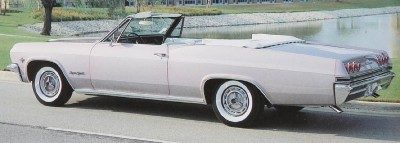
The Caprice Option That Changed Everything
You could swap an Impala Sport Sedan for a Caprice Custom for just two hundred bucks. That’s it. Twenty dollars more than the base price difference might suggest, but the result was a nameplate that would outlive us all. The package wasn’t just a badge swap. It came with a blacked-out grille that ate the light. A vinyl roof stamped with fleur-de-lis emblems. Wheel covers that didn’t look like standard issue. Narrow sill moldings to keep the door sills looking clean.
But the real story was underneath the sheet metal.
Chevy tightened up the suspension. They reinforced the frame. The interior was, by some counts, the most luxurious thing to roll out of a Chevrolet plant up to that point. Simulated walnut trim on the door panels. Specially stitched cloth that felt expensive to the touch. Contour-padded seats wrapped in a mix of fabric and vinyl. It was all designed to trick buyers into thinking they were driving a Cadillac. And it worked.
So well, in fact, that by 1966, the V-8-only Caprice didn’t just stay an option. It became its own full series.
1965 Model Lineup by the Numbers
If you’re trying to identify what you’re looking at, weight and price are your first clues. The hierarchy was strict. Heavier meant more chrome. More chrome meant higher prices.
Biscayne
* Weight: 3,305 to 3,900 lbs.
* New Price: $2,363 to $2,871
* Production: ~145,300 units
The Biscayne was the entry point. No fancy vinyl roofs here. No blacked-out grilles. Just the basics.
Bel Air
* Weight: 3,310 to 3,950 lbs.
* New Price: $2,465 to $3,039
* Production: ~271,400 units
The middle child. Slightly heavier. Slightly pricier. But still not quite hitting the luxury notes of the upper trim.
Impala
* Weight: 3,385 to 4,005 lbs.
* New Price: $2,672 to $3,181
* Production: ~803,400 units
The volume seller. You could option it up to look like a Caprice, but stock Impalas were everywhere. The numbers prove it.
Impala SS
* Weight: 3,435 to 3,655 lbs.
* New Price: $2,839 to $3,212
* Production: 243,114 units
Lighter than the standard Impala in some configurations, but packed with performance hardware. The SS was about speed, not faux wood grain.
Entering 1966: The Series Split
By the time the new model year hit, the distinction between “option group” and “series” blurred for the Caprice.
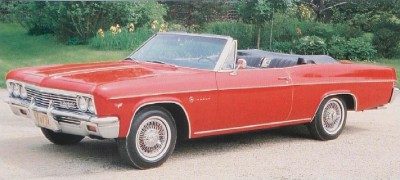
The 1966 GM Full-Size Makeover
The styling shift was stark. Gone were the curves. In their place came boxier lines and a complete hardware overhaul for the 1966 Chevrolet lineup. The Biscayne, Bel Air, Impala, and Caprice all got new fenders and bumpers. The grille changed too. But the real visual shift was in the rear. Rectangular wraparound taillights replaced the previous iterations. It was a harder look.
Under the hood, things got serious. The big news was the debut of the 427-cubic-inch V-8. This wasn’t a ground-up design. It was an enlargement of the 396-cubic-inch Mark IV engine. The result? Massive power. You could spec it for 390 horsepower or push it to 425 horses.
If you didn’t need that much grunt, there were alternatives. The traditional 396-cubic-inch V-8 returned, rated at 325 horsepower. There was also the smaller 327-cubic-inch option. These engines defined the era’s performance hierarchy.
Chevrolet didn’t just slap on new sheet metal. They fixed the chassis. Hardtop models received new perimeter frames. The body mounts were updated too. The company promised a “Jet-smoother ride.” The idea was to soak up road imperfections better than before.
Every single series covered the bases. That meant every model line included a station wagon variant. Utility didn’t get ignored.
Inside, the mechanics were refined. Three-speed column gearshifts came standard. Crucially, all forward gears were fully synchronized. No double-clutching required.
Performance Specs and Chassis Updates
The 1966 models represented a transition point. They kept the classic proportions but tightened up the execution. The perimeter frame was a key differentiator for hardtops. It provided structural rigidity that older designs lacked.
Engine choices remained diverse. The 427 was the headline act. But the 396 at 325 hp was likely the volume seller. It offered a balance of power and availability. The 327 catered to those who wanted reliability over raw speed.
The interior updates were subtle but important. Synchronized gears made daily driving easier. The column shift kept the dashboard clean. It was a practical choice for a family car that could also haul cargo.
Styling cues were consistent across the range. The rectangular taillights were a unifying element. They gave the cars a distinct profile from behind. This helped differentiate them from competitors who were still using round or vertical units.
The station wagon option was available across the board. Whether you bought a base Biscayne or a luxury Caprice, you could get a wagon. This broadened the appeal. It wasn’t just a performance car. It was a daily driver.
Why the 1966 Lineup Matters
This year marked a shift in how GM approached full-size cars. The body lines became more angular. It reflected a changing aesthetic in the mid-60s. Consumers started preferring sharper looks.
The 427 engine was a significant step up. It brought high-performance capabilities to a broader range of models. Before this, such power was limited to specific variants or years.
The “Jet
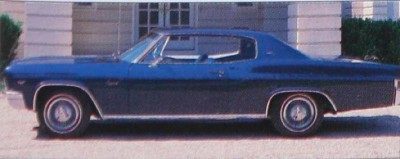
The Super Sports trim level got a significant interior overhaul for 1966. Gone was the standard bench setup. In came slim-profile Strato-bucket seats. It was a clear signal that Chevy was trying to sharpen the image of its mid-range offerings. The Impala stayed the family favorite. But the real story was the Caprice.
The nameplate had exploded in popularity in 1965 as an option package. By 1966, it was a separate series. Chevy was explicitly targeting Ford’s upscale LTD. The marketing copy called it the “most luxurious Chevrolet yet.” That’s a bold claim. It wasn’t just about leather. It was about presence. The four-model Caprice series was strictly V-8 powered. No inline-sixes allowed here.
Luxury with a sporty edge
Caprice buyers had options. You could get reclining Strato-back front seating. It was a nice touch for long highway hauls. But the star of the show was the Caprice Custom Coupe. It sported a more formal roofline. Chevy billed it as “one-of-a-kind.” Under the rear window, you’d find decorative exhaust ports. They weren’t functional, obviously. They were purely aesthetic. A nod to sportiness without the actual performance.
The styling cues were consistent across the body styles. Wide rocker sill moldings ran along the bottom. Dual color-keyed striping added length to the profile. And you couldn’t miss the fleur de lis emblems on the roof quarters. It was a distinct look. One that set it apart from the base models.
1966 Chevrolet Biscayne, Bel Air, Impala, and Caprice Facts
Here is how the lineup stacked up in terms of mass, money, and production volume.
Model
Weight range (lbs.)
Price range (new)
Number built
Biscayne
3,310-3,895
$2,379-$2,877
122,400 (approx.)
Bel Air
3,315-3,940
$2,479-$3,053
236,600 (approx.)
Impala
3,430-4,005
$2,678-$3,189
654,900 (approx.)
Impala SS
3,460-3,630
$2,842-$3,199
119,314
Caprice
3,600-4,020
$3,000-$3,347
181,000
The weight spread tells a story. The Biscayne started light at 3,310 lbs. The Caprice pushed over 4,000 lbs in some configurations. That’s a heavy car. But it came with a heavy price tag to match. $3,347 was no small change in 1966.
The Impala SS is interesting here. It wasn’t the cheapest. But
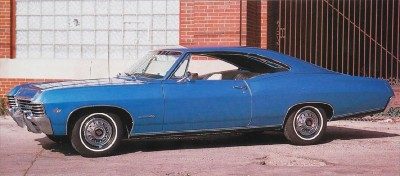
The 100 Millionth GM Car Was a 1967 Chevrolet Caprice
It landed on an assembly line in Janesville, Wisconsin, on April 21, 1967. The vehicle was a top-tier 1967 Chevrolet Caprice Custom Coupe. This wasn’t just another Tuesday for General Motors. It marked the 100-millionth vehicle built in the United States.
Was there some cosmic planning involved? Probably not. But looking back, it feels like a sign. The Caprice went on to become Chevy’s flagship luxury model. That milestone car hinted at where things were heading.
The body style mattered. The ’67 Caprice featured a formal roofline. You could add an optional vinyl top. No other Chevrolet model shared that specific silhouette. It stood alone.
Design Tweaks and Grille Games
The full-size platform got a fresh look for 1967. It wasn’t a total redesign. The dimensions stayed mostly the same. The wheelbase held steady at 119 inches. That’s four inches longer than the mid-size Chevelle.
Chevrolet spent time marketing the front end. They called it a “lattice-work grille playing peekaboo around the front fenders.” The chrome mesh was intricate. It framed the headlights without overwhelming the nose.
Interior choices split down the middle. Buyers could pick vinyl bucket seats with a center console. Or they could opt for a Strato-back bench. The bench included a fold-down center armrest.
Impala SS Specifics
The Impala Sport Coupe carried a distinct profile. Its roofline flowed into the rear deck in one unbroken curve. The SS versions kept that graceful shape.
Badging differed between models. The Super Sport (SS) models were less decorated than standard Impalas. They used black grille accents. The bodyside moldings had black accents too. The rear fender moldings followed suit.
Lower-trim Impalas leaned heavily on chrome. Brightwork was everywhere. Inside and out. The SS models stripped some of that away.
Both the Sport Coupe and convertible SS variants lacked bright trim around the wheel wells. It was a cleaner look. A sportier aesthetic.
The 1967 Caprice wasn’t just a car. It was a monument. The 100 millionth mark stuck in the public memory.
Why the Capice Stuck
People remember the hard numbers. 100 million. That’s a lot of steel, glass, and rubber. But the Caprice represented something else. It was luxury done right.
The formal roofline set it apart. Other cars had landau roofs. The Caprice had a dedicated design. It didn’t borrow from the Bel Air or the Impala base models. It stood on its own.
The wheelbase was long. 119 inches gave it presence. The Chevelle was shorter. Mid-size. The Caprice was full-size. It commanded more road space.
Enthusiasts still hunt for these cars. Not just any Impala. The SS models. The ones with the black accents. The ones without the wheel well trim. They’re rarer. Cleaner.
The lattice grille is iconic. It’s a specific 1967 look. You won’t see it on a ’66
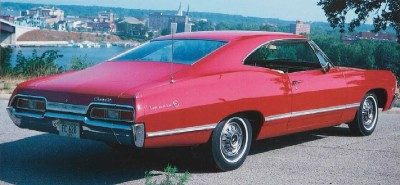
The headline engine for the year was the 385-horsepower 427-cubic-inch V-8. Out of 76,055 total Impala SS models built, the hierarchy was clear. Just 2,124 were the top-tier SS 427 editions. Another 400 Super Sports rolled off the line with a six-cylinder engine. You don’t find many of those left.
The Impala didn’t just mimic its siblings. It came in a full complement of body styles. It accounted for the lion’s share of sales, as usual. Total Impala output hit 556,800 cars with V-8 power. Another 18,800 carried six-cylinder engines, including those rare Super Sports.
Biscaynes stayed true to their budget-minded roots. Bel Airs offered a little extra luxury. More than 124,000 shoppers paid extra to bring a Caprice into the driveway.
1967 Chevrolet Biscayne, Bel Air, Impala, and Caprice Facts
| Model | Weight range (lbs.) | Price range (new) | Number built |
|---|---|---|---|
| Biscayne | 3,335-3,885 | $2,442-$2,923 | 92,800 (approx.) |
| Bel Air | 3,340-3,940 | $2,542-$3,098 | 179,700 (approx.) |
| Impala | 3,455-3,990 | $2,740-$3,234 | 575,600 (approx.) |
| Impala SS | 3,500-3,650 | $2,898-$3,254 | 74,000 (approx.) |
| Caprice | 3,605-3,990 | $3,078-$3,413 | 124,500 (approx.) |
1968 Chevrolet Biscayne, Bel Air, Impala, and Caprice
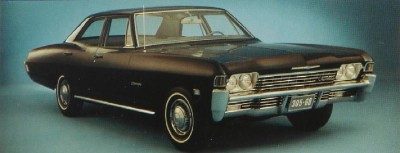
The Grand Chevrolet: Styling, Specs, and Sales Dominance
Chevy’s marketing machine went into overdrive for 1968. The brochure didn’t just claim the new 1968 Chevrolet Caprice had a classic roofline. It screamed it. “Nothing on the road is more distinctively stylish.” That’s not subtle. That’s a declaration of war on boring sedans.
And they weren’t lying about the luxury. These cars came loaded. We’re talking courtesy lights, ashtray lights, electric clocks, and front center armrests. The seats and door panels were fancier than the base models. Even the carpeting got treatment. It didn’t just stop at the floor. It ran up the side of the kick panels and covered the door bottoms.
“It can make you feel richer. At a Chevrolet price.”
This is how Chevy sold the 1968 Chevrolet Caprice. They branded it “The Grand Chevrolet.” The ads were heavy. The message was clear. This car was designed to replace the Impala in the American psyche as the ultimate icon. It promised status without the luxury brand markup.
Visibility and Ventilation Tech
The glass got an update. The old ventipanes? Gone. They were removed to offer greater visibility. It sounds minor until you’re trying to merge on a highway with a blind spot that feels like a wall.
Chevy pushed their Astro Ventilation system hard. The idea was simple. Pull in outside air without cracking a window. You kept the noise out. You got the fresh air. It was supposed to be a quiet, clean solution.
Most Chevrolets in this era got hidden wipers. They retracted into the cowl when not in use. The front end looked clean. Smooth.
Retractable headlights were a $79 option. They looked great. Few people bought them.
That’s the thing about 1968 car buyers. They loved the look but hated the price. The retractable headlights cost extra. Sales figures proved it. People wanted the clean aesthetic but not the $79 hit to their wallet.
Model Lineup Shifts
The Custom Coupe was a big deal. Previously, you could only get this formal body style on a Caprice. In 1968, Chevy opened it up. Now the Impala could wear the same sleek two-door skin. It widened the appeal for buyers who wanted that sporty, formal look without the full Caprice price tag.
The styling cues were distinct. The front end got a new face. Standard models looked sharper. The rear was unmistakable. Triple “horseshoe” shaped taillights lined the bumpers. It’s a design element that still makes these cars recognizable today.
The Sales Hierarchy
The hierarchy remained rigid. Biscayne sat at the bottom. It was the lowest-priced full-size model. It looked the part too. Plain. Functional. Unadorned.
Bel Air occupied the middle. It continued to lure the middle-of-the-roader. You didn’t want the base model, but you didn’t need the top-tier luxury. Bel Air was the sweet spot.
But the real story is in the numbers. The Impala overwhelmed the sales charts. It had done so for years. And with the Caprice stealing some thunder as the
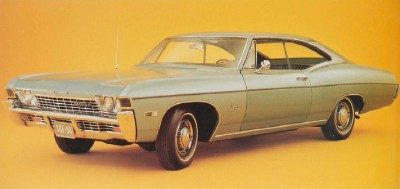
The Caprice was climbing the ladder, moving nearly 115,500 units through the season. Meanwhile, the Impala Super Sport was sliding down. It wasn’t a standalone model anymore. It was just a $179 option package bolted onto the coupe and convertible versions. Only 38,210 Impalas got the SS treatment. Of those, a mere 1,778 were equipped with the monstrous 427-cubic-inch V-8, officially badged as the SS 427.
Full-size Chevrolets offered a spectrum of powertrains. You could start with the humble 250-cubic-inch inline-six. Or jump to the 307-cubic-inch V-8. There were two versions of the 327 to choose from. Or step up to the 396-cubic-inch V-8, which pushed 325 horsepower. But at the top of the food chain sat the big 427. It was rated at either 385 or 425 horsepower. That’s plenty of punch for a heavy Chevy. The real question was which engine you wanted.
1968 Chevrolet Model Data
| Model | Weight range (lbs.) | Price range (new) | Number built |
|---|---|---|---|
| Biscayne | 3,400-3,900 | $2,581-$3,062 | 82,100 (approx.) |
| Bel Air | 3,405-3,955 | $2,681-$3,238 | 152,200 (approx.) |
| Impala | 3,250-3,940 | $2,846-$3,358 | 710,900 (approx.) |
| Caprice | 3,660-4,005 | $3,219-$3,570 | 115,500 (approx.) |
1969 Chevrolet Biscayne, Bel Air, Impala, and Caprice
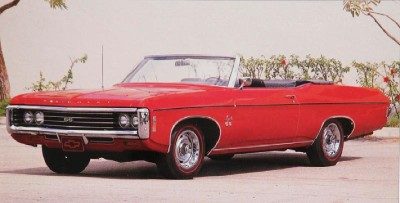
The 1969 Impala’s Sculpted Redesign
Chevrolet pulled the strings again in 1969. The full-size lineup got a fresh coat of paint and a new shape, though the DNA remained unmistakable. You could spot the lineage instantly. It was evolution, not revolution.
The wheelbase stayed put at 119 inches. That is three inches longer than the four-door Chevelle. A subtle difference in the showroom, but a rigid platform for the chassis.
Body lines shifted. The sides got sculptured, giving the cars a leaner, slightly longer profile. It wasn’t a dramatic stretch. Just enough to look modern without losing the classic bulk.
Up front, the grille took a fresh approach. Four deep-mounted headlights sat in a clean frame. A thin bumper wrapped around the nose. It was simpler than the clutter of previous years.
At the rear, the story was similar. Fenders bulged noticeably around each wheel well. This added visual weight. The car looked planted. Rectangular taillights slid into a thinner rear bumper. The chrome was minimized. The focus was on the light clusters themselves.
The 1969 redesign wasn’t about reinventing the wheel. It was about sharpening the edges of a familiar silhouette.
This approach kept the 1969 Chevrolet Impala grounded in its heritage. Enthusiasts know that era well. It was the last gasp of the raw, unrefined full-size American sedan before the oil crises and insurance mandates changed everything.
The Chevelle connection remained tight. Both cars shared that 119-inch stretch. The Impala just wore it with more flared fenders. The Chevelle sat lower in the lineup. The Impala was the crown jewel.
How did this affect handling? Not much. The platform was old. But the look? It was sharper. The thin bumpers made the car look wider. The deep headlights gave it a focused stare.
Why does this matter now? Because these details defined the end of an era. The 1969 Impala is the final chapter of the pre-recession full-size car. It’s clean. It’s bold. And it’s still on the road.
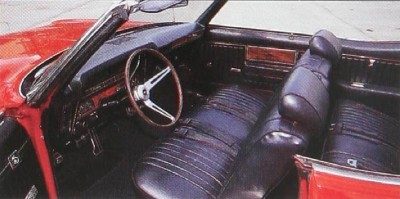
“We’re out to put everybody on Easy Street.” That was the pitch. It sounded good on paper. The marketing machine pushed hard for comfort and ease. Impalas got Hide-A-Way wipers. That’s an automatic system that tucks them away under the hood. Vinyl-insert bodyside moldings added a touch of class to the lower panels.
The full-size roster remained tight. Biscaynes and Bel Airs held the lower rungs. The Caprice sat at the top, looking posh. But there was a new trick in the trunk. Impala and Caprice coupes could now order an electric rear-window defogger. Cold mornings just got slightly less miserable.
Inside, the layout shifted. Ignition switches moved to the steering columns. No more floor pedals for starting. You turned the key in the dash.
Powertrain and the SS Package
The base engine didn’t change much. It was still a 155-horsepower, 250-cubic-inch inline-six. Reliable. Underpowered. Standard.
The V-8s, however, got bigger. The entry-level small-block grew to 327 cubic inches. It pushed out 235 horsepower. More torque. More grunt.
Then there was the Super Sport.
It wasn’t a standalone model. It was an engine and trim package. It cost $422 extra. A lot of money in 1969. Only 2,455 orders went out for the SS package across the Impala Custom Coupe, Sport Coupe, and convertible. That’s niche. That’s rare.
Chevrolet wanted to prove the SS could handle big displacement too. So they added the 427.
A 390-horsepower, 427-cubic-inch V-8 was available. It gave each Super Sport model an SS 427 designation. This badge carried weight. It signaled serious performance. It wasn’t just chrome and stripes. It was muscle.
Middle Ground Options
You didn’t have to choose between the six and the massive 427.
Chevrolet filled the gap with several V-8 options.
- 255-horsepower 350-cubic-inch V-8
- 300-horsepower 350-cubic-inch V-8
- 265-horsepower 396-cubic-inch V-8
The 350 became the heart of the American car industry for decades. In 1969, it was already proving why. The 396 offered a larger displacement for those who wanted more cubic inches without jumping to the exotic 427.
1969 Chevrolet Biscayne, Bel Air, Impala, and Caprice Facts
| Model | Weight range (lbs.) | Price range (new) | Number built |
|---|---|---|---|
| Biscayne | 3,530-4,170 | $2,645-$3,169 | 68,700 (approx.) |
| Bel Air |
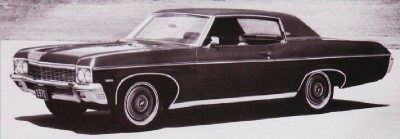
Restyling the Full-Size Chevy
The front and rear ends of the 1970 Chevrolet Impala were completely overhauled. The combined grille and bumper design was abandoned. It looked like a massive overhaul. It wasn’t. The changes were superficial.
The body lines shifted. The lighting packages changed. But underneath the sheet metal, the architecture remained largely familiar. It was an illusion of significant change designed to keep the model relevant.
Engine Lineup Shifts
Under the hood, the options tightened up. The six-cylinder engine was gone from the two-door Impala. It survived only in the four-door sedan. Enthusiasts looking for a cheap V8 starter option in a coupe had to look elsewhere.
The base powertrain for all full-size Chevys was a 350-cubic-inch V-8. It made 250 horsepower. That was the starting point.
If you wanted more punch, the dealer options list grew. You could step up to a 300-horsepower version of that same 350. Or you could grab a 400-cubic-inch engine rated at 265 horsepower.
The 454 V-8 Era
The big news came from Detroit’s response to new emissions standards. The old 427 V-8 was retired. It was replaced by the 454-cubic-inch big block. This new engine was developed specifically to meet forthcoming emissions standards while maintaining muscle car cred.
There were two versions of the 454. One produced 345 horsepower. The other pushed 390 horsepower. These were serious numbers for a heavy sedan.
The 454-cubic-inch engines replaced the 427, developed partly to meet forthcoming emissions standards, producing 345 or 390 horsepower.
The aesthetic updates masked modest mechanical changes. The horsepower figures told the real story. Detroit was pivoting. The easy power was starting to vanish. The 454 was one of the last hurrahs.
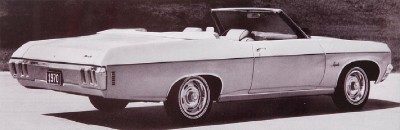
The Great Contraction: 1970 Chevrolet Lineup
The hierarchy of the Chevy lineup was shifting, and by 1970, the gap between the entry-level models and the premium badges had widened into a chasm. The Biscayne and Bel Air had been stripped of their versatility, available only in four-door sedan form. If you wanted a wagon from these base trims, you were looking at the Brookwood or Townsman equivalents. But if you wanted style? You had to climb the ladder.
All two-door bodies were now hardtop-styled. The era of the pillarless hardtop was ending, but for those who could afford it, the Impala and Caprice lines offered sleek, frameless windows. The convertible was dying, though it wasn’t dead yet. The Impala was one of only three remaining Chevy convertibles for the year. Production numbers tell the story clearly. Only 9,562 ragtops were built.
Interest in convertibles was plummeting. The fascination with large, sporty personal luxury cars was fading just as fast. This cultural shift killed the Impala Super Sport. It was gone, abandoned as buyers moved away from the muscle car ethos that had defined the previous decade.
The Strike and the Sales Drop
Total output for full-sized Chevrolets dropped sharply. Production fell below the one-million mark. Why? Blame the calendar. A 65-day strike in the fall of 1970 halted assembly lines and disrupted supply chains. It wasn’t the only reason, but it was a significant blow.
Despite the industry-wide contraction, the Impala remained the king of the lot. Sales for the top-tier model ranked far above other big Chevrolets. Buyers wanted prestige. They wanted the badge. Even in a down year, the Impala outpaced the Biscayne and Bel Air by a massive margin.
1970 Chevrolet Specifications and Production Data
The numbers from 1970 show the tiered pricing and weight disparities across the full-size range. The base models were light and cheap. The Caprice carried a heavy price tag and a heavier curb weight.
| Model | Weight Range (lbs.) | Price Range (New) | Units Built (Approx.) |
|---|---|---|---|
| Biscayne | 3,600 – 3,759 | $2,787 – $2,898 | 35,400 |
| Bel Air | 3,604 – 3,763 | $2,887 – $2,996 | 75,800 |
| Impala | 3,641 – 3,871 | $3,021 – $3,377 | 505,471 |
| Caprice | 3,821 – 3,905 | $3,474 – $3,527 | 92,000 |
Station wagon data for individual trims is not available as separate counts, as wagons were often categorized by series (Brookwood/Townsman) rather than the trim badges used on sedans
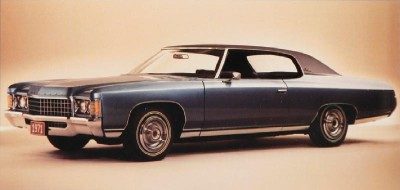
The Bulging 1971 Chevy: Full-Size Volume and the End of an Era
Skip the Caprice. That’s where the money went in 1971. The Impala sat below it but offered enough room for four distinct body styles. You had pillarless hardtops. Two-door. Four-door. They didn’t fold up the windows. Then there was the regular sedan. And yes, a convertible. But don’t get too attached. The roof-down version was already on its deathbed.
If you wanted the look of the top-tier Caprice without the tax bracket hit, the Impala Custom Coupe was the move. Same roofline. Better price point.
Biscayne vs. Bel Air: The Bottom Feeders
Biscayne was the cheap option. Bel Air sat in the middle. Both were strictly four-door sedans. No hardtops. No fun.
Under the hood, you started with the 250-cubic-inch six-cylinder. Boring. Reliable. Then the 307-cubic-inch V-8. Still basic. But if you actually ordered options, you could grab a 454. Real numbers. 425 horsepower. That’s enough to scare a smaller car.
Chevy stretched the wheelbase to 121.5 inches. Wagons got 125. The bodywork didn’t just stretch. It swelled.
Look at the beltline. It bulged. The sides pushed out. The hood swelled. It was a massive redesign for a full-size platform. The grille was new eggcrate pattern. Front fenders had sharp leading edges. It tried to look like a Cadillac. It mostly worked.
Vent Louvers and Volume Numbers
Production hit 475,000 units. Not counting wagons. Huge numbers.
But only a tiny fraction had the six-cylinder engine. People didn’t want slow. They wanted space. Or they wanted power. They didn’t want both economy and volume.
Chevy pushed flow-through ventilation. Standard tech. But the execution was flawed. Louvers were stamped into the decklids and wagon tailgates. Water found its way in. Complaints poured in. Water damage in the trunk isn’t a selling point.
The Biscayne Paradox
The Biscayne was entry-level. Only sedans. But it didn’t look cheap.
Chrome window trim. Side moldings. Whitewall tires. Full wheel covers. It dressed up well.
Shoppers didn’t care. They moved up to Bel Air or Impala. Indifferent.
Only about 22,000 Biscaynes left the lot. Low volume. The line died after 1972. Gone.
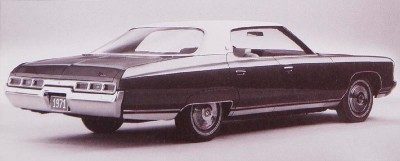
The 1971 run got hammered by a two-month UAW strike that shut down every Chevrolet plant. Production cratered. Yet the brand still moved nearly 668,000 big Chevys. That is a solid number.
Only 10,200 of those rolled off the line with inline-six engines. Buyers ignored the sixes. They wanted V-8 power. The styling matched Cadillac’s look anyway. The resemblance was especially sharp on the 1971 Chevrolet Caprice.
Historian George Dammann noted that a fully optioned Caprice or Impala was hardly less luxurious than a Cadillac. Dealers had no trouble clearing inventory. The value proposition was clear.
1971 Chevrolet Biscayne, Bel Air, Impala, and Caprice Facts
| Model | Weight range (lbs.) | Price range (new) | Number built |
|---|---|---|---|
| Biscayne | 3,732-3,888 | $3,096-$3,448 | 22,309 |
| Bel Air | 3,732-3,888 | $3,233-$3,585 | 315,986 |
| Impala | 3,742-3,978 | $3,391-$4,021 | 374,598 |
| Caprice | 3,964-4,040 | $4,081-$4,134 | 110,497 |
| Station Wagon | 4,542-4,738 | $3,929-$4,498 | 115,007 |
1972 Chevrolet Biscayne, Bel Air, Impala, and Caprice
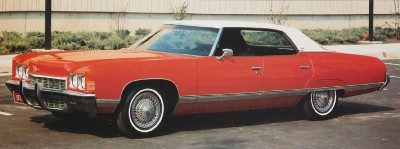
Size Matters: How the 1971 Chevy Impala Dominated the Road
The 1971 Chevrolet Impala didn’t just get bigger. It stretched. That half-inch gain in wheelbase might sound negligible on a spec sheet, but it added up. Chevy’s full-size lineup reached 220 inches total. That made them the largest vehicles among the “Big Three” manufacturers.
Station wagons played a different game. They kept their 125-inch wheelbase. But the body got longer. The Kingswood Estate and other wagons hit an immense 226 inches overall. You couldn’t miss them.
A Fresh Face for the Big Three
Chevy refreshed the front ends. They built them around a V-shaped grille. This new look applied to the Biscayne, Bel Air, Impala, and the high-end Caprice. It was distinct. It didn’t share design DNA with other models.
The marketing team sold it hard. The Caprice brochure claimed drivers would feel like they were behind the wheel of a car costing hundreds more. The stately grille did the heavy lifting. It projected authority. It signaled status without the luxury price tag.
Wagons rounded out the full-size roster. Brookwood, Townsman, and Kingswood models filled the family hauler niche. They were practical. They were huge. They were everywhere.
The Ten-Millionth Milestone
Production numbers tell the story of American dominance. Full-size Chevy output, including wagons, topped the one-million mark. That’s a massive volume for a single model year.
The Impala convertibles were rare. Only 6,456 were built. But the Impala nameplate itself was a juggernaut. It remained the most popular model name in automotive history. This year marked a specific milestone: the ten-millionth Impala sold. Ten million cars with that badge on the trunk.
The Caprice wasn’t slacking off either. It moved 178,455 units from the factory floor. A strong showing for a premium trim. It proved that buyers were willing to pay more for that V-shaped grille and extra prestige.
Under the Hood: Power and Choices
Engine choices covered the spectrum. At the top was a 270-horsepower version of the 454-cubic-inch V-8. Big displacement. Big torque. For those who wanted less, there was a 210-horsepower 402-cubic-inch V-8.
The mid-range options included a 170-horsepower 400-cubic-inch V-8. And the workhorses: 165- and 200-horsepower 350-cubic-inch V-8s. These engines were the backbone of American driving.
Six-cylinder engines were an afterthought. Fewer than 3,900 full-size Chevrolets got them. Who bought them? Maybe fleet buyers. Maybe people who drove slow. But the vast majority of Impalas roared with V-8 power.
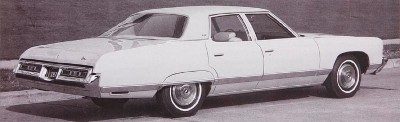
The luxury hierarchy shifted slightly in the Caprice lineup. Three distinct trims were on offer, headlined by the arrival of a pillared four-door sedan. You didn’t get a base engine here. Every Caprice came standard with the Turbo-Fire 400 V-8. The chassis was equipped with variable-ratio power steering and the Turbo Hydra-Matic transmission. The Kingswood Estate remained the top-tier wagon, featuring the signature simulated wood trim along the sides. If you were looking for ventilation louvers on the tailgates of these full-size wagons, you were out of luck. They were gone.
Inside the corporate structure, things were about to get messy. John Z. DeLorean, Chevrolet’s general manager, packed his bags. He left GM to pursue his own venture. It involved a stainless-steel sports car bearing his name. It would not end well.
The numbers tell the story of market share in this era. The entry-level Biscayne was the least popular. It weighed between 3,857 and 4,045 pounds. A new one cost between $3,074 and $3,408. Chevrolet built just 20,538 of them. The Bel Air sat just above it. Weight ranged from 3,854 to 4,042 pounds. Pricing started at $3,204 and went up to $3,538. Production hit 41,888 units.
The Impala dominated the mid-range segment. It tipped the scales between 3,864 and 4,150 pounds. The price tag ranged from $3,369 to $3,979. Chevrolet manufactured 597,541 of these. That volume dwarfs the competition.
The Caprice occupied the premium space. These were heavier machines, weighing in at 4,102 to 4,203 pounds. The price was fixed more tightly, ranging from $4,009 to $4,076. Total production reached 178,455 units.
Station wagons were a different beast entirely. They were heavy. Weight ranged from 4,686 to 4,883 pounds. Prices started at $3,882 and climbed to $4,423. Chevrolet built 171,703 of them.
1973 Chevrolet Bel Air, Impala, and Caprice
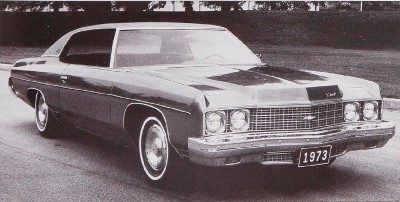
The Last True Full-Size Caprice
Forget about the Corvette. If you wanted a convertible Chevy in 1973 that didn’t scream mid-engine exotica, there was only one choice left. The 1973 Chevrolet Caprice Classic.
Chevy rolled out 7,339 of them. They cost $4,345. That was serious money back then. Marketing called it “the uppermost Chevrolet.” It wasn’t just a claim. It was a structural shift.
The Biscayne was gone. Vanished. You couldn’t buy it anymore. This changed the entire hierarchy. The Bel Air became the entry-level option. The Impala sat in the middle. And the Caprice? It presided over the lot. At the top. Unchallenged.
Wagons and Skirts
Station wagons didn’t have their own identity anymore. They were absorbed. The big wagon at the top of the heap was simply called the Caprice Estate. The Biscayne-based Brookwood? Disappeared with it.
If you weren’t buying a wagon, you got standard equipment you couldn’t opt out of. Rear fender skirts. Every single Caprice came with them. They weren’t optional extras. They were mandatory plastic trim designed to accentuate the sweeping lines of the body. Without them, the car looked incomplete.
Safety Regulations and Styling
Federal mandates were getting aggressive. Front bumpers had to meet a five-mph crash standard. That meant bulky, ugly rubber guards. Rear bumpers? The standard was only 2.5 mph. So those stayed sleek. Less obtrusive.
Roofs got stronger. Side door beams got thicker. Crash safety was becoming non-negotiable, even if it meant heavier steel in the chassis.
Visual Changes
The front end got a facelift. Two different grille styles were available. They featured a looser crosshatch pattern than previous years. New bumpers. New fender caps. It looked different. Sharper.
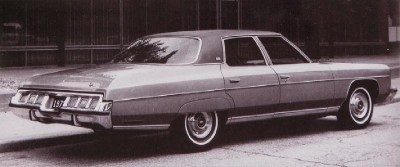
The rear told a similar story. Taillights became more square. They were set into the back bumper, which had been moderately restyled. But the real tell was the lights themselves.
Caprices had three taillights on each side. Lesser models got two. It was a visual hierarchy. You knew who was who just by looking at the back.
For the wagon buyers, one feature survived. The Glide-Away tailgate. Exclusive to full-size wagons. It didn’t fold down. It slid open. A practical touch in a car that was already pushing the limits of utility.
The engine lineup didn’t change much, but it grew heavier. The base six-cylinder was still the 250 cubic-inch straight-six. Or you could grab the 307 cubic-inch V-8. Full-size models often bumped up to the 350 V-8. If you wanted a Caprice, you could even spec a 454 big-block. That monster made 215 horsepower in standard trim. A higher-output version pushed 245.
Chevrolet also stretched its original small-block to 400 cubic inches. It breathed through a two-barrel carburetor. Power output was a meager 150 horsepower. Not exactly thrilling.
Six-cylinders were rare. They only appeared in Bel Airs equipped with column-shifted three-speed manuals. Automatics told a different story. Any full-size Chevy with a 350 or larger V-8 got the Turbo Hydra-Matic transmission. Heavy cars need heavy transmissions.
The Fuel Economy Problem
Fuel tanks held 22 gallons. That sounds generous until you see the mileage. These cars were not frugal. Owners made frequent trips to the pump. It was a daily chore.
Then the gas crisis hit in late 1973. Panic set in. Motorists stood in long lines. They waited for hours. The engineering imperfection of heavy, thirsty V-8s loomed large. Efficiency was no longer a luxury. It was a necessity.
1973 Chevrolet Sales and Pricing
Numbers don’t lie. The Caprice was the premium choice. But the Impala moved the most metal.
Model Breakdown
Bel Air
* Weight: 3,895–4,087 lbs
* Price: $3,247–$3,595
* Units Built: 41,832
The Bel Air was the entry point. Lightest of the bunch. Cheapest too. But still heavy by modern standards.
Impala
* Weight: 4,096–4,162 lbs
* Price: $3,386–$3,822
* Units Built: 549,482
The volume king. Almost half a million sold. The sweet spot for buyers who wanted full-size space without the Caprice badge.
Caprice
* Weight: 4,103–4,208 lbs
* Price: $4,064–$4,345
* Units Built: 212,754
Premium trim. Higher price tag. But still cheaper than many imports by the mid-70s.
Station Wagon
* Weight: 4,717–4,858 lbs
* Price: $4,022–$4,496
* Units Built: 173,974
The heaviest option. Practicality came at a cost. Both in weight and wallet.
Looking Ahead to
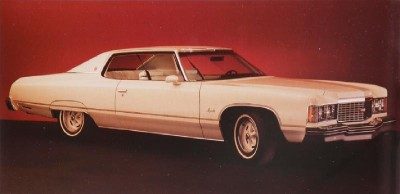
The 1974 model year was brutal for big American sedans. Chevrolet’s overall production tanked by 15 percent, a direct casualty of the OPEC oil embargo that had gripped the nation since late 1973. The energy crisis hit with immediate force. Overnight, American buyers abandoned the muscle-bound full-size giants like the Impala, Caprice, and Bel Air. They fled toward compact, fuel-efficient imports and smaller domestic runs. To make matters worse, Chevrolet raised prices by 10 percent. It was a death knell for an era, but the engineers still had tricks up their sleeves for the remaining loyalists.
The Colonnade Revolution Continues
The styling language of the mid-70s was defined by rigid geometry and fixed glass. The 1974 Chevrolet Impala and Caprice continued the “Colonnade” design language introduced on the 1973 Chevelle. This wasn’t just a trend; it was a necessity for roof rigidity and safety, but it also created a distinct, upright aesthetic.
The Custom Coupe featured dramatic new rooflines. The hallmark was the massive, fixed quarter window. It was larger than the previous year’s iteration, eliminating the roll-down glass entirely. For those who refused to sacrifice the open-air feel, true pillarless hardtop coupes remained in the lineup.
The Impala Sport Coupe carried over its unique roofline from 1973. It bore a striking resemblance to the iconic 1966 Caprice, offering a sleek, continuous curve that defied the boxy trend. Meanwhile, the front end received a restyled grille. It was a bold statement with distinctive, bright-accented vertical bars that cut through the chrome-heavy norms of the previous decade.
Luxury for the Passive Driver
Marketing for the Caprice Classic leaned heavily into the “captain’s chair” philosophy. Brochures touted “enviable luxury,” targeting a demographic they described as “people who think driving is something the car should do.” It was a shift from performance to comfort, positioning the sedan as a private lounge on wheels.
One notable feature was the available 50/50 reclining passenger seat in the Caprice Classic. It allowed the front passenger to lie back fully, reinforcing the idea that the driver should focus on the road while the car handled the motion.
Sales data from this period reveals a curious paradox. The four-door sedan, typically the volume seller for family haulers, was actually outsold by its more expensive counterparts: the coupe and hardtop sedan. Buyers seemed willing to pay extra for the aesthetics of the pillarless or hardtop designs, even if it meant sacrificing rear door practicality. It was a testament to the lingering desire for style over pure utility.
Radial Tires and Refined Rides
Underneath the bodywork, the full-size Chevrolets were getting a serious mechanical update. The suspension was retuned specifically for radial tires. This was not just a cosmetic change; it was a functional adaptation to the growing availability of steel-belted radials.
These tires offered better tread life and handling stability compared to the bias-ply rubber that had dominated for decades. The new setup absorbed bumps more
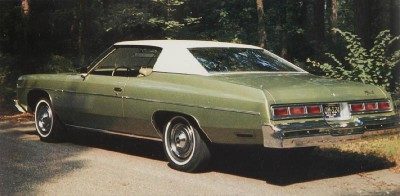
1975 Chevrolet Bel Air, Impala, and Caprice
The “Spirit of America” stunt ended. It was a nice try, but America’s love affair with stripes and stars in a sedan didn’t last. The 1975 lineup dropped the patriotic paint job. Instead, it brought the heat. Specifically, the heat from stricter emissions controls and the lingering shock of the oil crisis.
Chevrolet still offered the full-size range. Bel Air, Impala, and Caprice sat on the same wheelbase. But under the hood, things were getting tighter. The V-8s were still there. They were just being squeezed by regulators.
Engine Options and Power Drops
The big block was gone. GM had cut the 454-cubic-inch V-8 from most full-size cars. It survived in trucks and heavy-duty wagons. In the passenger cars, the hierarchy shifted.
The 400-cubic-inch V-8 became the workhorse. It made 180 horsepower in the Bel Air and Impala. That was down from previous years. The Caprice got a tuned version of the same 400. It made 150 horsepower. Lower power, but smoother. Better for city driving. Worse for passing.
The 350-cubic-inch V-8 was still available. It sat at the bottom of the food chain. Most buyers skipped it. They wanted the torque of the 400.
“The 454 was gone from most full-size cars. The 400-cubic-inch V-8 became the primary powerplant for the Bel Air and Impala.”
Full-size wagons kept the 454. If you wanted to tow a boat, you needed the big block. It made 235 horsepower. The wagon could tow up to 7,000 pounds. That number didn’t change much. But the cars pulling it were heavier.
Styling Changes
The 1975 models got a face lift. A literal one. The grille was smaller. The bumpers were still big. They still ate up front ends. But the nose looked slightly less aggressive.
The tail lights changed. They were still vertical. But the lenses were different. Red and clear. No more amber markers in the rear cluster.
Side trim was simpler. The “Spirit of America” stripes were gone. In their place, plain body lines. Chrome trim followed the beltline. It was boring. It was safe. It sold cars.
Safety and Emissions
The 1975 model year was the first with federal fuel economy standards. GM had to respond. The engines got smaller. Not much. The 454 was still there for wagons. But for sedans and coupes, the 400 was king.
Emissions equipment cluttered the engine bays. Catalytic converters were standard. Oxygen sensors were on some models. The result was lower power. Higher fuel consumption.
But the cars were safer. The bumpers were stronger. The seat belts were better. The glass was laminated. You felt it in the door closes. They thudded heavier than before.
Sales and Production
The Impala was still the volume seller. It was the people’s car. The Caprice
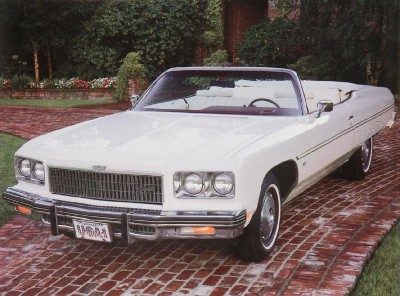
Chevy’s marketing machine in 1975 was running on the simple, stubborn belief that “Chevrolet makes sense for America.” It didn’t matter that gas prices were climbing and efficiency was becoming a necessity. The message was clear. Big cars still sold. The Impala and Caprice were front and center in that campaign, heavy on the ads and heavy on the steel, despite their thirst for fuel.
At the top of the heap sat the Caprice Classic. Specifically, the hardtop sedan was a monster of a machine. It stretched 223 inches from front to back. To break up that massive sheet metal, engineers cut side windows into the roof’s sail panels. It gave the four-door hardtop a fresher, less boxy look than previous years. You also got standard fender skirts and bright wheel moldings right off the lot.
Every Caprice was a fully trimmed Classic. There were no base models to compromise on luxury. You could order it in five distinct body styles: a coupe, a Landau coupe, a four-door sedan, a sport sedan, and the headline-grabbing convertible.
1975 Full-Size Convertible Production Numbers
This year marked the final curtain call for the full-size Chevrolet convertible. It was a Caprice, listed at $5,113. That price tag rarely stuck. Most buyers loaded them up with extra accessories, pushing the final cost well above sticker.
For the first time ever, these ragtops offered a 50/50 reclining passenger seat. You could also opt for a sport cloth interior. It was a small change, but it showed Chevy was listening to comfort demands even as the style faded.
Production numbers tell the real story here. Chevy built 8,349 full-size convertibles. That number is higher than it had been since 1970, when 9,562 open Impalas rolled off the line. But make no mistake. The era of the oversize, ostentatious American convertible was over. The best was yet to come, but the peak had passed.
The Impala Lineup and Landau Sales
Below the Capice prestige, the Impala line held its ground. It was still promoted as “America’s favorite car,” a slogan that felt less like hype and more like a statement of fact for many buyers.
The lineup consisted of two coupes and two sedans. You could get pillared or pillarless options. If you wanted to step down from the full Landau treatment but keep some elegance, there was a Landau coupe available. It didn’t move well, though. Only 2,465 were produced. Sparse sales, but they existed.
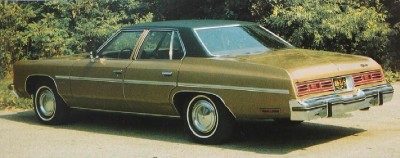
The Final Stand of the Pillared Impala and Bel Air
The Impala survived the styling overhaul by leaning into tradition. The new roofline, complete with those large rear door windows, kept buyers interested. Chevrolet moved 91,330 of these pillared sedans. It was a decent run. The Bel Air line, however, was dying. Facing its final season, the model offered nothing but a four-door sedan. The market disagreed. Sales plummeted.
Total full-size sales for Chevrolet continued their slide, dropping to roughly half the volume seen in 1973. The era of the massive, affordable full-size car was ending. But under the hood, things were changing.
Efficiency Over Power
Every Chevrolet passenger car got a “GM Efficiency System” for 1975. It wasn’t about speed. It was about survival in the wake of the oil crisis. The package included a catalytic converter and an electronic High Energy Ignition (HEI) system.
“Installation of the ‘cat’ permitted engine recalibrations which, in many cases, brought improved gas mileage and durability.”
The catalytic converter allowed engineers to retune the engines. The result wasn’t more horsepower. It was better fuel economy and longer engine life. The full-size lineup stayed consistent with three station wagons: the Caprice Estate, the Impala wagon, and the Bel Air wagon. Each came with either two or three bench seats. Space was still king, even if performance was being dialed back.
1975 Chevrolet Bel Air, Impala, and Caprice Facts
| Model | Weight range (lbs.) | Price range (new) | Number built |
|---|---|---|---|
| Bel Air | 4,179 | $4,345 | 15,871 |
| Impala | 4,190-4,265 | $4,548-$4,901 | 211,708 |
| Caprice | 4,275-4,360 | $4,819-$5,113 | 122,339 |
| Station Wagon | 4,856-5,036 | $4,878-$5,351 | 71,766 |
The numbers tell the story of a shifting market. The Impala remained the volume leader, moving over 211,000 units. The Caprice held its premium position, moving more than 122,000 units. The Bel Air was a ghost. Only 15,871 were built. The wagon segment still had some life left, with over 71,000 units moving. But the gap was widening.
1976 Chevrolet Impala and Caprice
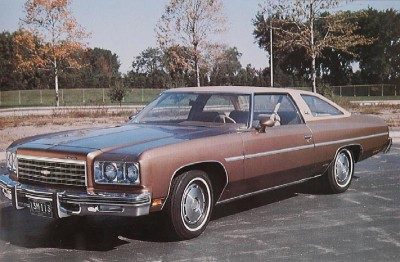
The Final Stand of Chevrolet’s Full-Size Giants
The 1976 model year marked the end of an era for Chevrolet’s traditional full-size lineup. With the Bel Air nameplate retired to history, only the Impala and Caprice remained to carry the torch for the brand’s largest sedans. They shared a fresh front-end design that featured a completely reworked grille, but their execution told two different stories.
Caprice models adopted new rectangular headlights and distinctive triple-unit wraparound taillights. The Impala stuck to tradition with four round headlights. Inside the coupe segment, the pillarless Impala Sport Coupe vanished. This left the 1976 Chevrolet Impala Custom Coupe as the sole two-door option for the model, featuring a more formal profile. The four-door hardtop body style also exited the lineup after this final season.
Last of the Big Chevys
These cars were massive. Measuring over 222 inches in overall length on a 121.5-inch wheelbase, the Caprice Classic and Impala stood as the last of the truly large Chevys. They represented a final chance for enthusiasts to get behind the wheel of a vehicle built on that specific perimeter frame architecture.
Mechanically, they offered one last unique selling point. For the final time, Chevrolet offered a 454-cubic-inch V-8 engine in these full-size cars. It produced 225 horsepower. While that number might seem modest by today’s standards, the powertrain was paired with a full coil-spring suspension system. This combination allowed the heavy cars to utilize their long wheelbase to deliver a smooth, compliant ride that owners of the era highly appreciated.
Interior Luxury and Standard Features
Despite their utilitarian roots as large cruisers, both models were well-equipped for comfort. The interior design leaned heavily into simulated rosewood vinyl trim. You could find this wood-grain effect on the instrument panel, the steering wheel, and the door panels.
Every car came standard with steel-belted radial tires. Power was managed through an automatic transmission, power brakes, and variable-ratio power steering. This setup made maneuvering such a lengthy vehicle significantly easier.
Seating options varied depending on buyer preference. The standard bench seat could be swapped for a 50/50 split front seat for better passenger accommodation. If you opted for a Landau Coupe, it included a distinctive padded half-roof finished in elk-grain vinyl to match the interior theme.
Why These Models Matter Today
When you look at a surviving 1976 Caprice or Impala, you are looking at the culmination of a specific automotive philosophy. Perimeter frames and coil-spring suspensions allowed for a level of isolation from the road that became harder to achieve in smaller, unibody designs.
The 454 V-8 option is particularly notable. It was the swan song for big-displacement, low-horsepower engines in mainstream American sedans. Once these models were gone, the focus shifted toward efficiency and emissions compliance rather than pure displacement and ride comfort.
Collectors now seek out these cars not just for their size, but for what they represent. They are the last of the big Chevys. The disappearance of the pillarless coupe and the four-door hardtop sealed the deal on a design language that had dominated American roads
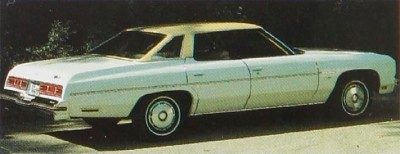
“Too much comfort?” According to the 1976 Chevrolet literature, that concept simply didn’t exist. The Caprice Classic was the king of plushness. You could grab it as a sedan, a sport sedan, a standard coupe, or the more upscale Landau coupe. Inside, they rolled out new standard knit cloth and vinyl upholstery. Or if you wanted pure softness, they offered expanded all-vinyl. It wasn’t just about looks though. Front and rear stabilizer bars came standard. So did a radial-tuned suspension with modified shock absorbers. Ride quality mattered.
The Impala ran the same four body styles as the Caprice. The brochure called it a tradition that kept getting better. But not everyone cared about the top trim. Low-budget buyers could opt for the Impala S four-door sedan. It stripped out the extra trim. It skipped the steel-belted tires. You could still add power if you needed it. Reclining passenger seats were available. So were power six-way front seats. Power locks. Power windows. A power trunk opener. Rear defoggers were there too. You could spec out Four-Season or Comfortron air conditioning.
1976 Chevrolet Impala and Caprice Facts
| Model | Weight range (lbs.) | Price range (new) | Number built |
|---|---|---|---|
| Impala | 4,175-4,245 | $4,507-$5,058 | 198,231 |
| Caprice | 4,244-4,314 | $5,013-$5,284 | 152,806 |
| Station Wagon | 4,912-5,007 | $5,166-$5,546 | 72,819 |
1977 Chevrolet Impala and Caprice
The momentum carried into 1977. The design language remained consistent, but the details shifted subtly. Buyers were looking for efficiency now. Fuel prices were climbing. The big block V8s were still there, but they were being squeezed. The 400 cubic-inch engine was the last of its kind for some models. Small blocks were taking over. The 350 was the workhorse. It offered enough torque for highway cruising without guzzling gas like the older engines.
Suspension updates were minor. The stabilizer bars stayed. The radial-tuned shocks remained standard on higher trims. Comfort was still the selling point. But efficiency was creeping into the conversation. The Impala S remained the budget entry point. It lacked the chrome. It lacked the fancy wheels. But it started. It drove. It got you from A to B.
The Caprice kept its Landau roof option. It was a status symbol. The vinyl roof added a layer of sophistication. Inside, the materials were durable. The vinyl could take a beating. The cloth held up well in humid climates. Air conditioning became more of a standard expectation. The Comfortron system was efficient. It kept the cabin cool without draining the engine too much.
Weight remained a concern. The Impala hovered around 4,2
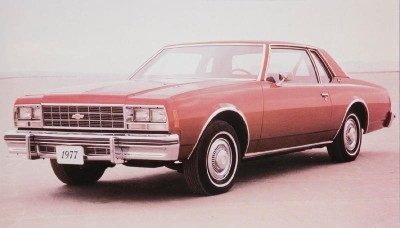
The 1977 Chevrolet Impala and Caprice: A New Era of Downsized Efficiency
The 1977 Chevrolet Impala and Caprice marked a seismic shift for General Motors. Along with other B-body platforms, these full-size sedans underwent a radical redesign that prioritized smaller dimensions. The result was a car that was shorter, taller, and noticeably narrower. Chevrolet marketed this overhaul as “The New Chevrolet,” pitching the vehicles as being “more appropriate for the times” and capable of occupying “a little less space in the world.”
It was a bold claim for an era when size equated to status. Yet, Chevrolet assured buyers that this downsized footprint didn’t mean sacrificing comfort. The reality was counterintuitive: the new models offered more interior space. Headroom and rear legroom improved over the 1976 predecessors. Trunk space also expanded, reaching 20.2 cubic feet in the sedan configuration.
Motor Trend recognized the engineering success immediately, naming the downsized Chevrolet Car of the Year. This sleeker lineage would endure with only minor facelifts, running through the 1990 model year. Their reliability and durability ensured they became staples in police fleets throughout the late 1970s and 1980s. That longevity was largely due to the engineering excellence of the small-block V-8 engines powering them.
Engine Options and Fuel Efficiency
The 1977 redesign placed a heavy emphasis on efficiency. Six-cylinder engines returned to the lineup, a direct response to the fuel crisis and changing consumer demands.
- Six-Cylinder: Achieved EPA ratings of 22 mpg on the highway and 17 mpg in the city.
- 305-Cubic-Inch V-8: The most popular option, producing 145 horsepower with a two-barrel carburetor. It delivered 20 mpg highway and 16 mpg city.
- 350-Cubic-Inch V-8: A higher-performance alternative, available at 170 horsepower.
Beyond powertrain adjustments, the interior saw a clever innovation. A new Smart Switch combined the dimmer and turn signal controls, streamlining the dashboard layout and improving usability for the driver.
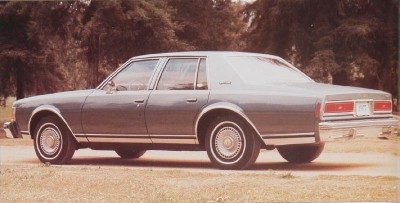
The Great Shrink
The Glide-Away tailgate was gone. In its place? An ordinary Door-Gate that just opened sideways or folded down like any other trunk lid. It wasn’t a revolution. It was a retreat.
The platform itself shrank. Wheelbases dropped from 125 inches to 116 inches. That matched the coupes and sedans. Overall length shed more than a foot. Less space. Less presence.
The Impala series kept it simple. Coupe. Four-door sedan. Four-door station wagon with two or three seats. Mid-year, they added the 1977 Chevrolet Impala Landau Coupe. Lavishly trimmed. A distinct break from the standard lineup.
But the real story was the Caprice.
It didn’t just update the full-size segment. It redefined it. “The shape of cars to come,” the press called it. Sleek. Lower. Different.
1977 Chevrolet Impala and Caprice Facts
| Model | Weight range (lbs.) | Price range (new) | Number built |
|---|---|---|---|
| Impala | 3,533-4,072 | $4,876-$5,406 | 320,279 |
| Caprice | 3,571-4,118 | $5,187-$5,734 | 341,382 |
1978 Chevrolet Impala and Caprice
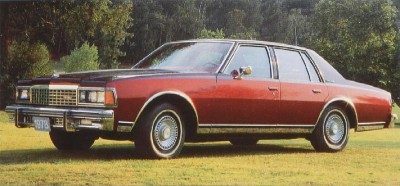
Chevy was feeling generous with the adjectives in 1978. They called the new Impalas and Caprices “trim, crisp, beautiful.” It wasn’t just marketing fluff either. This praise came hot on the heels of their claim that the downsized 1977 models had become “the most successful new car in the country.” The sales numbers back up the swagger.
But the real story here isn’t just volume. It’s about how they refined the formula for year two. You didn’t buy a 1978 Caprice for the same reasons you bought a 1977. You bought it for the details.
What Made the 1978 Caprice Different?
The 1978 Chevrolet Caprice wasn’t just a facelift. It was a rebranding of its own luxury tier. If you looked closely at the nose, you’d spot a distinctive new grille. It sat below a stand-up hood crest that looked far more substantial than the previous year’s emblem.
Under the hood, the engine bay stayed mostly familiar, but inside, the Caprice Classics trim level got specific upgrades:
- Wheel covers that were unique to the model
- Carpeted lower door panels (a nice touch for wet boots)
- Simulated woodgrain accents
- Extra sound insulation
You could also add a Power Skyroof. That’s a powered panoramic sunroof. Not every Impala got this. It was a Caprice exclusive option that made the cabin feel airy, especially with those extra insulation layers keeping the wind noise out.
Impala vs. Caprice: The Subtle Divide
So where did the Impala fit in? It kept the 1978 Chevrolet Impala grille fresh and redesigned the taillights. The key difference? Bigger backup lights. Practical, sure. But less flashy than the Caprice’s stand-up crest.
The Impala didn’t get the carpeted door panels or the extra soundproofing. It was the sportier, leaner sibling. The Caprice was the cruiser. The Impala was the driver’s choice for a family hauler that didn’t want to look like a taxi.
Why This Year Matters
Most people talk about the 1977 downsizing as the pivotal moment. And they’re right. But 1978? That was the polish. It was Chevy saying, “We made it work. Now let’s make it look like we always planned to.”
The taillights were modestly restyled across the board. No wild changes. Just cleaner lines. The 1978 Impala and Caprice were built on the same body shell, but the interior appointments and front-end styling told you exactly who was supposed to sit in the back seat.
Want to know which is rarer today? The Caprice with the Power Skyroof. Fewer were ordered. Fewer survived. The Impala with the bigger backup lights is easier to find. But it’s the Caprice that collectors still chase for that specific blend of 70s luxury and mid-70s efficiency.
You can still see them. Usually parked at car shows or rusting in barns in the Midwest. The woodgr
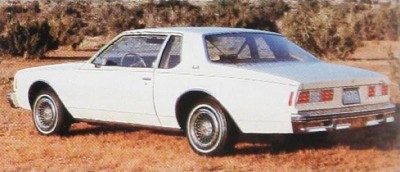
The numbers don’t lie. Over 609,000 full-size Chevrolets rolled off the lot in 1978. The Impala and Caprice four-door sedans were the clear winners. Buyers wanted space. They wanted practicality. They didn’t want the roofless life.
Big coupes were a hard sell. Landau variants? Even harder. Just 33,990 Impala coupes left the factory. The Caprice Classic Landau coupe? Only 4,652 were built. Most coupe buyers drifted toward the posher Caprice Classic trim. It looked better. It felt more upscale. If you bought a coupe in ‘78, you likely paid for the badge and the leather.
Interiors offered cloth or vinyl. Standard fare. But there was one quirky option: a 50/50 split front seat. Not a bench. Not bucket seats with a pass-through. A true split. You could fold down the passenger side to haul long items. Practical? Maybe. Weird? Definitely.
Under the hood, the base engine remained the 110-horsepower straight-six. It was standard on both the Impala and Caprice. But if you wanted power, you looked to the V-8 options. A 305-cubic-inch V-8 pushed out 145 horses. The bigger 350-cubic-inch V-8 delivered 170 horses.
California got the short end of the stick, as usual. Emissions controls choked the performance. Ratings in the Golden State were lower than in other regions. No automatic transmission was optional. Every full-size Chevy came with an automatic. You didn’t have a choice.
1978 Chevrolet Impala and Caprice Facts
| Model | Weight range (lbs.) | Price range (new) | Number built |
|---|---|---|---|
| Impala | 3,511-4,071 | $5,208-$5,904 | 290,744 |
| Caprice | 3,548-4,109 | $5,526-$6,151 | 321,653 |
The Caprice commanded a higher price. It also weighed slightly more. But it outsold the Impala by nearly 31,000 units. The premium trim won.
1979 Chevrolet Impala and Caprice
The curtain rises on 1979. The body style remains familiar. The badge logic stays the same. But the market shifts. Subtle changes happen. The air gets colder. The economy stutters. And the big Chevys? They keep rolling.
What changes in the lineup? What new options appear? The story continues.
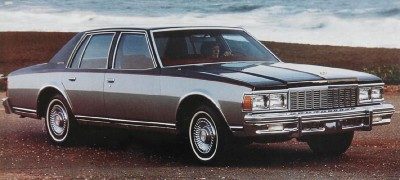
Chevrolet didn’t mince words about the 1979 lineup. They called the Impala and Caprice a “standard of success by which other full-size cars should be judged.”
It’s a bold claim. Especially since the same company was running ads in 1979 that pushed fuel efficiency for the Caprice. They were still branding these massive machines as “The New Chevrolet.” That tag had been attached to the downsized full-size models back in 1977. But let’s be clear. The changes for ’79 were subtle. Not revolutionary.
The 1979 Chevrolet Caprice Classic picked up a new segmented grille. It featured bold vertical accents. The headlights got a revision. It was a refinement of the traditional triple-segment taillights found on coupes and sedans. Nothing drastic. Just polish.
“America has driven it to the top.”
That was the line in the sales brochure. They argued this “new generation” had become “the most popular of our times.”
They weren’t lying. The market response was undeniable. But “popular” doesn’t always mean “innovative.” Sometimes it just means people are tired of paying more for gas.
The Impala sat at the top of the heap. The Caprice held its ground as the luxury option. Both relied on a platform that had already been proven. It wasn’t about reinventing the wheel. It was about making the wheel heavier. More comfortable. And slightly more efficient.
Was it enough? For most buyers in ’79, yes. They wanted space. They wanted status. They didn’t want to stop at the pump every forty miles.
Chevrolet knew this. They leaned into the comfort. They leaned into the size. And they sold it.
The competition was scrambling. Ford was trying to catch up with the LTD. Mercury was pushing the Marquis. But the Chevy name carried weight.
“The most popular of our times.”
It’s a specific phrase. It implies dominance. Not just in sales numbers. But in cultural perception.
The 1979 models didn’t look radically different from 1978. But the perception shifted. It was the same car. Just fresher.
That’s the trick. When you’re the market leader. You don’t need to change the product. You just need to change the narrative.
The narrative in ’79 was simple. You drive this. You are successful. The rest is noise.
And the noise was getting louder. Gas prices were stabilizing. But the habit of efficiency had been formed.
The Impala and Caprice were there to remind everyone who held the reins.
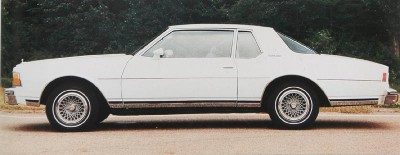
The engine lineup didn’t shift much. You still had the base 250-cubic-inch six and the standard 305-cubic-inch V-8. If you wanted more shove, you could step up to the optional 170-horsepower 350-cubic-inch V-8.
Inside, the luxury creep was real. Buyers could tick boxes for a Power Skyroof, six-way power seats, and Comfortron automatic air conditioning. Tech features like intermittent wipers, electric rear defoggers, power antennas, and power trunk openers were all available.
Chevrolet also kept its foot on the gas for law enforcement. A separate brochure highlighted Chevrolet police vehicles, specifically the Malibus and Impalas. The Nova was gone from that mix.
1979 Chevrolet Impala and Caprice Facts
| Model | Weight range (lbs.) | Price range (new) | Number built |
|---|---|---|---|
| Impala | 3,495-4,045 | $5,828-$6,947 | 270,907 |
| Caprice | 3,538-4,088 | $6,198-$6,960 | 317,731 |
1980 Chevrolet Impala and Caprice Classic
Output for full-size cars dipped slightly. The total landed at 588,638 units. It was a small drop, but it didn’t matter. That total still outpaced any other series on the lot. The Malibu was right there with it, close enough to matter.
For millions of Americans, the association was rigid. Chevrolet and big cars were practically the same word. Even with downsizing, the brand still defined the segment.
1980 Chevrolet Impala and Caprice Classic Facts
| Model | Weight range (lbs.) | Price range (new) | Number built |
|---|---|---|---|
| Impala | 3,530-4,080 | $6,050-$7,300 | 235,000 |
| Caprice | 3,570-4,120 | $6,300-$7,500 | 285,000 |
The 1980 Chevrolet Impala saw a redesign. It lost the sharp, angular look of the previous year. The front end became softer. The grille integrated into the fenders. The hood lines smoothed out.
1980 Chevrolet Caprice models kept their boxy shape longer. They retained the vertical taillights. The body lines stayed sharp. This made the Caprice look distinct from the Impala.
Engine options remained the same. The 250-cubic-inch six was base. The **305-cubic-inch
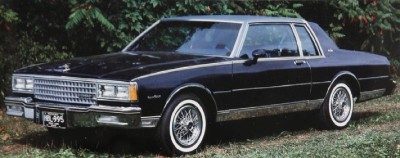
Subtle Shifts for the ’80 Chevy Impala and Caprice
The 1980 Chevrolet Impala and Caprice marked the first facelift for GM’s full-size lineup since the radical 1977 downsizing. The changes were quiet. Barely noticeable if you weren’t looking.
The hood and front fenders dropped slightly. Contours softened. The coupe lost its wraparound rear glass. In its place sat a flat window framed by more upright pillars. It was less dramatic than the 1977 cut, but it signaled a shift back toward traditional lines.
Powertrain Options: V-6 and V-8
Under the hood, buyers traded the old 250-cubic-inch inline-six for a new 1980 Chevrolet V6 engine. The base Chevrolet 229 V-6 displaced 229 cubic inches. It made the same 115 horsepower as its predecessor.
California buyers got a different setup. They received a Buick-built 231 cubic inch V6. Output dropped slightly to 110 horsepower. Likely due to stricter emission controls specific to the state market.
V-8 options expanded the choice. A 267 cubic inch engine delivered 120 horsepower. The bigger option was the 305 cubic inch V8. It rated out at 155 horsepower.
Wagons and Diesel
Station wagons came standard with the smaller V-8. Buyers could option up to the 305. Or they could spec the Oldsmobile 350 diesel V8. That diesel produced just 105 horsepower. Fuel economy was the goal there. Not speed.
Transmission choice was nonexistent. There was only one option. A three-speed automatic. No manual. No overdrive. Just the standard TH350 or TH400 depending on the engine.
Why did they stop offering manuals on full-size cars? Comfort was taking over. But the diesel was a niche play. A bet on fuel prices that might not have paid off for everyone.
The Impala and Caprice continued to dominate the fleet market. Taxi drivers loved the durability. Police departments preferred the V-8s. And families liked the space. It wasn’t exciting. But it worked.
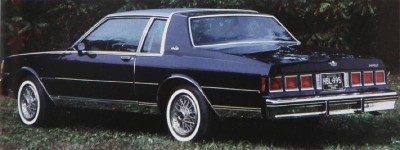
The two-tier structure held firm. Impala remained the entry-level choice. Caprice Classic kept its spot as the upscale option. Four-doors dominated the charts. Wagons and two-doors were afterthoughts. Caprices still outsold Impalas, though the gap was closing.
Then came 1979. The fuel crisis hit hard. Big cars took the brunt of the damage. Sales for both the Impala and Caprice nosedived. It wasn’t just the price of gas. The new Citation siphoned off buyers who might have stuck with full-size Chevys. The result was a brutal year. Sales plummeted from over 500,000 in ’79 to less than half that in 1980. They never got that volume back. The golden age was over.
1980 Chevrolet Impala and Caprice Classic Facts
| Model | Weight range (lbs.) | Price range (new) | Number built |
|---|---|---|---|
| Impala | 3,344-3,924 | $6,535-$7,186 | 99,527 |
| Caprice | 3,376-3,962 | $6,946-$7,536 | 137,288 |
| Sport Coupe | 3,104-3,219 | $6,524-$6,604 | 116,580 |
| Landau Coupe | not available | $6,772-$6,852 | 32,262 |
The numbers tell the story of a market in retreat. Even the lighter Sport Coupe couldn’t save the flagship. The Landau Coupe, strictly a Caprice variant, held its ground but couldn’t compensate for the overall slump.
1981 Chevrolet Impala and Caprice Classic
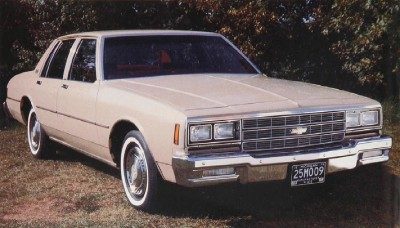
1981 Chevrolet Impala and Caprice: The Overdrive Revolution
The 1981 model year brought a shift in Chevrolet’s full-size lineup that felt almost radical, especially compared to the subtle tweaks seen in previous years. On the outside, the Impala and Caprice Classic looked nearly identical to their predecessors. The body lines remained familiar, the chrome trim stayed put, and the overall silhouette didn’t change much. But look under the hood and you’ll find a significant mechanical overhaul that actually matters.
At the heart of this change was GM’s new Computer Command Control (CCC) emission system. This wasn’t just a box-checking exercise for regulators. It genuinely improved driveability while helping the cars meet the stricter emissions standards of 1981. But the real headline here isn’t the emissions tech. It’s what came with it.
The 0.67 Overdrive Advantage
For the first time, these cars offered a four-speed automatic transmission with a dedicated overdrive fourth gear. The ratio was a stout 0.67:1. This wasn’t just a marketing gimmick. It was a functional gear that let the engine sit lower at highway speeds. When you combined that overdrive with a lock-up torque converter, the result was staggering fuel economy for a car of this size.
If you equipped a Caprice or Impala with the 305-cubic-inch V-8—which was the only engine paired with this new four-speed—you saw numbers that would shock you today. The EPA rated it at 26 miles per gallon on the highway. In real-world driving, you could nearly duplicate that figure. Think about that. A two-ton American sedan getting 26 mpg on the highway.
Why This Matters for Enthusiasts
Most people remember the Impala of the early eighties as a boat. A heavy, inefficient cruiser. But the 1981 update changed the narrative. The combination of CCC and the new four-speed made these cars more efficient without sacrificing their core purpose: comfortable, long-distance travel.
The lock-up torque converter was key. It eliminated the slippage that usually kills fuel economy in automatics. Once the lock-up engaged, the engine was mechanically linked to the transmission. No more energy lost in fluid shear. You got direct power delivery and better mileage.
This wasn’t just a one-off experiment. It was a proof of concept that GM’s engineering could produce a full-size car that didn’t guzzle gas. The 305 V-8 may not have been the most powerful engine in the lineup, but with the overdrive and lock-up, it was one of the most efficient.
So, while the body panels stayed the same, the heart of the car changed. The 1981 Impala and Caprice Classic weren’t just old designs with new badges. They were updated machines that responded to the times. And for those who actually drove them, the difference was noticeable.
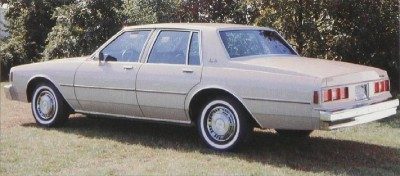
1981 Chevrolet Impala and Caprice Classic Facts
| Model | Weight range (lbs.) | Price range (new) | Number built |
|---|---|---|---|
| Impala | 3,326-3,897 | $7,129-$7,765 | 85,964 |
| Caprice | 3,363-3,940 | $7,534-$8,112 | 133,461 |
1982 Chevrolet Impala and Caprice Classic
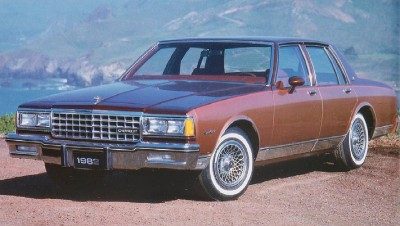
Rumors swirled that the 1982 model year would be the death knell for the classic American full-size sedan. The 1982 Chevrolet Impala and Caprice Classic were widely believed to be the last of their kind. That anxiety understandably led to a conservative approach. GM didn’t overhaul the lineup. They trimmed it.
The cut was brutal. Sales data showed the slow-selling Impala Sport Coupe and the Caprice Landau Sport Coupe were dragging down inventory. They were gone. No farewell tour. No special edition. Just a quiet exit.
This left a stark reality for buyers who wanted two doors. The Caprice Sport Coupe stood alone. It was the only two-door offering in the entire family. If you wanted a rear-seat cruiser with a trunk that could swallow a golf bag, your choices had narrowed significantly.
“If you wanted a rear-seat cruiser with a trunk that could swallow a golf bag, your choices had narrowed significantly.”
The Impala retained its sedan form, but the elegance of the Landau was stripped away. The Caprice, meanwhile, kept its luxurious badge. But the variety was gone. The market had spoken. Consumers weren’t buying the niche coupes. So GM stopped making them.
What remained was a focused, if somewhat barren, roster. The full-size segment was shrinking. The V8s were still there, but the options list was shorter. You bought what was left. Or you waited for the redesign. The 1980s were coming. And they were boxy.
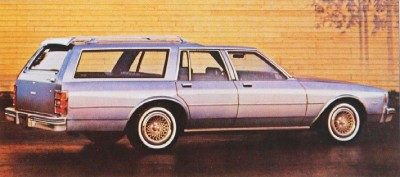
Powertrains didn’t change much. That four-speed automatic introduced last year for the 5.0-liter (305-cubic-inch) V-8 got the spotlight. Now it was available on the smaller 4.4-liter (267-cubic-inch) V-8 too.
Chevy kept the 3.8-liter 229-cubic-inch V-6 as standard on coupes and sedans. Wagons stuck with the smaller V-8. California was an exception. There, coupes and sedans got Buick’s 231-cubic-inch V-6. The wagon’s standard engine in the Golden State jumped to the 305-cubic-inch V-8.
The Olds-built 350 diesel V-8 remained an option across the board. Just as it was before.
Big old-fashioned cars like the Impala and Caprice lost appeal after fuel prices spiked. They didn’t lose their value, though.
Base prices tell the story. A roomy Impala sedan started at $7,918. The ritzier Caprice Classic sedan cost $8,367. The Caprice was far more popular.
Compare that to the competition. A Chevy Cavalier CL subcompact ran $8,100. A Celebrity intermediate was $8,600. Suddenly, those big family cruisers looked cheap.
1982 Chevrolet Impala and Caprice Classic Facts
| Model | Weight range (lbs.) | Price range (new) | Number built |
|---|---|---|---|
| Impala | 3,361-4,050 | $7,918-$8,670 | 64,679 |
| Caprice | 3,373-4,010 | $8,221-$9,051 | 123,510 |
1983 Chevrolet Impala and Caprice Classic
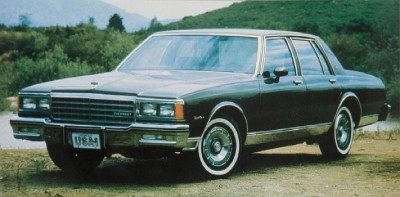
The 1983 Chevrolet Caprice and Impala: A Trimmed Legacy
The rumors were circulating that the 1983 Chevrolet Impala and Caprice Classic were facing extinction. They didn’t die, though. They just got lighter. The lineup was severely pruned.
The Caprice coupe vanished. That was the last two-door version. Gone too was the Impala wagon.
Under the hood, the smaller 4.4-liter V-8 disappeared. It was never popular, not even during the height of the gas crisis. That left a thinner menu of powerplants.
The base engine became the 3.8-liter 110-horsepower Chevy V-6. Californians got a similar Buick-built unit due to emissions rules. Options were limited. You could spec the 150-horsepower 5.0-liter gas V-8. It was standard on wagons. Or you could go with the 105-horsepower 5.7-liter diesel V-8.
All engines came with a three-speed automatic transmission as standard. A four-speed automatic was optional.
The 1983 Chevrolet Caprice and Impala were reduced to their essential forms, stripping away niche options to focus on core buyers.
This was a transitional year. The V-6 was a holdover. The 5.0-liter V-8 was the new entrant. The diesel was a niche play. Most buyers would have stuck with the base V-6 or the standard V-8. The diesel required a different kind of patience.
Transmission choice mattered little for the base engine. The three-speed was adequate. The four-speed was a comfort feature more than a performance upgrade.
The Caprice Classic remained the flagship. The Impala sat below it. The distinction was largely trim and equipment. The mechanicals were shared.
The 1983 model year marked the end of an era for certain body styles. No more coupes. No more wagons. Just sedans.
It was a conservative year for the brand. Risk was minimized.
The V-6 provided enough power for highway cruising. The 5.0-liter offered a bit more shove. The diesel was for those who valued range over speed.
The three-speed automatic was robust. It handled the torque. The four-speed was smoother. It was optional.
This was not a year for experimentation. It was a year for consolidation.
The Impala and Caprice continued to sell. But the variety was gone.
What remains is the memory of the V-6. It was unremarkable. It was reliable. It was enough.
The 5.0-liter V-8 was the sweet spot. 150 horsepower. Enough to move the heavy body without excessive fuel consumption.
The diesel was an outlier. A curiosity.
The transmission choices were straightforward. Three-speed standard. Four-speed extra cost.
The lineup was simple.
This was the end of the line for the two-door Caprice. And the wagon.
The rest was sedans.
And engines.
The V-6. The V-8. The diesel.
Three options.
That was it.
The rumors of extinction were false. But the spirit of the variety was diminished.
The 1983 models were functional
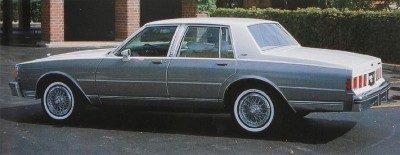
The Return of the Big V-8
Gas prices stopped climbing. People stopped being afraid of big cars. That changed everything for Detroit. Chevrolet had been in a holding pattern. The old full-size platforms were getting long in the tooth. Replacing them cost money. Money the company didn’t want to spend. But you can’t ignore a market that keeps buying. Even if it’s just 200,000 units a year. That’s enough revenue to keep the lights on. And enough volume to justify keeping the line moving.
The Impala and Caprice were still king. Sure, the coupes were gone. Gone. But the sedans were flying off the lots. They outsold everything else in the Chevy lineup. It wasn’t just survival. It was dominance. Buyers wanted that V-8 rumble. They wanted the room. They got it.
1983 Chevrolet Impala and Caprice Classic Facts
The numbers from the previous model year tell the story of a brand clinging to its roots. The weight ranges show substantial steel. These weren’t featherweights. The prices? Steep for the era, but buyers paid up.
Model
Weight range (lbs.)
Price range (new)
Number built
Impala
3,490-3,594
$8,331-$8,556
45,154
Caprice
3,537-4,092
$8,802-$9,518
175,641
Look at that Caprice volume. Nearly four times the Impala sales. The Caprice Classic was the volume driver. The Impala was the entry point. Both were selling better than the year prior. Both were beating out the Novas and the Vegas. It was a full-size revival.
1984 Chevrolet Impala and Caprice Classic
The momentum carried over. If 1983 was a confirmation, 1984 was a celebration. The market had spoken. Chevy listened. The designs didn’t change radically. Why fix what isn’t broken? The styling was clean. Simple. Honest. No excess. Just lines and chrome.
Under the hood, the V-8s were still the heart of the operation. Small block engines. Reliable. Powerful enough. For what people wanted. They wanted comfort. They wanted space. They wanted an American car. Chevy gave them one. The sales figures would reflect this shift. You could see it in the showrooms. The big sedans were back on top. And they weren’t going anywhere.
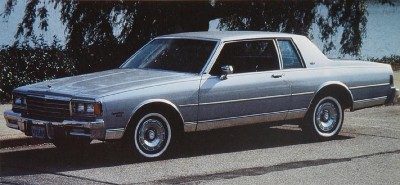
The Coupe Returns
The 1984 lineup kept the Chevy Impala and Caprice Classic sedans as the heavy hitters for full-size duty. But there was a twist. Chevy brought back the Caprice Classic coupe. It had disappeared after the 1982 model year. Its return mattered. It became the only two-door option in the full-size Caprice or Impala family. The result was strong. Buyers placed nearly 20,000 orders for the coupe that year.
Minor tweaks defined the rest of the changes. Wiper controls moved. They left the dashboard. Now they lived on the turn-signal stalk. That is a much better spot. Cruise control also got an update. The optional system allowed incremental speed adjustments. You could change speed by just one mph at a time. It was small. But it added precision.
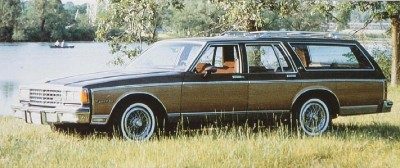
Under $9k and moving units
The powertrain lineup didn’t get much love. Chevy stuck with the 3.8-liter V-6 as the standard heart for coupes and sedans. That 110-horsepower mill was solid. California got a similar Buick V-6, likely to meet stricter emissions rules without changing the platform too much.
Wagons and other trims could spec the 5.0-liter V-8. It made 150 horsepower. Same old engine. Same old output. It was optional elsewhere on regular cars, too.
If you wanted torque and fuel economy, the 5.7-liter diesel V-8 was available. It pushed 105 horsepower. Not fast, but it lasted.
Transmission logic was simple. A three-speed automatic was standard. But if you bought the 5.0-liter V-8, you got a four-speed automatic. It was standard with that engine. Optional with the diesel.
Prices started under $9,000. In 1984 dollars, that was a deal. The Impala and Caprice Classic weren’t just cheap. They were affordable luxury.
Buyers noticed. Sales jumped 25% over 1983. Over 276,000 people signed papers and drove off.
1984 Chevrolet Impala and Caprice Classic Facts
| Model | Weight range (lbs.) | Price range (new) | Number built |
|---|---|---|---|
| Impala | 3,489-3,628 | $8,895-$9,270 | 55,296 |
| Caprice | 3,532-4,053 | $9,253-$10,210 | 221,199 |
1985 Chevrolet Impala and Caprice Classic
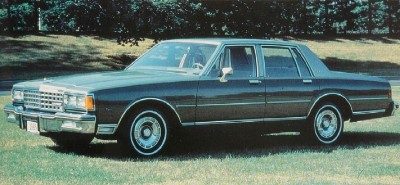
Under the Skin
Looked at from the driveway, the 1985 Chevrolet Impala and Caprice Classic were nearly identical to the year before. No sweeping body lines. No new grilles. Just subtle updates in the details.
But dig a little deeper and the story changes.
Inside, the dashboard got a fresh coat of paint in the form of new instrument panel graphics. Simple stuff. Clean lines. Better readability.
Underneath? That’s where the real work happened.
Chevy spent the year tightening up the suspension. The goal was to eliminate that floaty, boat-like sensation that plagued earlier models. Remember that “floating” feeling? The one where the car seemed to drift on air rather than roll on tires? Gone.
If you didn’t have the optional F41 suspension package before, you were likely paying for that instability. The 1985 models firmed up the springs and dampers across the board. It wasn’t a sports car treatment. But it made the car feel planted. Grounded. Like it actually belonged on the pavement.
The New 4.3L V-6
While the chassis was getting its act together, the engine bay saw a massive shift.
The previous 3.8-liter V-6s—shared between Chevy and Buick—were retired. They were replaced by something far more interesting.
Enter the 4.3-liter V-6.
This wasn’t a brand-new design from scratch. It was a chopped-down version of Chevy’s legendary small-block V-8. Take a robust V-8. Slice off two cylinders. Keep the strong bottom end and familiar architecture.
The result was a motor that felt familiar to mechanics and drivers alike. It used throttle-body fuel injection. No carburetor. More precise. More consistent.
Power figures jumped significantly.
130 horsepower.
That’s 20 more horses than the old 3.8-liter units. Not a supercar number. But in a full-size sedan or coupe weighing nearly two tons, every extra horse helps. It meant better acceleration off the line. Easier merging onto highways. Less strain on the transmission during passes.
The 4.3L became the new standard. Reliable. Powerful enough. And built on a foundation that Chevy knew inside and out.
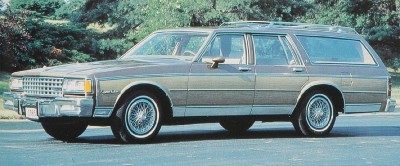
The optional 5.0-liter V-8 got a squeeze in compression. That small change pulled 15 more horses out of the engine. Total output sat at 165. Not much. But every bit counts when you are pushing a full-size boat. The 5.7-liter diesel V-8 stayed exactly as it was. It made 105 horsepower. A number that feels almost insulting by modern standards.
Transmission choices were conservative. The V-6 and the diesel came with a three-speed automatic. You could pay extra for a four-speed. The gas-powered 5.0-liter V-8 got the four-speed standard. No hesitation there.
The lineup remained familiar. You could buy an Impala sedan. Or a Caprice in coupe, sedan, or wagon form. These weren’t niche products. They were ubiquitous. Sales hit nearly 265,000 units. People still wanted the long roofline. The rear-wheel drive simplicity. The sheer size of them.
1985 Chevrolet Impala and Caprice Classic Facts
The numbers paint a picture of a market that knew exactly what it wanted. Weight and price hovered in a tight band.
| Model | Weight range (lbs.) | Price range (new) | Number built |
|---|---|---|---|
| Impala | 3,508-3,634 | $9,519-$9,759 | 55,438 |
| Caprice | 3,525-4,083 | $9,888-$10,714 | 211,355 |
The Caprice outsold the Impala by a wide margin. Almost four to one. People were willing to pay a few hundred dollars more for the extra trim. Or maybe they just liked the badge. The weight differences were negligible. A few hundred pounds depending on option packages.
1994 Chevrolet Caprice and Impala SS
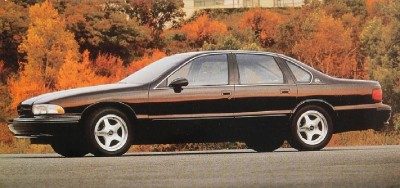
The 1994 Impala SS: How a Styling Exercise Became a V-8 Statement
The 1994 Chevrolet Impala SS didn’t just arrive; it ignited something. Based on a 1992 show car, the 1994 Chevrolet Impala SS burst onto the scene midway through the model year, turning heads and revving hearts. It was a revival of Chevy’s performance heritage, draped over a Caprice base. But let’s be real. It was little more than a styling exercise on paper. A coat of paint and badging. Yet its success did something unexpected. It forced GM to look at its bland front-drive family haulers and ask if they could inject some soul. They responded with a series of concept cars that hinted at what could be.
But style without substance is just noise. To give the Impala SS bite to match its bark, Chevy slapped on a heavily revised 5.7-liter V-8 LT1. This wasn’t the same old iron. It was a fresh take on a classic displacement. Running on lower compression ratios, it played nice with regular gas. That’s a luxury most enthusiasts didn’t get in the 90s. It pushed out 260 horsepower in this application. Compare that to the 275 in the Camaro Z28 or the 300 in the Corvette. Both those beasts demanded premium fuel. The Impala didn’t. It was efficient power.
This engine represented a massive leap. An 80-horsepower increase over the previous 5.7-liter V-8 found in Chevy’s full-size lineup. That’s not a tweak. That’s a transformation.
Engine Options and Transmission Limits
Under the hood, the 1994 Caprice lineup had options. The standard engine for sedans and wagons was a 4.3-liter V-8 producing 200 horsepower. Reliable. Adequate. Boring. The Impala SS came standard with the LT1. But you could spec a regular Caprice with that 260-horsepower motor too. It was an option available to those who wanted more without going full SS.
Regardless of which heart you chose, the drivetrain remained consistent. And restrictive. There was only one transmission offered. A four-speed automatic. No manuals. No five-speeds. Just a slushbox designed to move heavy steel efficiently. It was the era’s compromise. Speed wasn’t about engagement; it was about arrival.
The Impala SS proved that badging alone could drive demand, but it was the LT1 that kept enthusiasts listening.
Why did this matter? Because it showed Chevy could move volume with a performance halo. Even if the halo was just a package deal. The success of the Impala SS spawned similar concept cars from Chevy’s mainstream lineup. They wanted more. They wanted more power. They wanted more style. The Impala SS gave them a blueprint. It was shallow. It was superficial. And it worked.
The Caprice was already a staple. A taxi favorite. A cop car. Now it had a cousin that looked fast. Acted fast. Even if it couldn’t quite keep up with the Camaro or Corvette on fuel economy. The LT1 was the bridge. It connected the old V-8 tradition to the new millennial demand
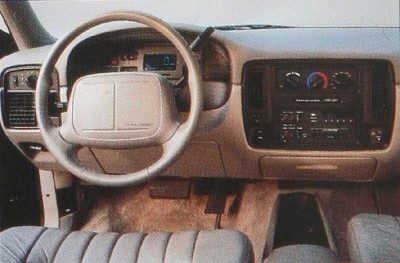
The 1994 Impala SS didn’t just arrive; it announced itself. The secret wasn’t in a complex formula. It was in the look. Black. Only black. That monochromatic paint scheme set the stage for the rest of the package. You couldn’t get it in blue or red. If you wanted the SS, you bought the black version.
Then came the details that mattered to enthusiasts. The C-pillars featured unique “dogleg” inserts. Retro Impala insignias adorned the body. A rear spoiler sat on the trunk lid. But the real showstopper was the wide 17-inch five-spoke aluminum wheels. They filled the wheel wells with purpose.
Underneath, the car actually drove like a sporty sedan. A lowered sports suspension did the heavy lifting. De Carbon gas-pressurized shocks managed the bumps. This setup gave the Impala SS better road manners than any previous full-size Chevy. It wasn’t just a cruiser. It was a handler.
Power came from a potent V8. That engine sent force through a standard limited-slip differential. Stopping power was equally impressive. Four-wheel disc brakes were standard equipment. Inside, the message was clear. Bucket seats. Black dashboard trim. It signaled sporting intent from the moment you slid behind the wheel.
Enthusiasts did have complaints. The column-mounted shifter felt archaic. The lack of a tachometer was a missed opportunity for a performance badge. Still, the hardware spoke louder than the interior quirks.
Other changes for the full-size line in 1994 were less exciting but technically significant. Safety regulations drove the biggest update. The addition of a passenger-side air bag forced a redesign. The dashboard was no longer a single unit. It split into two rectangular pods. One housed a digital speedometer and analog auxiliary gauges. The other held the radio and climate controls.
Environmental concerns also made an impact. Standard air conditioning switched to CFC-free refrigerant. It was a small change. But it marked the industry’s slow pivot away from older chemicals.
1994 Chevrolet Impala SS and Caprice Facts
Model : Impala SS | Weight range (lbs.) : 4,218 | Price range (new) : $22,495 | Number built : not available
Model : Caprice | Weight range (lbs.) : 4,036-4,541 | Price range (new) : $18,995-$21,435 | Number built : 104,724 (includes Impala)
1995 Chevrolet Impala SS
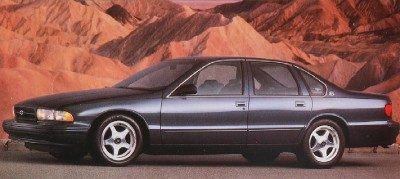
1995 Chevy Impala SS Updates
The 1995 Chevrolet Impala SS didn’t shake things up much. The model had arrived in mid-1994 to rave reviews. It came back for year two with only minor tweaks.
Most observers noticed the color palette first. The original “any color so long as it’s black” philosophy expanded. You could now get it in Dark Cherry. Green-Gray was also in the mix. Black remained the default.
Interiors stayed rigid. Gray leather was the only option. No brown. No tan.
Audio tech kept pace with luxury standards. Like the Caprice, optional premium cassette and CD players included speed-compensated volume control. The radio adjusted its volume to ambient noise levels. You didn’t have to fiddle with the knob every time the wind hit the windows.
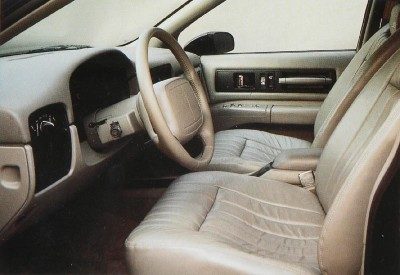
The Suspension Saved It
Power stayed exactly where it was. A 260-horsepower 5.7-liter LT1 V-8 pushing torque through a four-speed automatic. It was the same drivetrain GM offered in the Caprice, which made the Impala SS feel less like a performance car and more like a fancy sticker job. You weren’t getting speed upgrades. You were getting style.
And even the style took a hit.
This year, the Caprice borrowed the Impala’s controversial “dog-leg” rear roof pillar. That sharp, angular break in the C-pillar became standard on both cars. The SS lost its visual exclusivity. It was just a Caprice with a badge and a slightly sportier attitude.
But here is where the magic happened.
The chassis told a different story.
While the engines were identical, the 1995 Chevrolet Impala SS had a more sophisticated suspension setup. It was engineered for agility. For a two-ton full-size sedan, it handled with surprising sharpness. You could throw it into corners without the body roll that usually plagues these heavy cruisers. It felt planted. It felt alive.
The rest of the package remained visually distinct. The monochromatic paint treatment was still there, matching the body color to the trim. The aero body aids gave it a low, aggressive stance. And those 17-inch aluminum wheels? Still beautiful. Still the best part of the package.
1995 Specs and Numbers
If you are tracking down a survivor, or just curious about what you were paying for, here are the hard numbers.
| Model | Weight (lbs.) | Price (New) | Production Count |
|---|---|---|---|
| 1995 Chevrolet Impala SS | 4,036 | $22,910 | Not Available |
The weight is worth noting. Over 4,000 pounds. Yet, thanks to that suspension tune, it didn’t drive like a boat. That’s the paradox of this car. It looked like a sedan. It weighed like a sedan. But it drove like a sports car in disguise.
Looking Ahead to 1996
The formula wasn’t changing. The LT1 was still king of the hill for V8 options in the lineup. But rumors were swirling about what was coming next. The market was shifting. Enthusiasts were asking for more power. Less plastic. More metal.
The Impala SS had carved out a niche. It wasn’t the fastest car. It wasn’t the cheapest. But it was the most fun to drive in a package that looked good in traffic.
What would 1996 bring? Would GM finally give it a bigger engine? Or would they keep the status quo and let the suspension do the heavy lifting?
The wait was almost over.
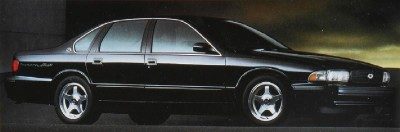
The Final Hurrah for the 1996 Chevrolet Impala SS
The 1996 Chevrolet Impala SS was peak performance for the rear-drive full-size sedan, and it carried the heavy burden of being its own finale. It died because its parent platform, the Caprice, was getting the axe. Chevy engineers knew the clock was ticking. They knew the Arlington, Tennessee plant was likely destined for pickup trucks. So they didn’t just tweak the 1996 model. They fixed nearly everything that annoyed purists about the debut year.
The original Impala SS was already a beast. The LT1 V8 under the hood produced 260 horsepower and 330 lb-ft of torque. That was the same big-block-for-a-small-block powerplant found in the Corvette. But the interior told a different story. Column-shift automatics are for commuting, not driving. And a performance car without a tachometer is just a grocery getter with a badge.
Chevy listened. They stripped out the lazy column shifter. In its place, a floor-mounted lever demanded your attention. They also punched a hole in the dashboard. A tachometer now sat in the center stack. It wasn’t just cosmetic. It told you exactly when to drop the clutch and shift to keep the LT1 in its power band.
Interior Upgrades Define the Final Year
Why did the 1996 Impala SS matter more than the 1995 model? Because it was complete. The first year was promising. The second year was serious.
The steering wheel changed too. It was no longer the bland, thick-rimmed unit from the Caprice. The new wheel had a sportier diameter and better grip. The seats got bolstering that actually held you in place during hard cornering. It was a subtle shift. You wouldn’t notice it until you were leaning into a turn.
Then there was the ride. Chevy tuned the suspension for a firmer stance. It still absorbed potholes. It still cruised on the highway without shaking your teeth out. But it leaned less. The handling was sharper. The steering felt heavier. It responded to input rather than waiting for it.
The 1996 Impala SS wasn’t just a carryover. It was the definitive version of a car that was about to vanish.
The End of an Era
The Caprice was still available. It looked almost identical. But the Impala SS had personality. The 1996 model had purpose. Chevrolet could have sold the same car with the same engine and kept going. But they chose to refine. They chose to perfect.
And then it was gone. The Impala nameplate would return years later as a front-wheel-drive economy car. The SS badge would appear on sedans and coupes with different engines and different platforms. But none of them carried the soul of that Arlington-built V8 sedan.
The 1996 Impala SS remains a collector’s item for a reason. It was the last of its kind. A rear-drive, V8, American luxury cruiser that could keep up with sport cars of its day. It had the tach. It had the stick shift. It had the attitude.
There are no new Impala SS models coming back in this form. The platform died. The plant changed. The era ended
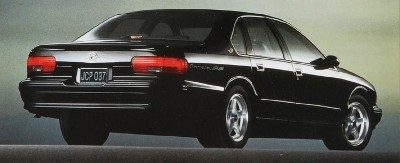
The first major criticism of the new Impala SS was its gear selection method. It used a floor-mounted shifter tucked into a proper console. The console itself carried an Impala logo. This was a deliberate move. Chevy wanted to distance the car from the mundane Caprice. They redesigned the instrument panel entirely. The old digital speedometer was gone. In its place sat an analog speedometer and a new analog tachometer. These changes did more than just look good. They forced the Impala to fit the mold of a true sport sedan. It stopped feeling like a detuned fleet vehicle.
Chevy’s internal projections were conservative. They anticipated building roughly 15,000 Impala SS sedans for 1996. Enthusiasts hated that number. It felt too low. They wanted more. The demand was clearly there. The supply was not.
The Reality of the 1996 Model Year
The numbers tell a specific story about availability. The base curb weight sat at 4,036 lbs. That is heavy for a sport sedan. It reflects the V8 architecture and the luxury features borrowed from the Caprice.
The starting price for new units was $24,405. In 1996 dollars, that was a significant investment. It placed the Impala SS in a competitive bracket against established performance sedans. You were paying for the LT1 engine. You were paying for the special suspension tuning.
“The revised interior and drivetrain were designed to separate the Impala SS from the standard Caprice, creating a distinct identity for a sport sedan.”
Production numbers remain unverified. Official records do not list the exact count. Some sources suggest the 15,000 estimate was accurate. Others argue actual builds fell short. The scarcity drives current interest. A car built in low numbers tends to hold value better. Enthusiasts hunt for surviving examples. The missing data point adds to the mystery.
Understanding the LT1 in a Sedan
The heart of the matter is the engine. The 5.7L LT1 V8 produced 260 horsepower. That was modest by modern standards. It was competitive for 1996. The torque curve was flat. It provided strong mid-range pull. This suited the heavy sedan body. It moved the car quickly enough. It did not feel sluggish. The 4L60E transmission handled the power. It was a robust unit. Shift points were firm. It contributed to the sport sedan feel.
Suspension upgrades were subtle but effective. Stiffer springs reduced body roll. Larger sway bars improved cornering stability. The brakes were upgraded from the Caprice base. They provided better fade resistance. This was crucial for spirited driving. The car could handle repeated hard stops. It maintained its composure.
Market Positioning and Legacy
Chevy was testing a market segment. They wanted to see if a family sedan could be sporty. The Impala SS was the answer. It combined comfort with performance. It attracted buyers who wanted practicality. They also wanted a bit of thrill. The design achieved this balance. It was not a track day car. It was a street performer.
The lack of precise build numbers creates a gap in automotive history. Collectors