It’s awkward. Standing in front of an engineer and telling him his brilliant, painstaking work is a little nonsensical. Most engineers deserve a break. This guy did not.
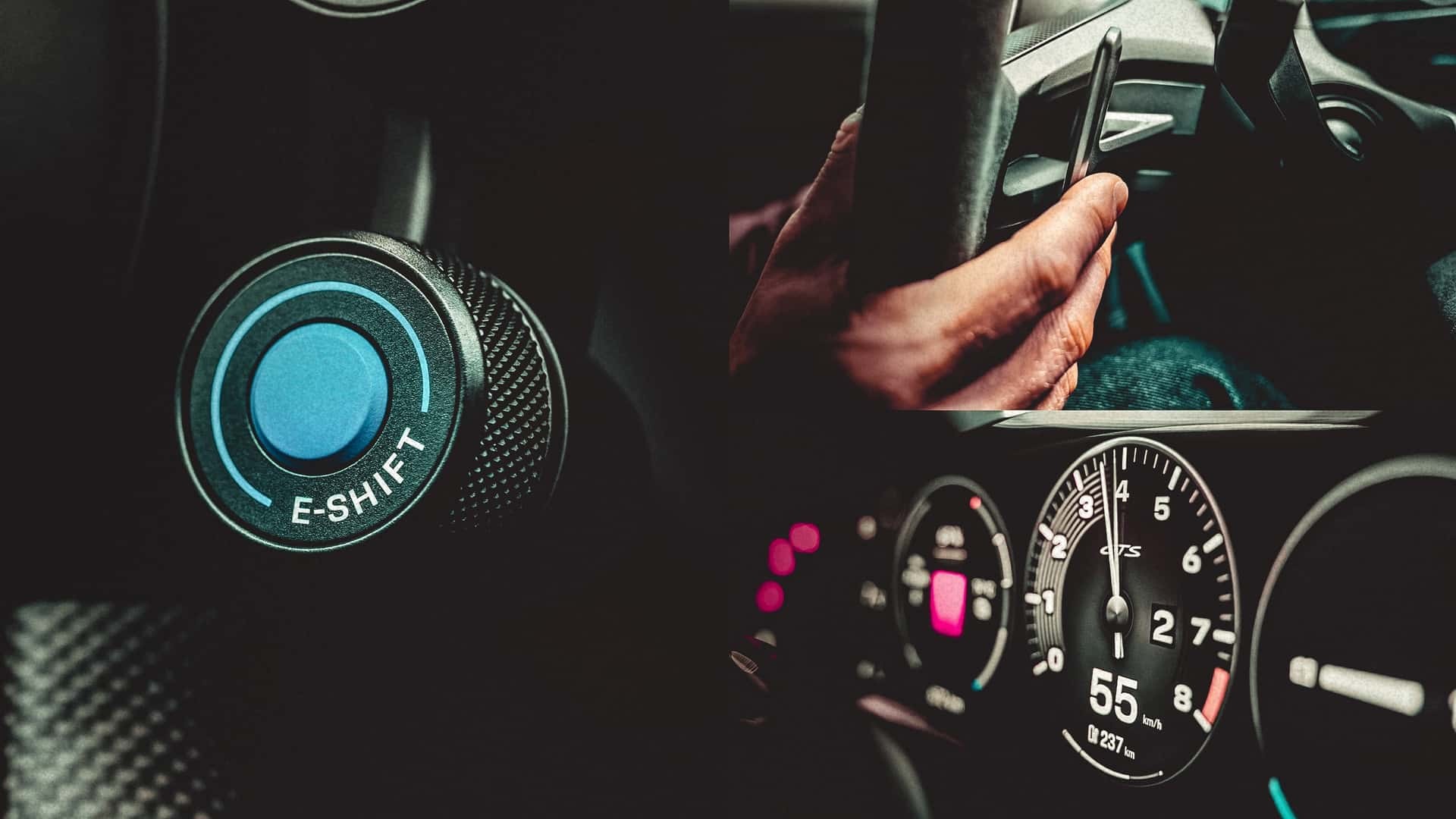
He built the 2027 Porsche Taycan ‘s new E-Shift feature.
The goal? More driver engagement. Zero performance loss. Notice how he didn’t say “more fun”? That wasn’t the metric. After looping Zuffenhausen twice, I told him straight out: it was pure Porsche Whimsy. Better than the Hyundai Ioniq 5 N ‘s chaos, sure, but still a simulation that took itself entirely too seriously. He liked my summary. I did not.
What Is This E-Shift Anyway?
It is a facade. A very good, high-tech facade.
Porsche claims the gearbox logic is lifted straight from their PDK dual-clutch transmissions. But it talks to a ghost engine. This simulated unit has a torque curve shaped like real gas, plus a fake turbo lag at high load, plus inertia to make the RPM changes feel heavy. It tries hard.
“We saw this as a special opportunity to create a unique sound without historical baggage.”
So no vintage V10s. No Flat-Six roar. They mashed four-, eight-, and six-cylinder sounds into a futuristic slurry. It sounds synthetic. It sounds like a computer dreaming about gasoline.
Technically, the E-Shift system feeds data to the electric motor controllers. The motors then output torque in the exact rhythm of a piston engine. In theory.
The problem is that electric motors are clean. Smooth. Efficient. Real gas engines jerk. They stumble. They interrupt power flow during shifts. Porsche refused to simulate those hiccups.
Why? Because speed matters more.
If the fake engine “shifted,” it would briefly cut torque. So Porsche spikes torque immediately after the shift to compensate. The result is a flat, broad powerband. The Taycan goes exactly as fast in E-Shift mode as it does in pure EV mode.
They drilled this point home. Repeatedly.
The Feeling Is… Nothing
Too perfect. Too refined.
Driving it feels less like swapping gears and more like an electric car with a rev limiter installed.
Below 2000 RPM, nothing happens. Above that? Pure EV acceleration. There is no lean into the shift. No drag. The PDK transmissions in regular Porsches have weight; you feel the metal moving. This? Instant. Faster than I can process.
Where is the drama?
The Hyundai Ioniq 5N leans into the messiness of gas engines. The body rolls under hard throttle. The response is dull. The shifting is rough. It is deliberate ugliness for the sake of feeling.
The engineer nodded when I mentioned it. He admitted the Hyundai executed the chaos well. Then he shook his head. That is not the Porsche way.
And I get it. Compromising 0.60 times for “feel” is heresy at Porsche headquarters.
But isn’t the whole point of a fake engine simulation to chase imperfection?
Where’s The Whimsy?
E-Shift is objectively flawless.
Which means it fails at its own purpose. You don’t turn this mode on because you need to go faster. You turn it on because you want the theatre. You want to lose a tent of a second if it means the car feels alive, rough, human.
Keeping the performance intact was foolish here.
Is E-Shift better than nothing? Yes. I would take this sterile simulation over silence. But I want Porsche to let their hair down. Add a little lag. A little noise. A little nonsense.
Right now, it just fine. It’s competent.
It’s missing the soul of the machine it is trying to mimic.