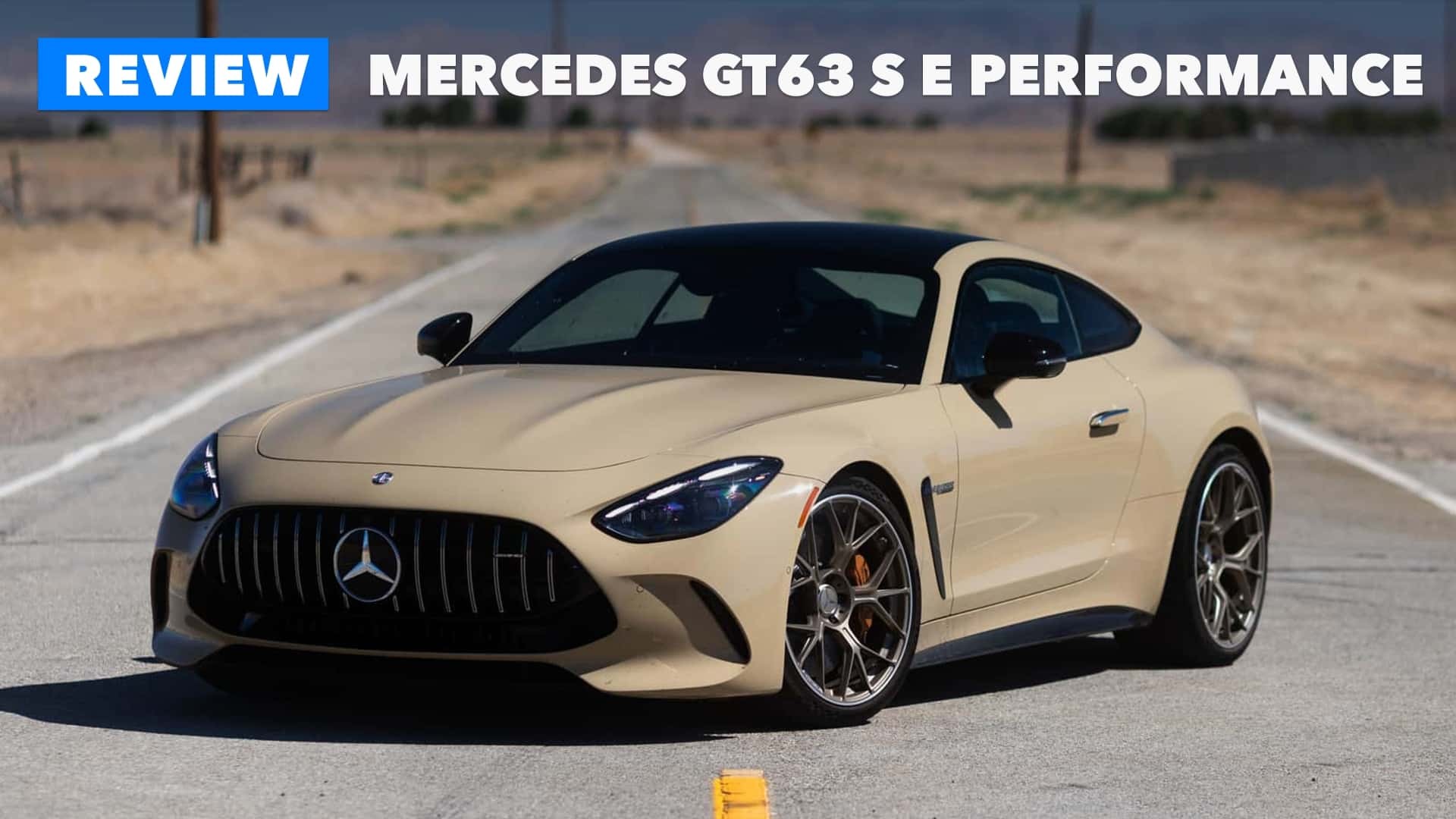
For many enthusiasts, the departure of the dedicated, aluminum-spaceframe platform used in previous AMG GT models felt like a death knell for a classic. The shift from a pure, lightweight sports car architecture to a heavier, more conventional setup raised serious doubts: Could an AMG still feel like a “real” sports car if it weighed nearly 5,000 pounds and relied on hybrid technology?
The Mercedes-AMG GT63 S E Performance provides a definitive, albeit complex, answer. It is a vehicle caught between two worlds—the raw, mechanical soul of a traditional brute and the high-tech, electrified future of performance.
A Fundamental Shift in Engineering
The transition from the old C190 platform to the new C192 chassis represents a massive change in philosophy. Mercedes-AMG has moved away from the lightweight, rear-mounted transmission setup in favor of a more conventional, front-mounted gearbox and a mixed aluminum-and-steel body.
Key mechanical changes include:
– Powertrain: A move from a dual-clutch transmission to a nine-speed planetary-gear automatic.
– Suspension: A shift from simple dual wishbones to more complex multi-link arrangements.
– Lubrication: The replacement of a track-ready dry-sump system with a more standard wet-sump system.
– Hybridization: The addition of the P3 hybrid system, which integrates a 201-horsepower electric motor into the rear differential.
Combined with the 4.0-liter V8, this setup produces a staggering 805 horsepower and 1,047 pound-feet of torque.
The Driving Experience: Precision vs. Complexity
Driving the GT63 S E is an exercise in managing sophisticated technology. The car utilizes a massive suite of “physics-bending” tools, including rear-wheel steering, active sway bars, and adaptive dampers.
The Hybrid Hurdle
The integration of electric power is not without its growing pains. While the initial electric thrust is instantaneous, the handoff between the electric motor and the V8 can feel unrefined during moderate throttle application. At times, the system may drop electric power just as the V8 builds boost, causing a momentary lurch in torque.
However, there is a workaround: drive it aggressively. When pushed, the algorithms seem to sync more effectively, and the car settles into a rhythm.
Handling and Feedback
Despite its significant mass, the car excels when pushed. The steering is exceptionally communicative—a rarity in modern high-performance cars—and the braking-to-cornering transition is remarkably addictive.
– On the limit: The car uses the rear motor to manipulate handling balance, helping stabilize the chassis during aggressive maneuvers.
– The “Dance”: When the driver nails the braking pressure through an apex, the car transforms from a heavy cruiser into a precision instrument that carves through corners with supercar-like urgency.
Interior and Interface: Luxury Meets Digital Friction
The interior is a visual spectacle of stainless steel accents and high-end animations, but it suffers from a modern trend: the loss of tactility.
The 11.9-inch MBUX display and the 12.3-inch gauge cluster are fast and crisp, but nearly all functions are relegated to touchscreens. For a vehicle priced north of $220,000, the lack of physical buttons for critical functions can feel like a step backward in ergonomic luxury.
Market Positioning: The High-Stakes Competition
At a price point reaching $221,299, the GT63 S E Performance enters a highly competitive arena. It must justify its existence against established titans:
- Porsche 911 Turbo S: The benchmark for efficiency and precision, though arguably less “playful” than the AMG.
- Aston Martin Vantage S: A direct rival that offers a more special interior and similarly evocative handling.
While the AMG cannot compete with the lightweight agility of a Porsche, it compensates with sheer, unadulterated power and a more visceral, communicative steering feel.
Conclusion
The Mercedes-AMG GT63 S E Performance is a contradiction: it is a heavy, technologically complex hybrid that somehow manages to retain the soul of a driver’s car. While its hybrid systems and touch-heavy interface require refinement, its ability to choreograph a high-speed “dance” on a canyon road makes it a truly memorable performance machine.